// KOTAKU — GAMING
Resonance: A Plague Tale Legacy: The Kotaku Review
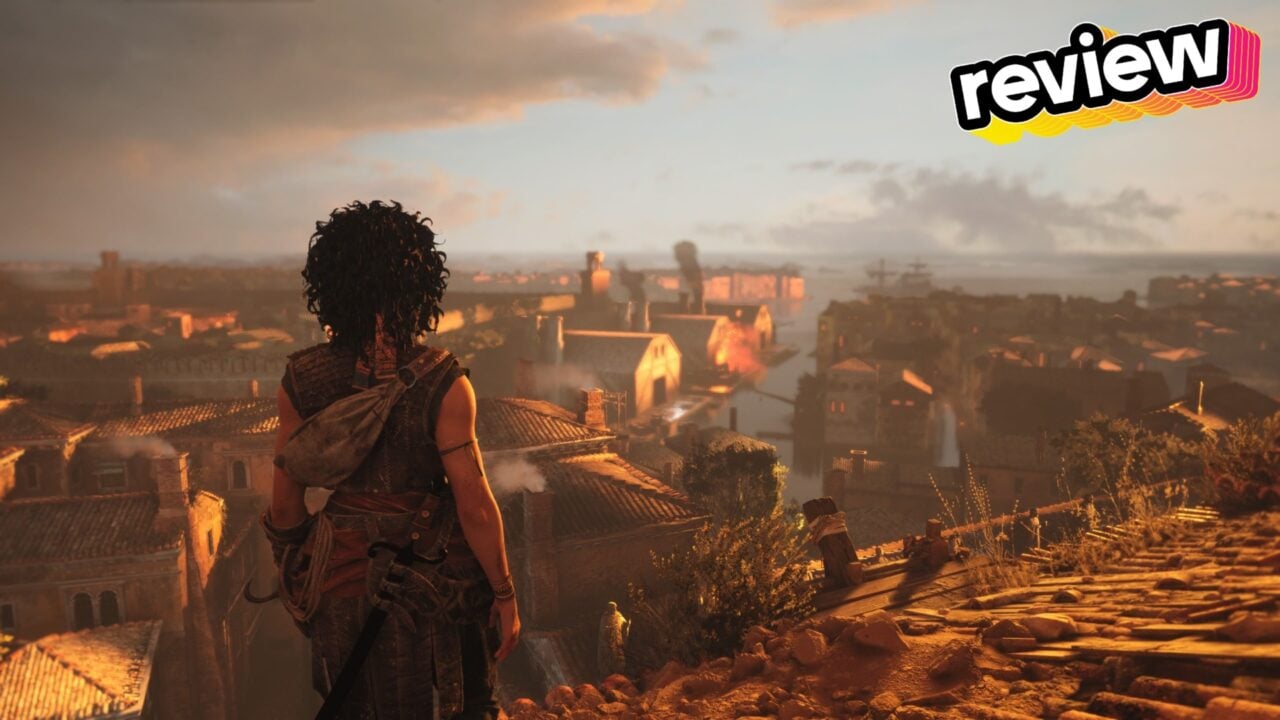
I didn’t see a single rat during my time with Resonance: A Plague Tale Legacy. That wouldn’t be worth remarking on in 99.99 percent of game reviews, but 99.99 percent of game reviews aren’t discussing the latest entry in a series that, until now, was set during a fantastical version of the Bubonic Plague. A Plague Tale is the one franchise that promised that, if you bravely ventured along its dimly lit corridors, you would encounter rodents doing stuff you’d never seen rodents do before; devouring the skin off soldiers’ bones like you might clean a chicken wing, moving in waves to wreak havoc on medieval infrastructure, and whirling around in tornadoes at the behest of an evil Catholic priest. As such, it’s a bit surprising that the only time rats are invoked in this spin-off, it’s as an insult directed at you and yours.
You, in this case, being Sophia, the pirate smuggler who, in 2022’s A Plague Tale: Requiem, aided series leads Amicia and Hugo de Rune in their quest to reach a mysterious island hiding magical secrets. Yours, in this case, being the misfit pirate family who raised her. As this third-person action-adventure game begins, Sophia recounts the time she spent in a convent as a child, forced by nuns to draw the contents of her supernatural visions. She’s quickly rescued by her kindhearted father, Alec, and his right-hand man, Faro, who brutally slits one of the nuns’ throats. When Alec is killed during the latest in a long line of recurring expeditions to a mysterious island—a bit of a motif in this series—which the gang believes holds the key to understanding Sophia’s visions (plus plenty of treasure), Faro takes Sophia in and raises her.
“For Uncharted fans who miss when the games had ghouls and yetis.”
But Sophia grows up and, as she does, Faro becomes more and more obsessed with the island, all the while denying Sophia a part in its exploration. Trust between the two deteriorates and so, when a job goes bad, Faro naturally believes Sophia was the rat that fed information to their enemies. Cut loose from her gang, Sophia and her girlfriend, Leni, set out for the island in an adventure that will take them down into its depths and the depths of history.
(At least, it seems like we’re supposed to believe Leni is Sophia’s girlfriend; the game never explicitly defines their relationship but in Leni’s introduction, Sophia tells us, “I would’ve done anything for her…”).
As Sophia and Leni explore the island, Resonance begins to feel extremely familiar. A Plague Tale has historically offered a double-A alternative to The Last of Us: both stealth-action series set in a dark world populated by hordes of mindless creatures, in which players take on the role of an older character protecting a younger, more vulnerable one who has an inexplicable tie to the plague destroying their world. But with Sophia at the helm, Resonance embraces Uncharted, instead. You run along rooftops, use a notebook full of sketches and diagrams to solve puzzles in ancient, cavernous test chambers, redirect beams of light, narrowly avoid spike traps, platform along mountain ledges, and squeeze through many crevices in rock walls.
That obvious inspiration becomes a bit of a problem given how fixated Resonance is on trapping you on this island. Uncharted kept its formula light and lively with a healthy dose of globe-trotting. You never got too tired of one locale because the game would spirit you away to another on the other side of the world. Jungles gave way to mountains, mountains gave way to deserts, deserts gave way to cities, and so on.
Initially it seems like Resonance will do something similar. Within the first hour, you’ve seen the convent, your crew’s shanty-town smuggler camp, a bandit-ridden beach, and the canals and rooftops of Venice. But then you arrive on the island. And stay there. And continue to stay there. And then the credits roll. The island has varied environments, but they skew darker and darker, grimmer and grimmer, as t