// SPACE.COM — SPAZIO & SCIENZA
Watch Rocket Lab launch Japanese radar satellite to orbit early Aug. 31
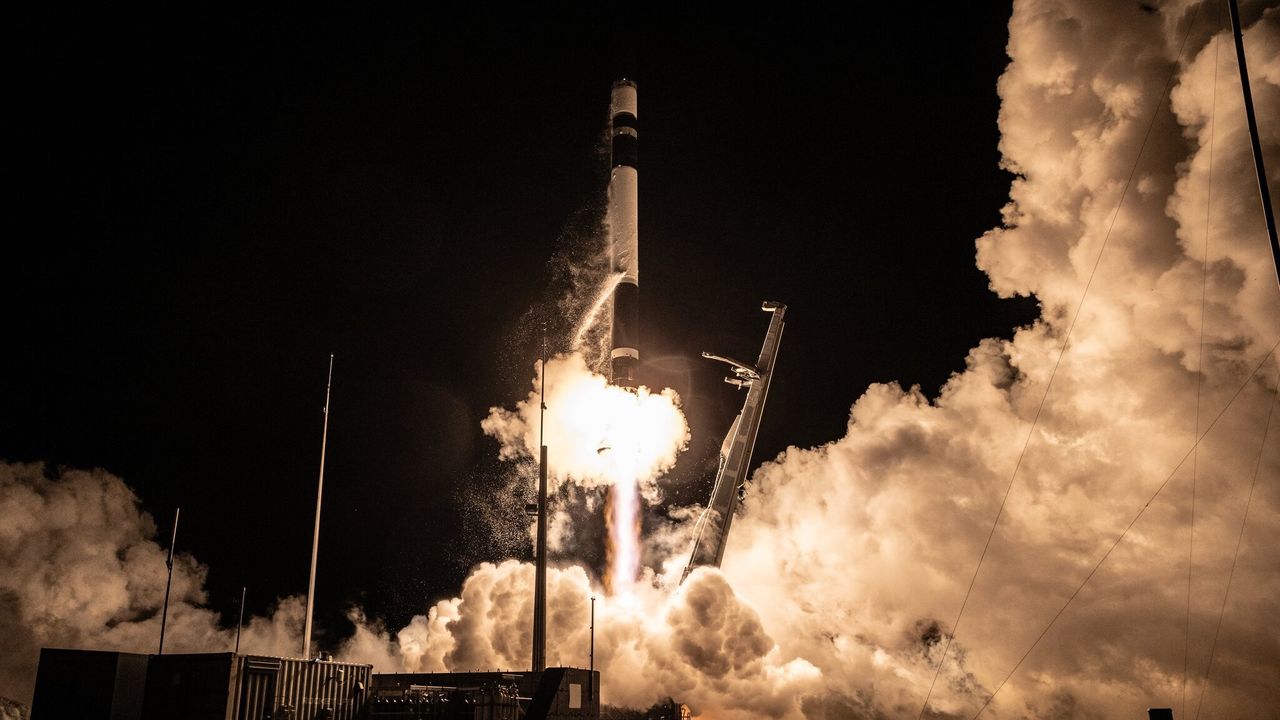
Liftoff of the "Owl Around the Moon" mission is scheduled for 8:00 a.m. ET on Monday (Aug. 31).
When you purchase through links on our site, we may earn an affiliate commission. Here’s how it works.
Rocket Lab will launch a private Japanese radar satellite to orbit early Monday morning (Aug. 31), and you can watch the action live.
An Electron vehicle is scheduled to lift off from Rocket Lab's New Zealand site on Monday during a window that opens at 8:00 a.m. EDT (1200 GMT; midnight on Sept. 1 local New Zealand time). It's carrying a single Strix satellite for Synspective, a Tokyo-based Earth-imaging company.
You can watch it live via Rocket Lab, beginning about 30 minutes before launch. Space.com will air the feed as well, if, as expected, Rocket Lab makes it available.
Synspective is assembling a constellation of about 30 Strix satellites in low Earth orbit (LEO). These spacecraft — which are named after a widespread genus of owl — use synthetic aperture radar (SAR) to study our planet both day and night, and in all weather conditions.
The Strix constellation will "make it possible to quickly monitor and confirm on-the-ground changes during disasters such as earthquakes and floods at night, as well as in areas that are difficult to access," Synspective's website reads.
"In addition to disaster response, we will leverage our SAR satellite capabilities to promote efficient resource utilization," it adds. "For example, we can use our satellite data to monitor natural resources and urban development, ensuring sustainable and optimal use of land and water."
Ten Strix satellites have reached orbit to date, all of them atop Electron vehicles. Rocket Lab is currently the sole launch provider for Synspective and has 16 more missions for the company on its manifest after Monday's mission.
If all goes according to plan on Monday, the Electron's upper "kick stage" will deploy the Strix satellite 56 minutes after liftoff, at an altitude of 357 miles (575 kilometers).