// HACKER NEWS — CYBERSECURITY
Separating logic and language
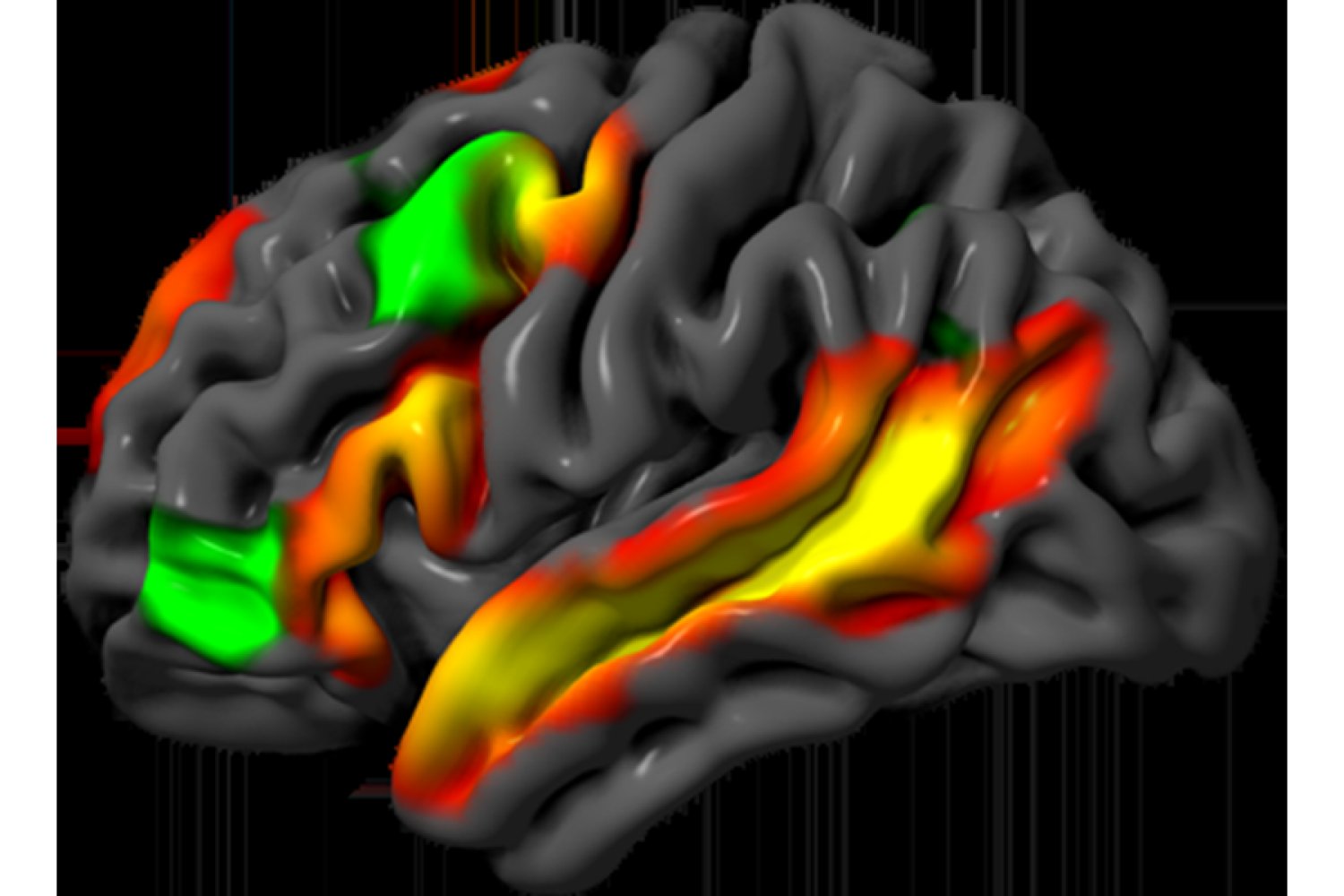
Some people find it useful to talk through their problems — but language isn’t necessary for logical reasoning, cognitive neuroscientists at MIT’s McGovern Institute for Brain Research say.
In research published this week in the journal PNAS, researchers led by MIT associate professor of brain and cognitive sciences Evelina Fedorenko have shown that people can perform well on tasks that require logical reasoning even if their language abilities are severely impaired. What’s more, brain imaging shows that language-processing parts of the brain are not called on for logical reasoning.
Philosophers, linguists, and cognitive scientists have debated the relationship between language and thought for thousands of years, with many arguing that we use language to think. There are good reasons to suspect a close relationship between logic and language, acknowledges Hope Kean, a postdoc and former K. Lisa Yang Integrative Computational Neuroscience (ICoN) Center graduate fellow in Fedorenko’s lab. “Abstract thinking has properties that look a lot like language,” Kean says, pointing to structural similarities. “You can decompose a thought into subcomponents, like little atoms of logical propositions, and you can combine them in a hierarchical manner to make more complex structured rules, very akin to language.”
But she and Fedorenko, who is also a McGovern Institute investigator, suspected that while we largely depend on language to communicate about logical reasoning — from presenting a problem to explaining how we have arrived at conclusions — the brain might use a separate system for the reasoning itself.
“There are aspects of thinking that seem to go beyond some of the limitations of language,” Kean explains. Logical reasoning demands precision that language often lacks. And language is linear, progressing one word at a time, whereas evaluating available information to reach logical conclusions can require thinking in less linear ways.
These observations left Kean curious about how the brain handles logical reasoning. It’s a particularly difficult question to answer scientifically, because it’s hard to take language out of the equation when working with human study participants. But Fedorenko’s team did just that by collaborating with Rosemary Varley, a neuroscientist at University College London who studies acquired language disorders, and her team.
Together, the scientists worked with two patients who had experienced stroke that damaged language-processing parts of their brains, leaving them with severe impairments in both understanding and producing language. They designed language-free logic games in which participants were asked to infer relationships between sets of numbers. Given two lists, they had to figure out the hidden rule that turned one list into the other, such as reversing the digits or removing numbers above a certain value. Once they thought they’d discovered the rule, they had to apply it to new examples. In a second game, participants were presented a set of geometric patterns and asked to identify another pattern to complete the matrix.
As participants solved increasingly difficult puzzles, it became clear that people don’t need language for this kind of reasoning. Patients with language impairments solved the problems as well as a control group, and were even able to communicate the rules they inferred using gestures, or with a sketch. “It really upends a theory that says that symbolic rule induction is not possible without linguistic capacities,” says Kean.
Alongside this part of the study, Kean and colleagues also used functional brain imaging to study what happens in the brains of healthy adults when they are engaged in logical reasoning. Participants in this part of the study visited MIT for a series of MRI scans, which captured images of their brain activity during an array of tasks. In addition to completing different kinds of logic games inside the scanner, participants were asked to engage in tas