// SPACE.COM — SPAZIO & SCIENZA
China's private, reusable Pallas-1 rocket aces debut launch (video)
When you purchase through links on our site, we may earn an affiliate commission. Here’s how it works.
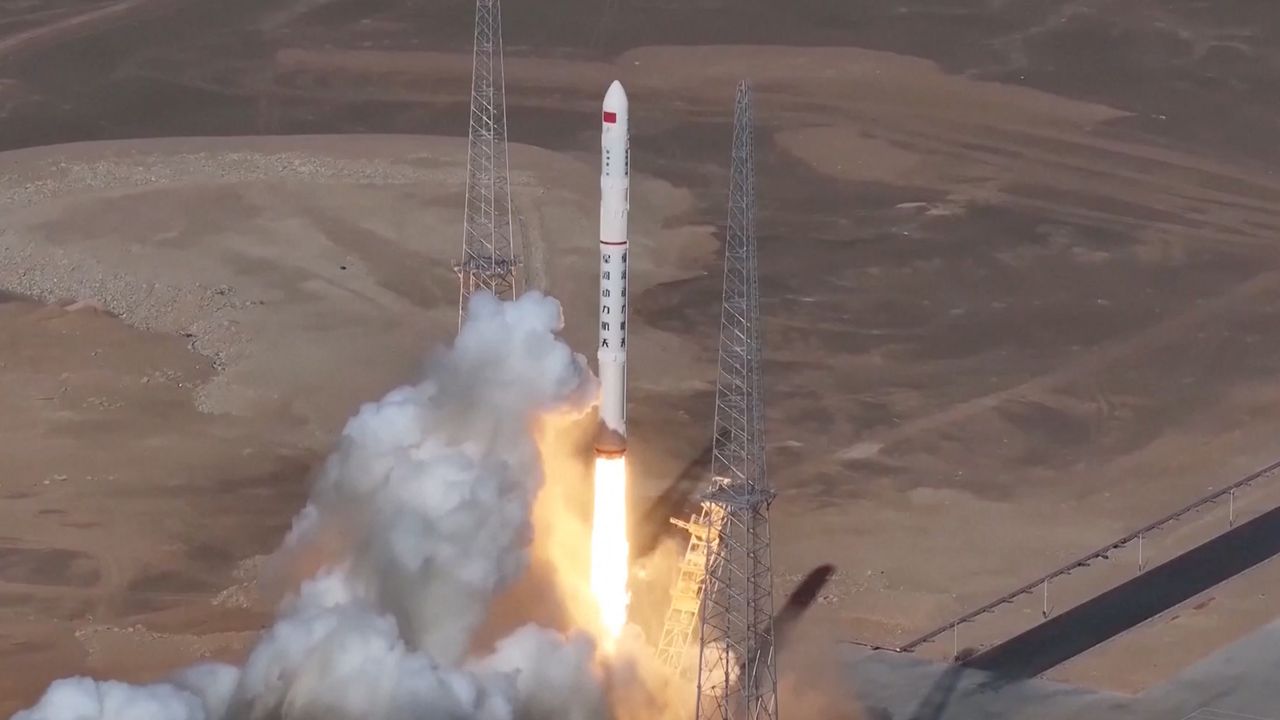
Another reusable Chinese rocket has taken to the skies.
Pallas-1, a launcher developed by the Beijing-based company Galactic Energy, flew for the first time ever on Monday (Aug. 31), lifting off from the Jiuquan Satellite Launch Center in northwest China at 10 p.m. EDT (0200 GMT and 10 a.m. Beijing time on Sept. 1).
Everything went well on the mission, according to Galactic Energy.
"The rocket successfully entered its predetermined orbit," the company said via social media on Monday about 30 minutes after liftoff (translation by Google). "This successful maiden flight marks Galactic Energy's official entry into a new development stage of combining solid and liquid propellants, driven by a dual-engine approach."
The company — which also operates Ceres-1, a small-satellite launcher with 23 flights under its belt to date — did not reveal what payloads, if any, Pallas-1 carried to orbit on Monday.
The two-stage Pallas-1 stands 171 feet (52 meters) tall and can haul about 15,400 pounds (7,000 kilograms) to low Earth orbit. It will be one of Galactic Energy's "core models for the large-scale satellite constellation deployment and launch market," the company wrote in Monday's update.
Reuse is key to that vision. Like SpaceX's workhorse Falcon 9, the Pallas-1 features a reusable first stage, which Galactic Energy says is designed to fly at 25 times. Also like the Falcon 9, the Pallas-1 booster will steer its way to Earth with the aid of hypersonic "grid fins" and touch down on deployable landing legs.
There was no landing attempt on Monday's debut flight, however. Galactic Energy is targeting the second half of 2027 for that milestone, according to Space News.
Pallas-1 won't be the first Chinese rocket to land during an orbital mission. Two have already done so — the Long March 10B, whose first stage settled into a net carried by a ship at sea on July 10, and Zhuque-3, which came down on landing legs on Aug. 18.