// HACKER NEWS — CYBERSECURITY
America's Two Largest School Districts Impose AI Moratoriums
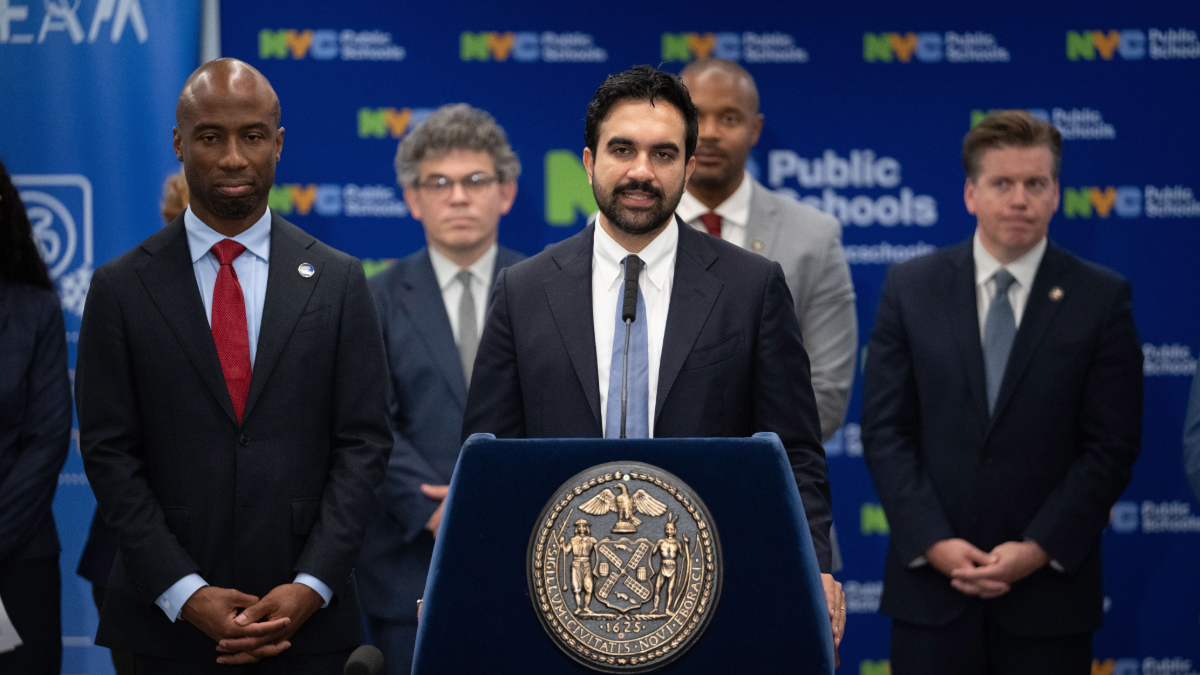
New York City Schools Chancellor Kamar Samuels and Mayor Zohran Mamdani hold a press conference at the Brooklyn STEAM Center on September 2, 2026 in New York. Photo by: NDZ/STAR MAX/IPx
When ChatGPT was released in the fall of 2022, the scale of the impact it could have on K-12 schools appeared obvious. Not only could the chatbot fulfill many class and homework assignments in response to simple prompts, but children and teens had the digital fluency to adopt the technology much faster than their teachers.
The New York City Department of Education was one of the first educational bodies in the United States to act on what many perceived as the threat OpenAI’s new product posed to schooling: in January 2023, it blocked access to ChatGPT on district devices and networks. The nation’s largest school district made the decision shortly after the second largest, Los Angeles Unified School District, banned the chatbot in December 2022.
Other districts across the country soon followed suit, including Seattle, Baltimore, and Oakland, California.
The bans didn’t last though — by May of 2023, then NYC Public Schools Chancellor David Banks was ready to “embrace” the potential of ChatGPT, and in August of that year LAUSD Superintendent Alberto Carvalho said his system was looking into a more permissive use policy.
Yet this week, ahead of the start of the 2026-27 school year, these two districts are once again charting out a more restrictive approach to artificial intelligence than the majority of their peers.
On Wednesday, NYC banned student-facing AI in all K-8th grade classes, while allowing a limited set of approved tools to be used for high schoolers, for the upcoming school year.
This new policy is significantly tighter than the guidelines the district had proposed in March, which instituted a stoplight system for judging AI risk that put almost all student use into the “yellow light” category, kicking use decisions to individual teachers. After intense backlash, the district pushed pause on that policy with Chancellor Kamar Samuels admitting the draft “missed the mark.” The district also paused software purchases over the summer.
Later that same day, LAUSD officials announced the district was placing a one-year moratorium on generative AI use on its devices for all of its estimated 378,000 students in a move that caught even school district officials by surprise.
The district had passed restrictions on screen time for students earlier in the summer, but did not previously issue specific rules on AI.