// ARS TECHNICA — FINANZA
Boston dumps Flock, says it shared data nationwide in violation of contract
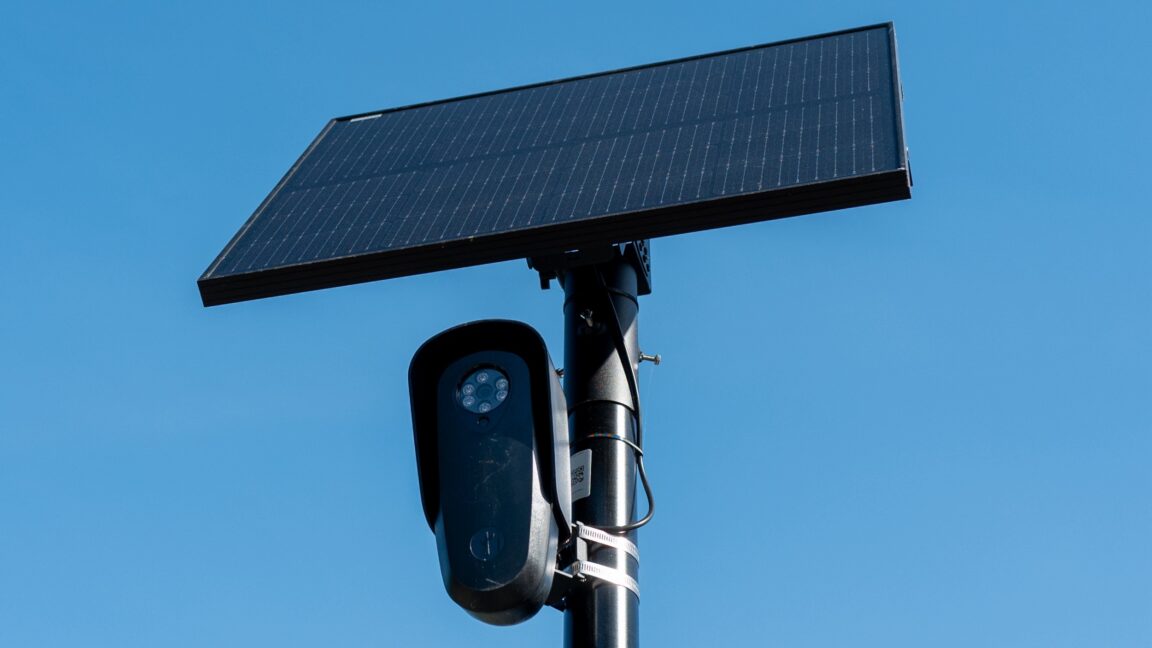
City: Flock enabled “nationwide lookup” despite contract requiring it to be disabled.
The Boston city government abandoned Flock Safety’s license-plate reader cameras after the company shared data nationwide in violation of a contract provision, according to city officials.
“We have actually abandoned Flock,” Boston Mayor Michelle Wu said in her monthly “Ask the Mayor” segment on GBH News last week. Wu made the comment a few days before the release of Boston’s annual surveillance technology report, which said a Flock “vendor error” resulted in nationwide data sharing.
The report, which covers 2025, describes how the Boston Police Department deployed about 45 Automated License Plate Reader (ALPR) cameras in a trial with Flock from April to September last year. The unauthorized data sharing occurred during the first few days of the pilot, the report said:
Pursuant to the contract, the Flock ALPR Pilot Program was designed to restrict access to the data collected by BPD ALPR cameras exclusively to trained BPD personnel. The contract clearly noted that data sharing was to be disabled, and BPD confirmed with Flock that settings were “off” for sharing. Within three days of initiating the Pilot, BPD became aware that other law enforcement agencies were able to access license plate and vehicle information collected from BPD ALPR cameras using a nationwide lookup feature that was enabled by the vendor in error. Upon learning of the vendor error, BPD ensured that the function was immediately disabled and access to the Department’s data was no longer available without submitting a written request to BPD as described above. No further direct access was available for the duration of the Pilot.
The report didn’t say how many law enforcement agencies accessed the data. The problem with Flock didn’t stop Boston from seeking another vendor of license-plate reader technology. The police department started another license-plate reader trial with Motorola in February 2026 and a third trial with Axon in June 2026.
Boston’s report comes amid a larger privacy debate over law enforcement access to license-plate camera data. An Electronic Frontier Foundation report yesterday described how the nationwide lookup tool lets police conduct searches with little or no justification.
“An EFF analysis of ALPR search logs from Flock Safety systems shows that officers across the country are spying on drivers for completely nonsensical ‘reasons,’” the EFF wrote. “Police are routinely searching the Flock database without providing any legitimate justification, making a mockery of our civil liberties by logging reasons like ‘LOL’ (short for ‘laugh out loud’), ‘LMAO’ (short for ‘laughing my ass off’), ‘sexy,’ and ‘idk’ (short for ‘I don’t know’) to access sensitive ALPR location data.”
The EFF wrote that “Flock Safety claims it has improved its system by requiring officers to select from a dropdown list of crimes before running a search,” but the new system in place since late 2025 “does not require proof that the dropdown reason actually matches the true purpose of the search.”
When asked if the city will keep using license-plate cameras as long as there are appropriate constraints, Wu replied, “Yes, we need a publicly approved and authorized policy to guarantee all of those protections, privacy, civil liberties, and if that’s in place, then we should deploy technology to be able to keep people safe and solve crimes faster.”