// NATURE NEWS — SPAZIO & SCIENZA
Map of brain ‘microproteins’ could offer new clues to Alzheimer’s disease
Search author on:
PubMed
Google Scholar
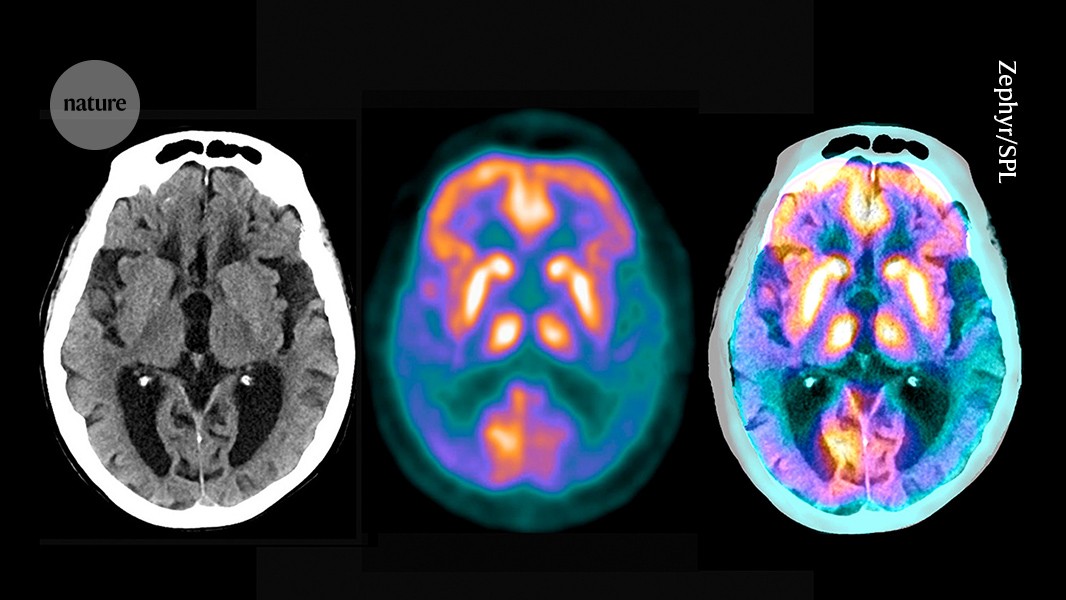
Mapping microproteins in the brain might help to understand, and treat, Alzheimer’s disease.Credit: Zephyr/SPL
More than 1,000 previously overlooked ‘microproteins’ have been found in samples of human brain tissue, providing researchers with the most comprehensive database yet to study these hidden molecules inside the human brain. Dozens of the tiny proteins showed altered expression in people with Alzheimer’s disease, which could pave the way to unlocking new mechanisms of ageing and neurodegeneration.
Microproteins are small proteins with fewer than 150 amino acids and are notoriously difficult to detect with standard gene and protein sequencing techniques. In a study published in Nature Aging on 14 September1, researchers combined several methods to pinpoint the tiny molecules in postmortem samples of the dorsolateral prefrontal cortex — a region of the brain involved in cognitive control — from people with and without Alzheimer’s disease.
The team identified more than 4,300 microproteins, creating the largest atlas of microproteins in Alzheimer’s disease made so far.
“We might be actually missing a whole layer of biology by overlooking these microproteins,” says Bahareh Ajami, a neuroimunologist at Cedars-Sinai Medical Center in Los Angeles, California.
“Alzheimer’s disease is a proteinopathy [wherein] the pathology is in part due to the proteins that have misfolded or accumulated and evoked a toxic response,” says study co-author Brendan Miller, a neuroscientist at the Salk Institute for Biological Studies in San Diego, California. “It should be somewhat urgent to understand the full proteome”, including microproteins, he adds.
Microproteins are sometimes referred to as “the dark matter of the genome”, says Miller. Because of their short length, the standard method to identify the protein content of cells, known as mass spectrometry, often fails to detect them.
Some microproteins are made by parts of the genome that were thought to be non-coding and unable to produce proteins. But others are made from coding genes that also produce large, known proteins, explains Miller. This has made it difficult to find microproteins using conventional RNA sequencing techniques.
‘Dark proteins’ hiding in our cells could hold clues to cancer and other diseases