// NASA BREAKING NEWS — SPAZIO & SCIENZA
NASA Seeks Industry Input to Accelerate Lunar Surface Technologies
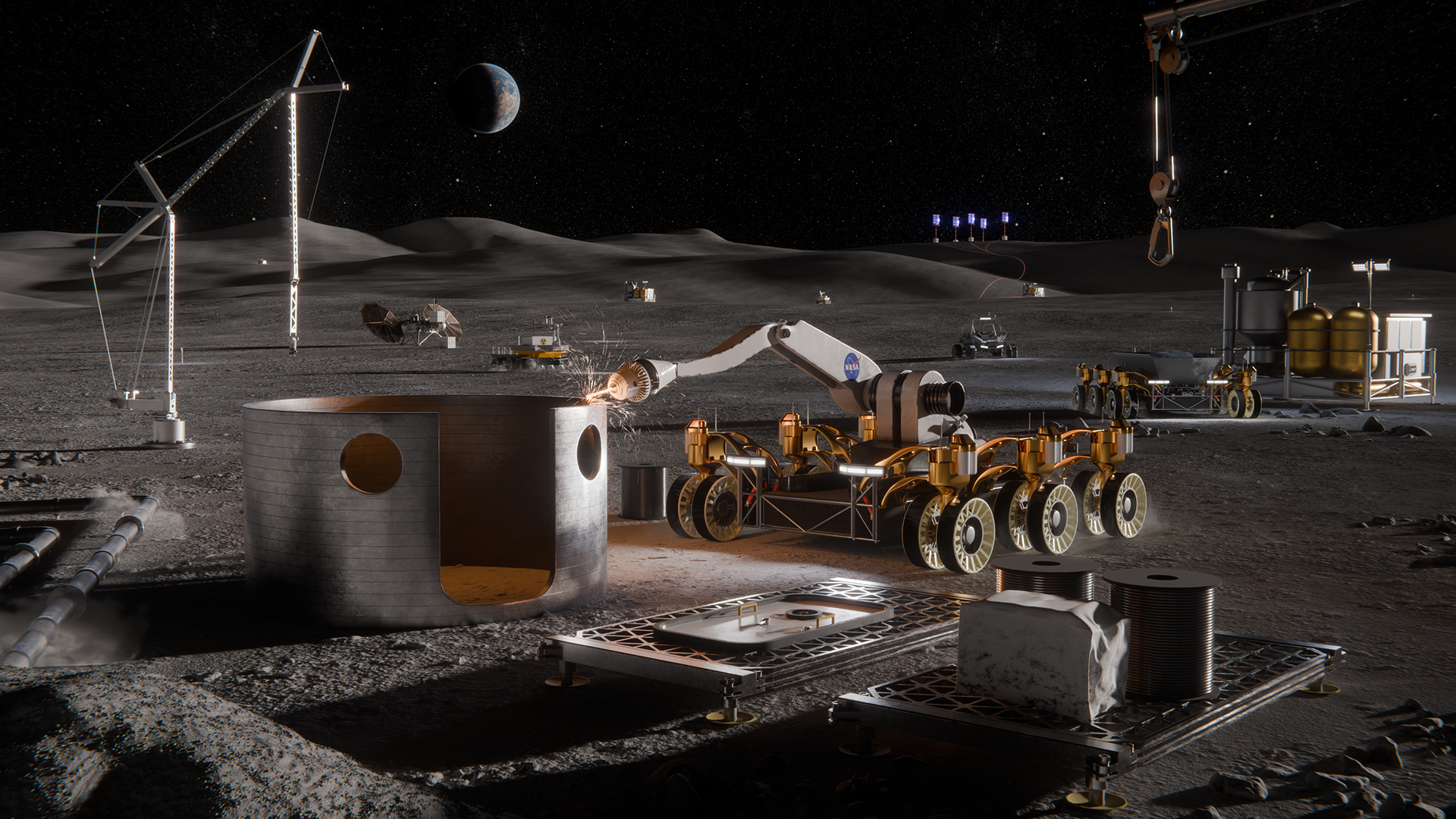
Long-term lunar exploration requires technology, infrastructure, and operations that function together cohesively on the surface of the Moon. To accelerate the development of key lunar surface systems and reduce risk, NASA and industry must work together in the design, development, testing, and evaluation of innovative solutions that support U.S. space priorities.
NASA is seeking feedback on a draft solicitation for the Lunar Enabling Infrastructure Accelerator, an effort to help develop emerging capabilities in surface power, in-situ resource utilization, advanced manufacturing, and innovative nanomaterials. The draft is available for review by U.S. organizations, including industry, educational institutions, and non-profits.
Director of the Advanced Research and Technology Division, Research and Technology Mission Directorate at NASA Headquarters in Washington
This review period allows NASA an opportunity to gather feedback on the draft solicitation, including the requirements, schedules, proposal instructions, and evaluation approaches. NASA strongly encourages industry to carefully review the draft and identify any areas of ambiguity, or concerns. Industry input will help inform the solicitation’s final requirements, acquisition planning, and solicitation parameters.
The Lunar Enabling Infrastructure Accelerator includes five topics that address gaps in technology needed for exploring the Moon and the cislunar region between Earth and the Moon as identified in NASA’s Civil Space Shortfalls. The topics focus on near-term mission priorities:
Surface power: Access to continuous, localized, and scalable power generation throughout the lunar day and night is essential for initial phases of the Moon Base plan. NASA’s needs include power generation, power management and distribution, and energy storage.
Radioisotope power: A type of nuclear energy technology that uses heat to produce electric power for operating spacecraft systems in the darkest, dustiest, and most remote places in our solar system.
In-situ resource utilization: As a sustained presence grows at the Moon, opportunities to harvest lunar resources could lead to safer, more efficient operations with less dependence on Earth. Advancing in-situ resource utilization technologies could support production of fuel, water, and oxygen from local materials, expanding exploration capabilities.
In-space advanced manufacturing: Long-term human presence beyond Earth orbit requires autonomous in-space production of essential tools and materials. Advancing in-space manufacturing will be critical to reducing reliance on Earth resupply, as well as optimizing mission flexibility and resilience at the Moon, Mars, and elsewhere in deep space.
Innovative nanomaterials: U.S. objectives related to the commercialization of low Earth orbit, building a sustained presence on the lunar surface, and pursuing deeper space exploration will involve work in demanding operational environments and under stringent mission constraints. To meet the agency’s most ambitious space exploration goals, this topic seeks to advance the commercial availability, performance, quality, and uniformity of nanomaterials to address environmental, mass, and performance challenges.