// ITS FOSS — LINUX & OPEN SOURCE
Garuda Linux Begins Nixification By Promoting Its Sybsystem
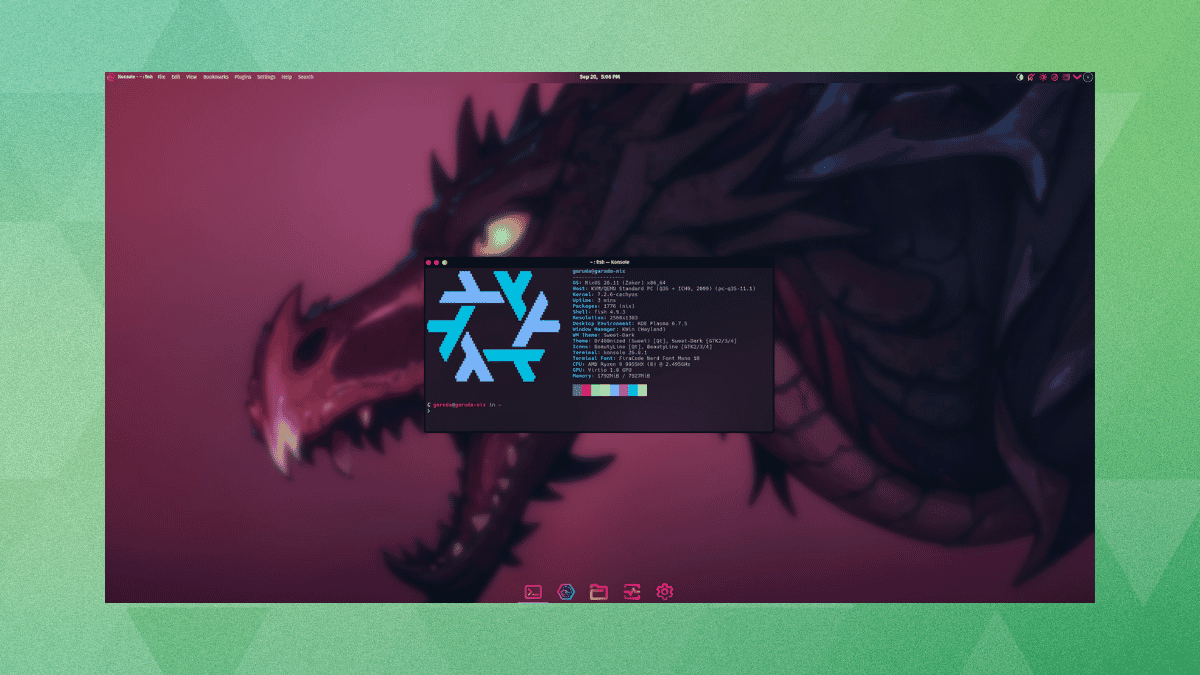
Garuda Linux has started nudging its userbase toward Nix. The distro's maintainers have just renamed the Garuda Nix Subsystem to Garuda Nix, and you will find that the move is more nuanced than something purely cosmetic.
What used to be a side project for dual-booting NixOS is now also its own bootable installer. The flake ships a dedicated ISO with a Calamares GUI, alongside a command-line install-garuda-nix tool for scripted setups.
This isn't something new. As a subsystem, it has offered a way to run NixOS alongside Garuda on the same drive, keeping both separate through a BTRFS subvolume rather than a dedicated partition.
Garuda Nix 'Mokka' and 'Dr460nized' flavors (Source: dr460nf1r3).
Suggested Read 📖: Get started using NixOS with us.
If you set out to install this, you will find that Calamares handles most of it, asking you to select an edition, Dr460nized or Mokka, and letting you opt for extras to gain better gaming and printing support along the way.
The CLI tool is where it gets interesting; it covers the basics of installing a Linux distro such as this one, while also providing presets for desktop, laptop, server, and handheld setups, plus eight partition layouts spanning ext4 and BTRFS, encrypted and unencrypted alike.
Impermanence, though, is the real draw. Switch it on, and the root filesystem gets wiped clean each time the machine restarts, either through a BTRFS rollback to a saved snapshot or by running root out of tmpfs on ext4 systems.
Don't worry, those wipes don't touch login credentials. Both the user and root passwords go through yescrypt hashing before landing in the generated config, which is what lets them persist across a rollback.
Garuda Nix also keeps a handful of essentials persistent by default, so things like your Wi-Fi credentials and per-user config folders stay safe. Anything outside that short list needs to be declared manually, or Impermanence deletes it along with everything else on the next restart.