// ARS TECHNICA — INTELLIGENZA ARTIFICIALE
South Korea to spend $1T on more memory chip production and humanoid robots
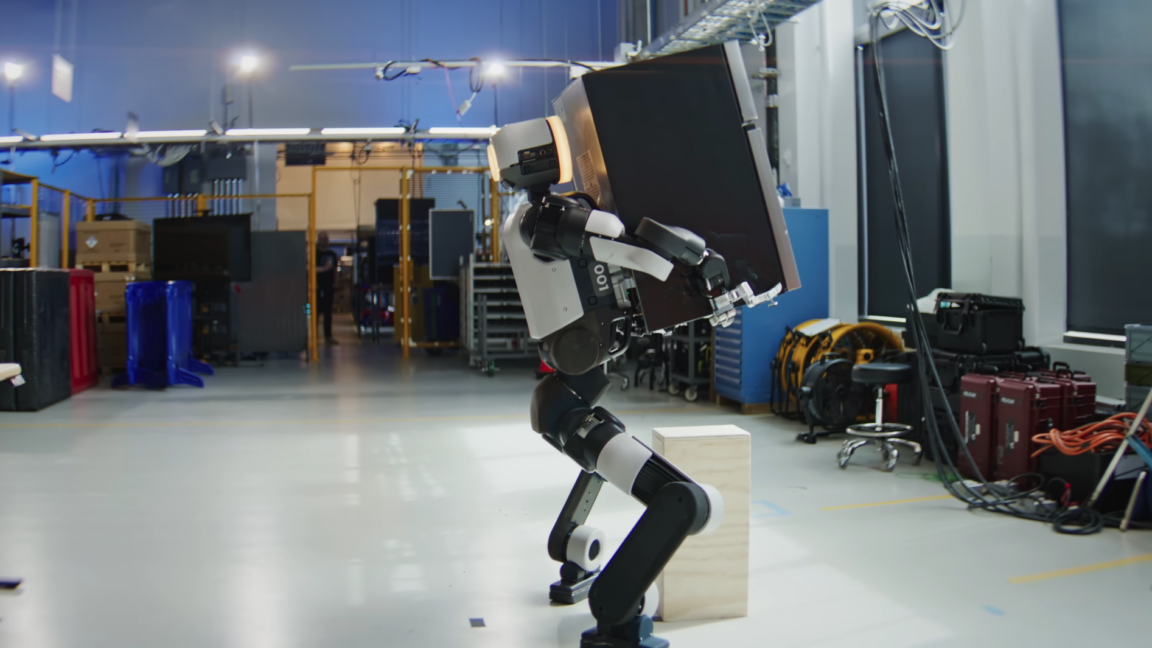
South Korea targets physical AI lead and commercial humanoid robots by 2028.
South Korea’s government and top tech companies are committing $1 trillion to several flagship megaprojects that could bolster global memory chip supply, build new AI data centers and spur commercial deployment of humanoid robots by 2028.
The announcement comes as South Korean companies such as Samsung and SK Hynix have enjoyed record profits and stock valuations due to the AI industry’s demand for memory chips—with the subsequent supply strain leading to memory chip shortages and higher prices for consumer electronics. Meanwhile, Hyundai Motor Company is racing to mass manufacture humanoid robots developed by its subsidiary, Boston Dynamics, so that the robotic workers can start taking over certain laborious tasks in automotive factories and other workplaces.
“We must secure the core elements of AI faster than any other country,” said South Korean President Lee Jae Myung in a televised speech on June 29, as reported by BBC News and other media outlets. “Semiconductors, physical AI, and AI data centers are the triple axis for a great leap forward.”
But the initiatives also coincide with public debates about South Korean chipmakers’ huge profits during the AI boom and even policymaker proposals to distribute the excess wealth, along with South Korean labor unions pushing back against the prospect of humanoid robots entering the workforce.
The most costly of the megaprojects involves Samsung and SK Hynix committing $585 billion to building new chip fabrication plants in the southwest provinces of South Korea, along with boosting semiconductor fab construction in the Seoul capital region, according to Reuters. The government’s goal is to double South Korea’s production of dynamic random-access memory (DRAM) within five years.
However, the new fabs in South Korea’s southwestern region may need more time to get up and running, with SK Hynix Chairman Chey Tae-won commenting that it took nine years for the company to build a cluster of chip manufacturing facilities in Yongjin within the Seoul metropolitan area.
So it’s unclear how soon global consumers can expect relief from sky-high memory chip prices and elevated prices for Apple’s Macs and Valve’s Steam Machine—especially if the AI boom continues and tech companies continue to buy up memory for AI data centers.
The second flagship megaproject involves a $357 billion investment by the South Korean tech companies SK Group, GS Group, and Naver into building large-scale AI data centers in more outlying provinces, including South Chungcheong Province in the west, Gangwon Province in the east, and the North and South Jeolla Provinces in the southwest corner of South Korea.
However, the new semiconductor chip fabs and the AI data centers require substantial electricity and water to operate. South Korea’s Ministry of Climate, Energy and Environment said it was working to secure 6.3 gigawatts of electricity and 650,000 tons of water for the southwestern chip plants, along with an additional 8 gigawatts of power to support the new AI data centers, according to The Korea Times.