// NATURE NEWS — SPAZIO & SCIENZA
The human skeleton’s unique adaptations relied on gene regulatory changes
Audrey M. Arner is in the Department of Biological Sciences, Vanderbilt University, Nashville, Tennessee 37232, USA.
Search author on:
PubMed
Google Scholar
Amanda J. Lea is in the Department of Biological Sciences, Vanderbilt University, Nashville, Tennessee 37232, USA.
Search author on:
PubMed
Google Scholar
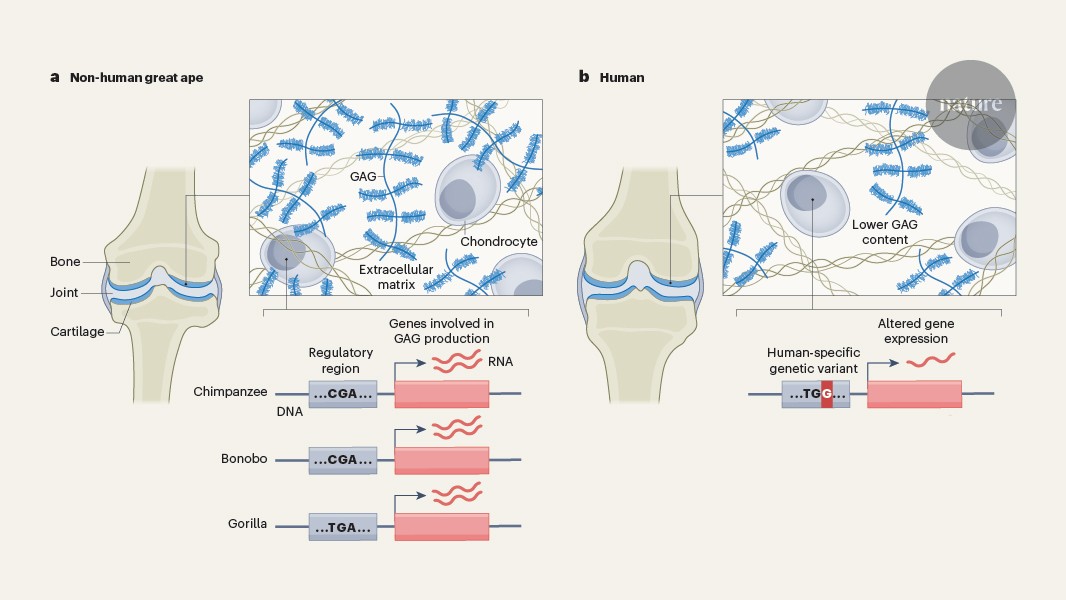
Across biological and biomedical disciplines, there is a strong interest in understanding the evolution and function of traits that differ in humans and our closest primate relatives, such as chimpanzees, bonobos and gorillas. Writing in Nature, Yan et al.1 use a comprehensive suite of genomics tools to systematically map genetic variants, genes and pathways that are involved in differentiating the human skeleton from those of other great apes.
Access Nature and 54 other Nature Portfolio journals
Get Nature+, our best-value online-access subscription
Prices may be subject to local taxes which are calculated during checkout
Yan, Y. et al. Nature https://doi.org/10.1038/s41586-026-11053-x (2026).
Article
PubMed
Google Scholar