// PC GAMER — GAMING
Tonda Ros, creator of Blue Prince, has played UFO 50 for almost 700 hours: 'I think it's easily my favourite game of the last 20 years'
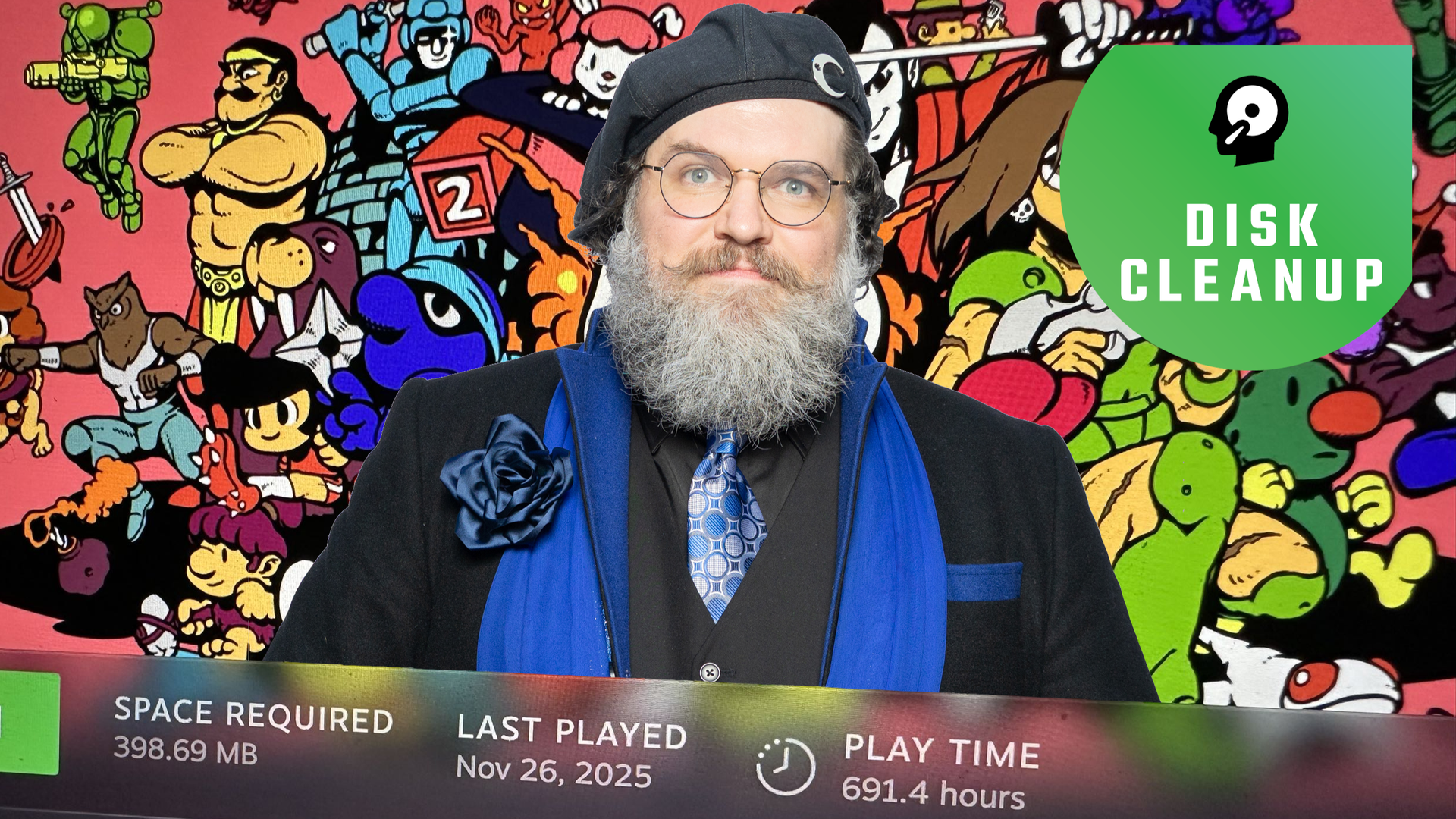
The designer of 2025's celebrated puzzler guides us through the games on his PC.
When you purchase through links on our site, we may earn an affiliate commission. Here’s how it works.
Welcome to Disk Cleanup, our regular weekend feature delving into the PCs of PC gaming luminaries. Come back every weekend to read a new interview, digging into the important questions, like "How tidy is your desktop?" and "What game will you never uninstall?"
Tonda Ros was first drawn to PC gaming at seven years old, after playing the action-adventure classic, Beast. "It's kind of like an open, nonlinear Sokoban that's action-based and not puzzle-based," says Ros, the creator of 2025's Blue Prince. "I think it was the next year where we had a 386 PC in the house, and that's when the floodgates opened … when I played Tank Wars and the original SimCity and Star Control."
Establishing a career as a cinematographer and visual artist, in 2016, Ros began working on Blue Prince. Inspired by games like Myst, board games like Jewels in the Attic and puzzle books like Maze: Solve the World's Most Challenging Puzzle, Blue Prince was painstakingly created across the best part of a decade. When it released last year, it quickly established itself as a modern puzzling classic.
After taking a break following Blue Prince's launch, Ros is currently working on tech support for the puzzler, while also experimenting with new projects. "I think the next game will have to be a smaller game, logistically," he says. But he stepped out of his game development lab to show me around the ever-shifting parlour of his Steam library.
I'm currently playing Cairn, by The Game Bakers, which is just a gorgeous rock-climbing simulator/adventure game with some survival elements. What's remarkable about the game is how much it feels like rock climbing, and how simple and intuitive the controls are.
I didn't even have to do a tutorial to understand, because that's just how simple and intuitive the controls are—where you control each limb in sequential order. It's just one of the most well-executed control schemes that I've ever seen. And it's not a control scheme that I had seen before.
I think what's really interesting to me is how similar the controls are, conceptually, to last year's Baby Steps, because these are both games where you're controlling individual limbs [and] climb up a mountainous terrain. But one is incredibly intuitive and smooth and frictionless—in the way the controls are executed at least. And then of course Baby Steps goes to the opposite side of the metric.
I love both games, and I think it's cool to see such similar design work conceptually, but with just slight tweaks in the game feel, they're completely different and unique experiences.