// NATURE NEWS — SPAZIO & SCIENZA
The top cancer success stories of the past 50 years, by the numbers
Heidi Ledford reports for Nature from Seattle, Washington.
Search author on:
PubMed
Google Scholar
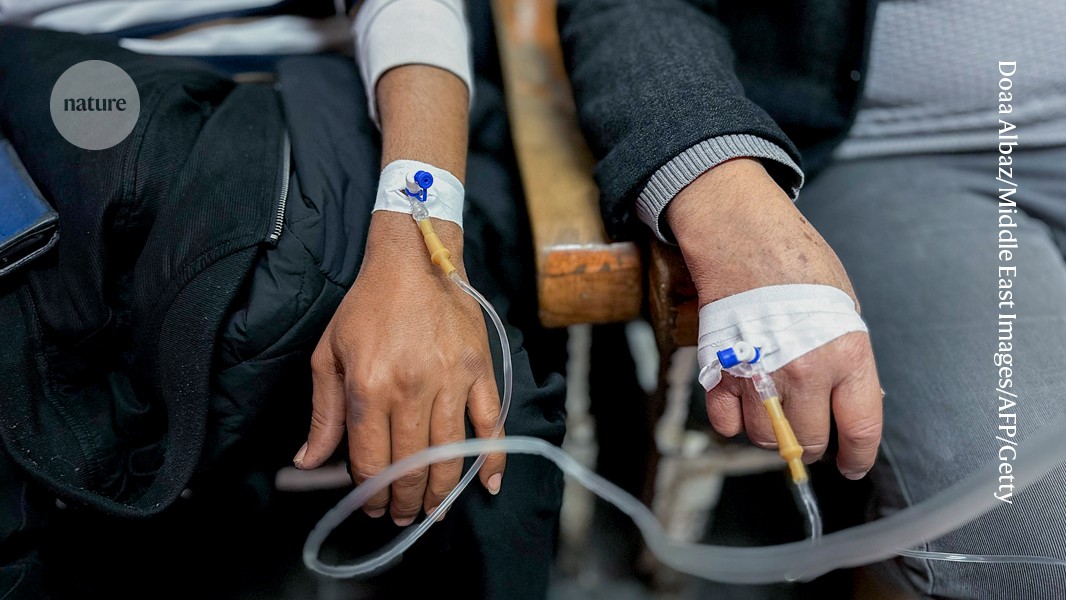
Improvements in cancer treatment in the past half-century have made many forms of the condition less deadly.Credit: Doaa Albaz/Middle East Images/AFP/Getty
An analysis showcases the past half-century’s biggest cancer success stories — but also highlights the recalcitrant malignancies that continue to vex researchers.
The report, released last month by the American Association for Cancer Research1 in Philadelphia, Pennsylvania, finds that 71% of people with cancer in the United States will live for at least five years after diagnosis, up from 49% in the late 1970s (see ‘Uneven progress’).
Among the success stories, gains in lung cancer survival rates are particularly striking, says Rebecca Siegel, a cancer epidemiologist at the American Cancer Society in Atlanta, Georgia. Lung cancer is one of the world’s biggest causes of death, and on average, only 13% of people diagnosed with lung cancer between 1975 and 1979 lived for another five years. Between 2016 and 2022, that number reached 29%. “It’s still really low, but it’s such an improvement,” says Siegel.
That jump in survival rates comes from improvements in surgical techniques and radiation treatments, as well as new medicines that either unleash the immune system against tumours or target cancer cells bearing specific mutations. “It’s very heartwarming,” says Michel Coleman, an epidemiologist at the London School of Hygiene and Tropical Medicine. Coleman says global statistics broadly exhibit this same trend towards greater survival.
Meanwhile, progress in treating childhood leukaemias is widely considered to be among the greatest achievements in cancer research. For children and adolescents up to 19 years old, the 5-year survival rate for lymphoid leukaemia has risen from 57% to 90%. That boost came not from the discovery of a transformative therapy, but from the careful, collaborative tweaking of dosages and timings for treatments that were already available, says Siegel.
Other highlights include liver cancer, for which five-year survival has tripled to 22% since the mid-1990s2, says Siegel. Survival rates for people with multiple myeloma, a type of blood cancer, have also increased drastically, in part owing to the development of drugs that harness the immune system.
American Association for Cancer Research. AACR Cancer Progress Report 2026 (AACR, 2026). Available at https://go.nature.com/4rjxsyd