// SPACE.COM — SPAZIO & SCIENZA
Relive Starship's 1st-ever orbital flight with these epic SpaceX videos
The great views of Starship's first orbital flight keep on coming.
When you purchase through links on our site, we may earn an affiliate commission. Here’s how it works.
The great views of Starship's first orbital flight keep on coming.
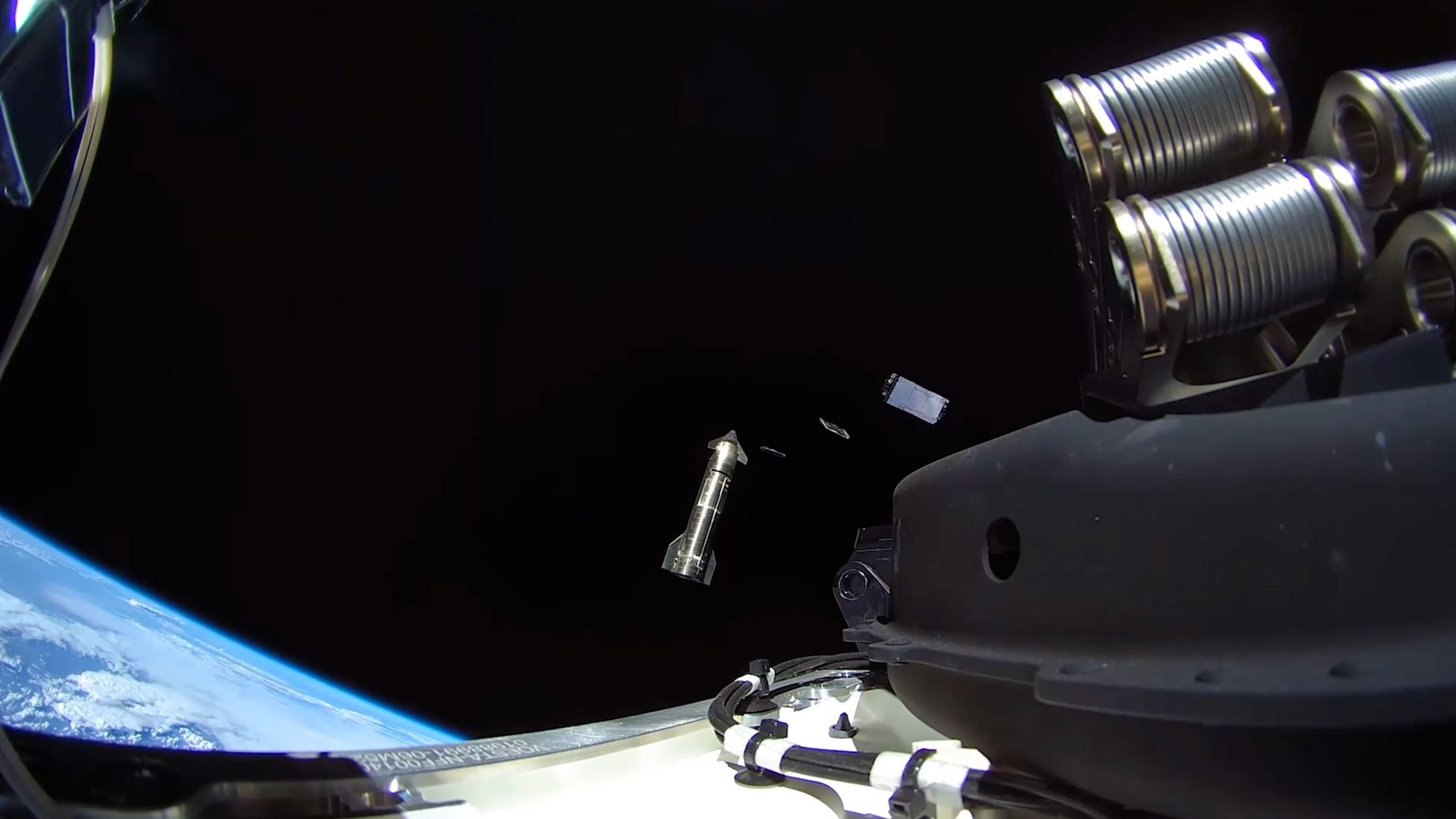
The megarocket circled our planet for the first time ever on Sept. 28, its 14th liftoff to date. And Starship deployed some payloads when it got up there — 26 of the company's next-gen Starlink satellites, the first members of a broadband constellation that will eventually consist of 100,000 spacecraft, if all goes to plan.
SpaceX already released still imagery of that historic deployment, which was captured by cameras on a few of the Starlink satellites. But on Tuesday, the company gave us something even better, releasing gorgeous video of Starlink craft popping out of the Starship upper stage's "Pez dispenser" slot.
"Constant communication is what makes autonomy like this safe," representatives of Starlink, which is a SpaceX subsidiary, said in a Tuesday X post that featured the deployment video.
"Early contact lets us take maneuvering responsibility, publish ephemeris faster than ground radar can catalog the object, and deorbit and keep commanding through demise if needed," they added. "We treat early communications as a requirement, not a nice-to-have."
A few days earlier, on Oct. 2, SpaceX posted three short videos of another important Flight 14 milestone — stage separation, when the megarocket's 171-foot-tall (52 meters) Ship spacecraft began flying independently of its Super Heavy booster.
The footage captured the farewell from both perspectives. One video showed Super Heavy falling back toward Earth, while the other two revealed Ship powering its way toward orbit, its six Raptor engines glowing yellow-orange with the effort.
Super Heavy came down relatively quickly, steering itself to a splashdown in the Gulf of Mexico about seven minutes after liftoff. Ship stayed up for another three hours, circling Earth multiple times (and deploying those Starlink satellites) before meeting its own watery end in the northern Pacific Ocean.