// 9TO5GOOGLE — MOBILE & WEB
Hey Google, where is the next Nest Hub?
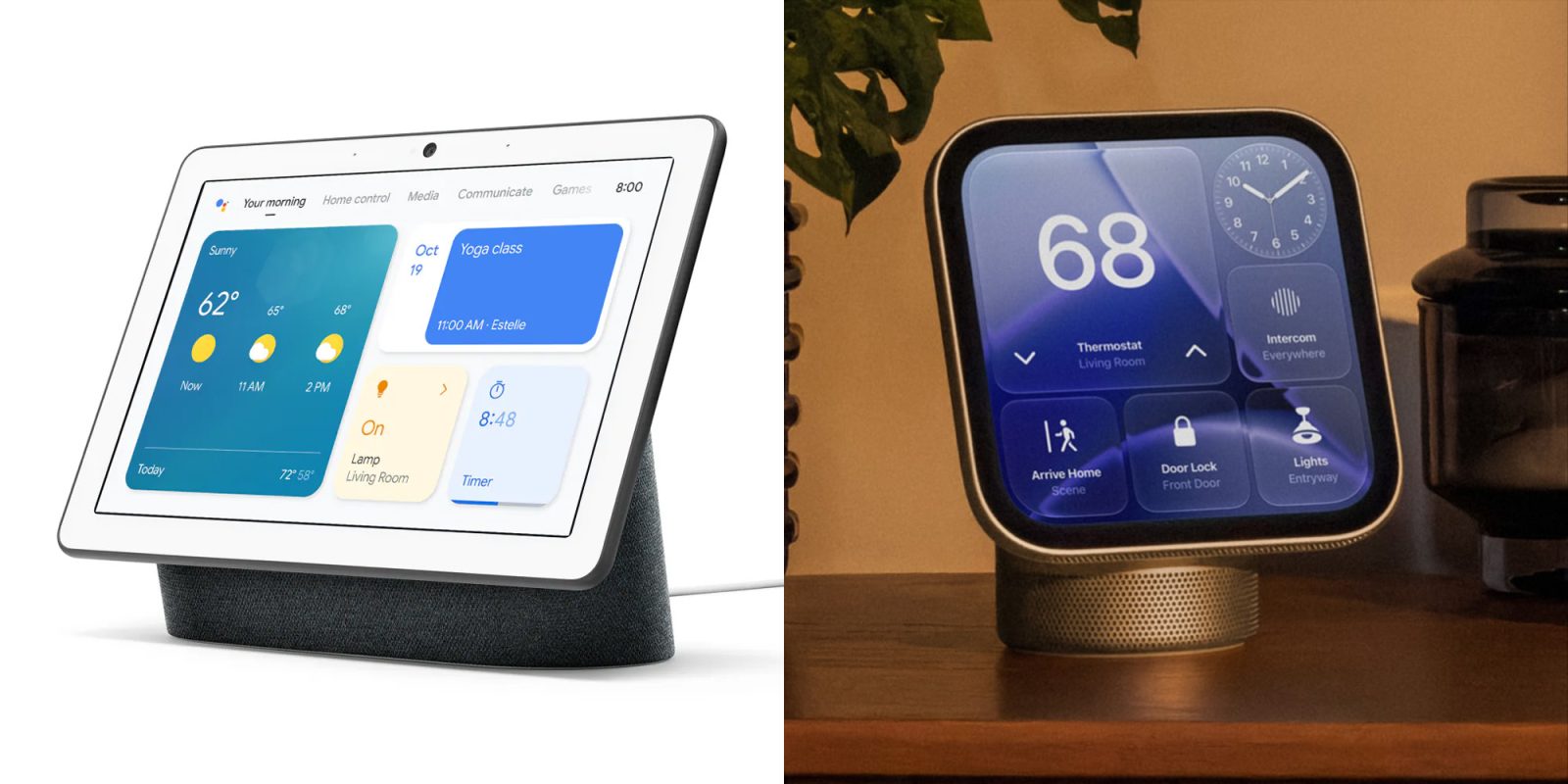
Apple’s long-rumored smart home display is finally here and it begs the question – why hasn’t Google released a new Nest Hub in half a decade?
Following the explosive popularity of smart speakers, 2018’s Google Home Hub helped usher in a new step forward with smart displays, combining the always-listening hotwords with additional functionality in visual responses, video streaming, live camera feeds, and more. It was a pretty immediate hit that was eventually rebranded as the “Nest Hub” and later spawned two sequels: the larger Nest Hub Max and the second-gen Nest Hub.
Half a decade later, Google’s smart display efforts have been completely silent. Outside of bringing Gemini for Home to smart displays in the exact same capacity as smart speakers, virtually nothing has changed on a Nest Hub in the past few years. Just look at our coverage over the past couple of years – no new features, no groundbreaking changes of really any kind. Google impressively replaced the underlying operating system without anyone really noticing, but functionally, it’s just status quo.
That’s not to say status quo isn’t still good. The Nest Hub experience still checks a lot of boxes. Visual responses to voice commands is at the center, with easy controls for your smart home and doorbell previews also being core to it all. Top that off with casting of video apps (great for the kitchen), setting timers, and the Nest Hub Max’s ability to double as a Nest Cam, and it all gets the job done. There’s a reason that myself and millions of other Nest Hub buyers still use these devices.
But did Google really hit a wall so hard that not only nothing has changed on the software side, but hardware has just been completely stagnant? Maybe, but it’s hard to believe if so, especially as Amazon has been plugging away with new form factors and ideas for its Echo Show series for years now – the bigger Echo Show 15 with Fire TV is a great example; I’d love a tiny Google TV for parts of my home that can’t justify a “real” TV.
Fast forward to today, and now we’ve got Apple’s entry to the market. “Homeview” is a little 7-inch display on an iMac-like pedestal that also mounts itself to the wall. At its core, there’s not a ton here beyond what you get on a Nest Hub. Visual responses to voice commands are the central functionality, with Apple also picking up Nest Hub Max’s ability to recognize individual users and adjust the software accordingly. Where Apple builds on it is with faster software – Nest Hub, even at launch, has always been a laggy mess – and a reboot of its smart home efforts with other new hardware in tow. It’s really just a ton of Apple’s usual polish to integrations and apps, just in the form factor of a Nest Hub.
But again, it begs the question; where is Google in all of this?
Google hasn’t ignored the smart home space over the past few years, with its own smart home reboot coming in 2021’s Nest Cam revival and further releases since, as well as a complete reinvention of the Home app to better serve as a hub for not just Google’s ecosystem, but a deep catalog of compatible smart home devices. And there’s been a lot of good on that front, with the more recent effort to use Gemini helping to clean up what was a crumbling experience in Assistant. It’s still not perfect, but Google’s ecosystem has all of the right parts to back up a smart display.
The last time Google acknowledged smart displays was around when the Google Home Speaker was announced. Roughly a year ago this week, in fact. At the time, Google Home chief Anish Kattukaran called the smart display the “ultimate form factor” for the smart home. And yet, it’s now Apple that’s delivering on that promise before Google.
Google seems to have something in the works, with “Google Home Display” showing up in code earlier this year, but nothing has come of it yet. 9to5Google readers pitched their ideas for the product, including keeping the Pixel Tablet’s detachable display and generally improving the p