// SPACE.COM — SPAZIO & SCIENZA
NASA's ambitious Artemis 3 mission includes 3 giant rocket launches, 2 private moon landers and 1 big question: Can it all work together?
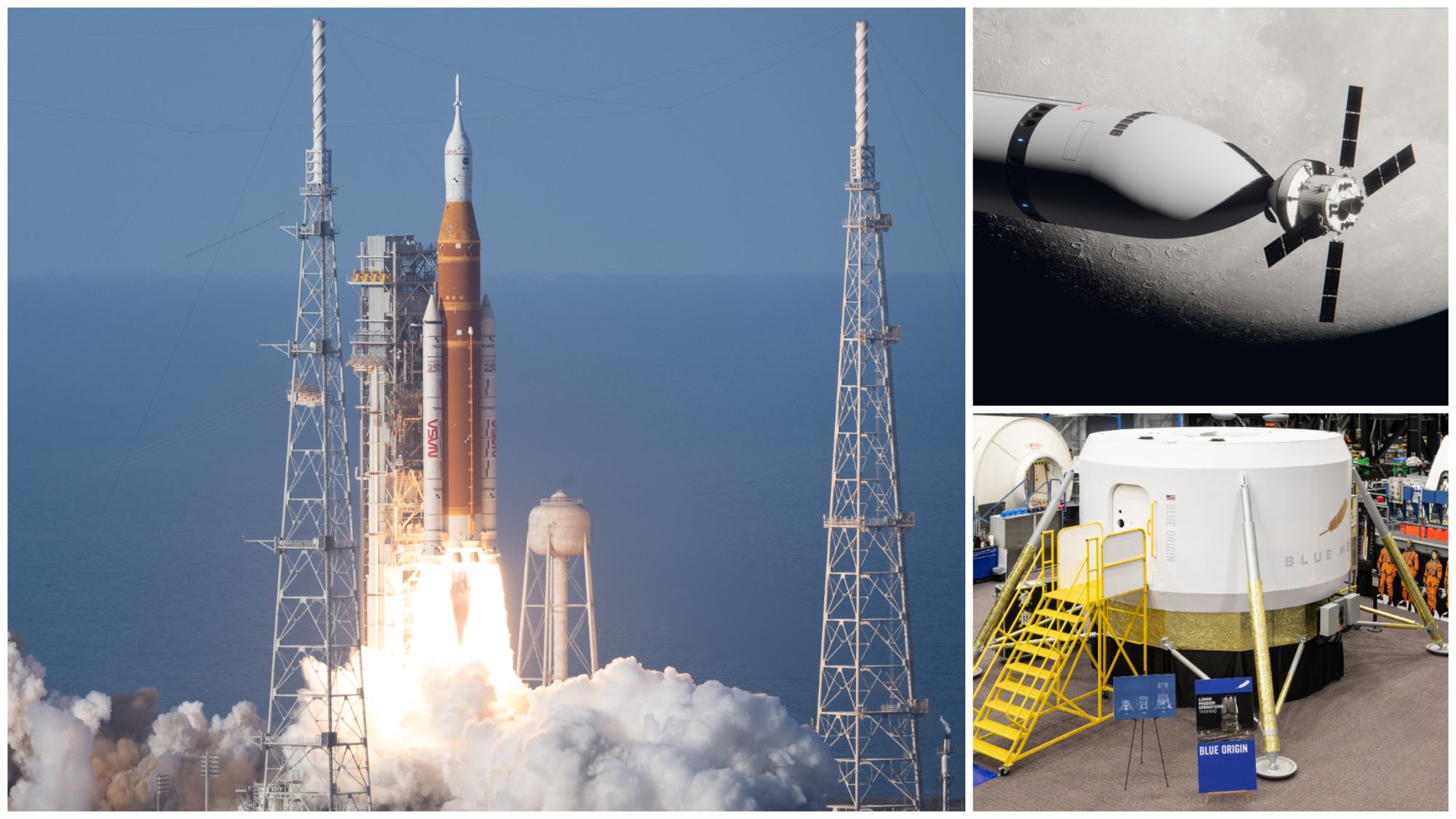
It will be one of NASA's most complex missions ever.
When you purchase through links on our site, we may earn an affiliate commission. Here’s how it works.
HOUSTON — When you get down to brass tacks, NASA's Artemis 3 mission in 2027 looks to be one of agency's most complicated missions ever — one that relies on not one but three giant rockets and a pair of private moon lander prototypes that haven't even been built yet.
If NASA's schedule holds, four Artemis 3 astronauts will launch aboard an Orion spacecraft sometime in the second half of next year. Once in Earth orbit, they'll test Orion's capability to fly and function with two Artemis moon lander designs. NASA introduced that crew on Tuesday (June 9) during a ceremony here at the Johnson Space Center that also included new details on how the Artemis 3 mission will work.
"Artemis 3 is an incredibly exciting, complicated, and highly coordinated multi-launch campaign," NASA Artemis program manager Jeremy Parsons said Tuesday. "It's going to happen in a short period of time with three of the world's most powerful rockets."
Artemis 3 will be commanded by NASA astronaut Randy Bresnik, with the European Space Agency's Luca Parmitano as pilot. Mission specialists Frank Rubio and Andre Douglas, both of NASA, round out the crew. They will fly Orion's longest crewed flight yet, and move NASA's Artemis program one step closer to returning astronauts to the surface of the moon by 2028.
Here's what we knew before Tuesday's mission update:
NASA planned to launch Orion to orbit to rendezvous and dock with at least one of the commercial lunar lander vehicles contracted for Artemis. SpaceX's Starship, and Blue Origin's Blue Moon lander have each faced development delays, with explosive accidents for both companies occurring within the last year. The agency had previously suggested Orion would fly with whichever lander was ready when the time came to launch the mission, even if that meant leaving one behind.
Now, NASA administrator Jared Isaacman says both landers will fly with Orion on Artemis 3.
"Additional powerful rockets will launch to place the Blue Origin and SpaceX Starship landers into orbit throughout the duration of the Artemis 3 mission," he said during Tuesday's ceremony. Isaacman said NAS will coordinate Artemis 3 with launches of SpaceX's massive Starship rocket and Blue Origin's New Glenn rocket that will launch their respective landers after NASA's Space Launch System (SLS) launches Orion.