// SPACE.COM — SPAZIO & SCIENZA
Annular solar eclipse 2027: everything you need to know about the 'ring of fire' on Feb. 6
Here's where and when to see the 'ring of fire' annular solar eclipse on Feb. 6, 2027
When you purchase through links on our site, we may earn an affiliate commission. Here’s how it works.
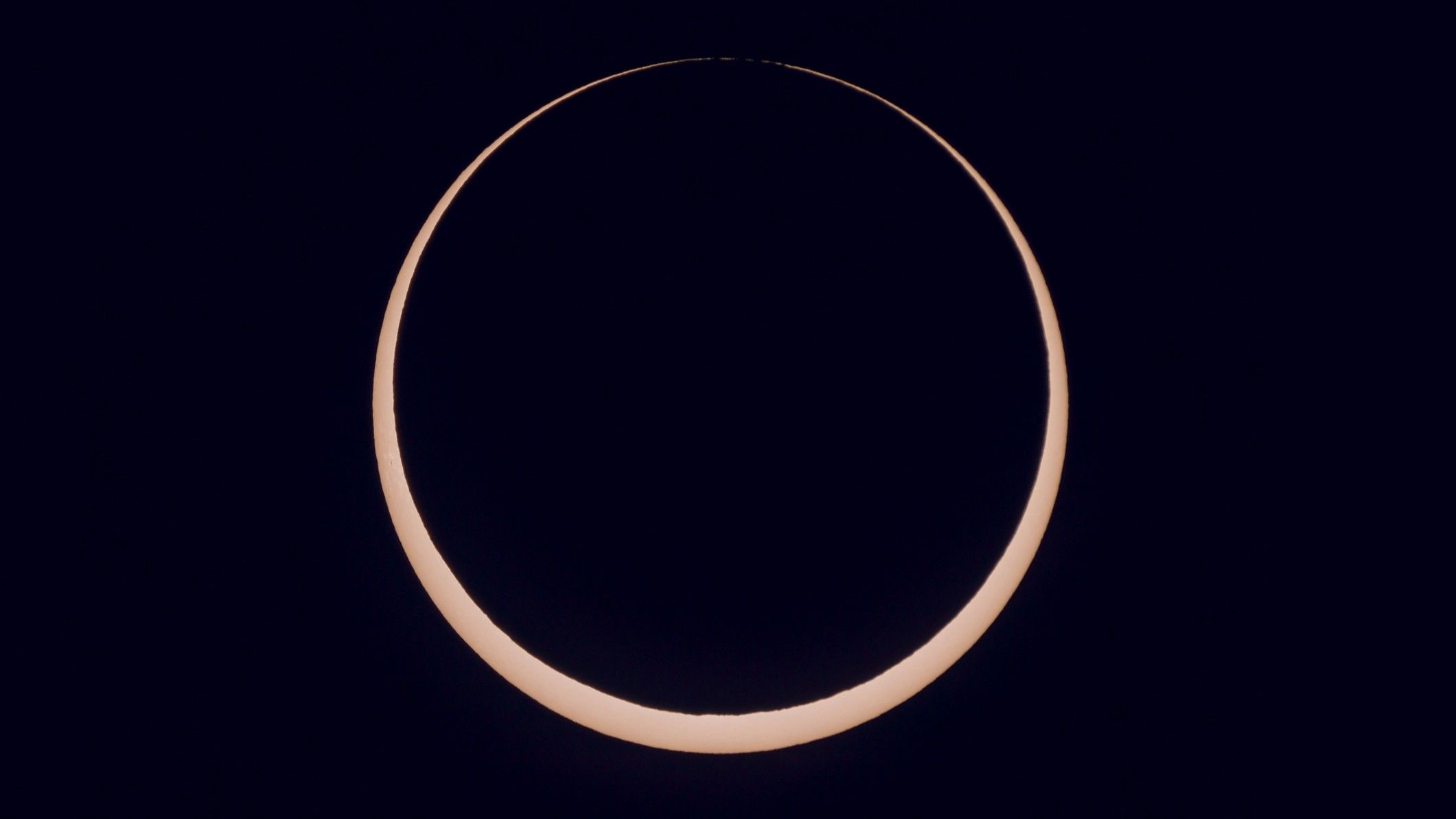
An annular solar eclipse will occur on Feb. 6, 2027, when the moon's cone-shaped central shadow will not quite reach Earth. The result will be a 'ring of fire' visible to those within a broad path across southern Chile, Argentina and coastal parts of West Africa.
At the point of greatest eclipse in the Pacific, the moon will cover 93% of the sun's disk, leaving a relatively large bright ring visible for 7 minutes and 51 seconds. That makes it one of the longest annular solar eclipses this decade.
During an annular solar eclipse, it is NEVER safe to look directly at the sun without solar eclipse glasses designed for solar viewing. Read our guide on how to observe the sun safely.
This annular solar eclipse has a long and broad path, rising southwest of Easter Island (Rapa Nui) in the south Pacific Ocean and setting in the Gulf of Guinea, West Africa.
That journey is 9,011 miles (14,501 kilometers), with the path between 180-220 miles (289-355 km) wide. The path of annularity crosses southern parts of Chile, Argentina, Uruguay and (a tiny sliver of) Brazil in South America. After crossing the Atlantic, the northern edge of the path just makes land in the Côte d'Ivoire, Ghana, Togo, Benin and Nigeria.
Eclipse chasers wanting to observe annularity high in the sky while on land should head to Chile or Argentina, with the latter having a better chance of a clear sky. The path crosses northern Patagonia, a region of wide skies, low population, and — crucially in February — a generally favorable climate.
As it reaches Chile's Pacific coast, the "ring of fire" will sit around 50° above the northeast, but this region of mountains and fjords is both logistically challenging and likely cloudy. Average February cloud cover along the centerline in Chile is typically around 65%, while just across the mountains in a classic rain-shadow zone in Argentina's Patagonian plains, cloud cover drops to as low as 30%, according to meteorologist Jay Anderson on Eclipsophile.com.
Standout locations in the rain-shadow include El Maitén (which is being favored by eclipse tour groups), Esquel and Trevelin, where annularity occurs just before midday. There's a similarly small chance of cloud on Argentina's Atlantic coast, with potential observing locations including Las Grutas on the San Matias Gulf and, south of Buenos Aires, the lush Laguna La Brava.