// TOM'S HARDWARE US — HARDWARE & GADGET
Intel shifts production capacity from consumer to server CPUs in face of 'unprecedented' AI demand
Client platforms struggle to get memory anyway, right?
When you purchase through links on our site, we may earn an affiliate commission. Here’s how it works.
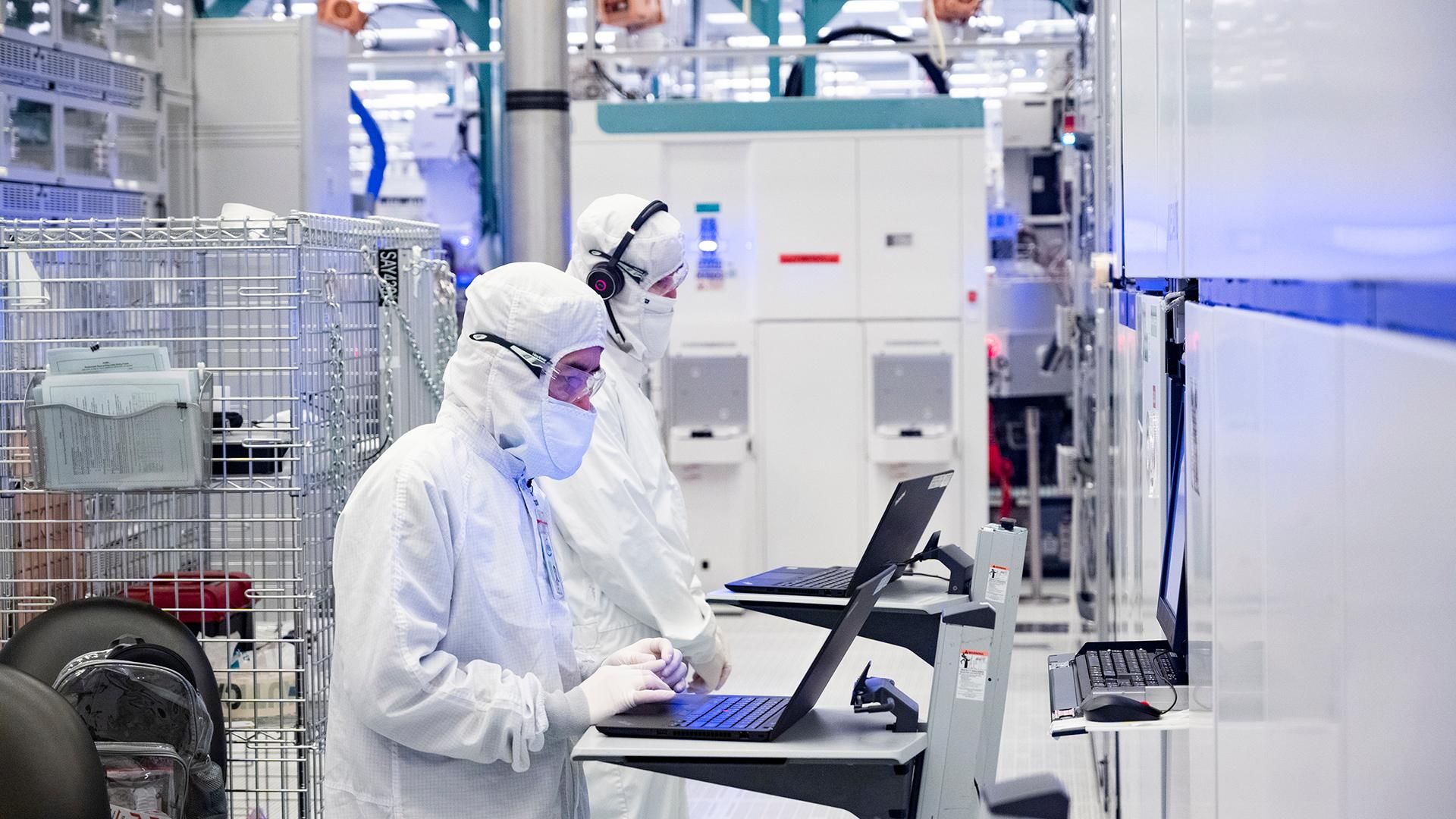
Although the consumer PC market is shrinking and will continue to shrink in the coming quarters, Intel is confident that the overwhelming demand from the AI industry for everything that can compute or store data will offset declines in the client space. To that end, the company is reallocating some of its capacity from client to data center CPUs, expanding its Fab 24 in Ireland to make more Xeons, has begun equipment installation into Fab 62 in Arizona ahead of schedule and vows to make 18A chips there, and is expanding its advanced packaging capacity in New Mexico and Malaysia.
"The industry continues to navigate one of the most significant supply shortages in history, driven by the unprecedented demand for Super Intelligence," said Lip-Bu Tan, chief executive of Intel, during the company's earnings call. "Against this backdrop, I am pleased by the progress we made growing our server supply in Q3. I am mindful about the ongoing challenges we face in the future quarters to keep pace with server demand."
Intel's manufacturing expansion comes as demand for server processors continues to exceed supply despite substantial production increases over the next several quarters. The company's Data Center and AI (DCAI) business generated $7.3 billion in revenue in the third quarter of 2026, up 17% sequentially and nearly 80% year-over-year. Intel expects demand for data center CPUs to remain strong in 2027 – 2028 as AI infrastructure operators deploy more CPU-intensive agentic and inference workloads.
To meet demand for Xeon CPUs in the coming years, one of Intel's immediate priorities is to increase output of Xeon 6 'Granite Rapids' processors, which are made using its Intel 3 process technology. The company recently began expanding production capacity at its Fab 24 manufacturing complex near Leixlip, Ireland, but this capacity will only come online by the end of 2027, unless the move can be accelerated.
To further increase its Intel 3 capacity, Intel plans to convert some manufacturing resources at its Oregon facilities from Intel 18A to Intel 3. These resources were originally intended to manufacture Panther Lake client processors, but weaker PC demand has allowed Intel to prioritize higher-demand data center products. The company expects the additional Intel 3 capacity in Oregon to enter production in the second half of 2027.
"What we are taking offline to put Intel 3 into Oregon is 18A wafers, which we are generally going to build Panther Lake products," said Dave Zinsner, chief financial officer of Intel. "We see the opportunity with some of that capacity freed up to go produce more data center wafers."
Granite Rapids has already become Intel's fastest ramping server processor family, but demand continues to exceed available supply, according to the company's management. Intel is also improving manufacturing yields and reducing production cycle times to extract more usable processors from its existing capacity. According to the company, Intel 3 manufacturing costs have declined by approximately 15% since the first quarter of 2026.
Get Tom's Hardware's best news and in-depth reviews, straight to your inbox.