// SPACE.COM — SPAZIO & SCIENZA
You can see another galaxy with the naked eye — here's how to find it
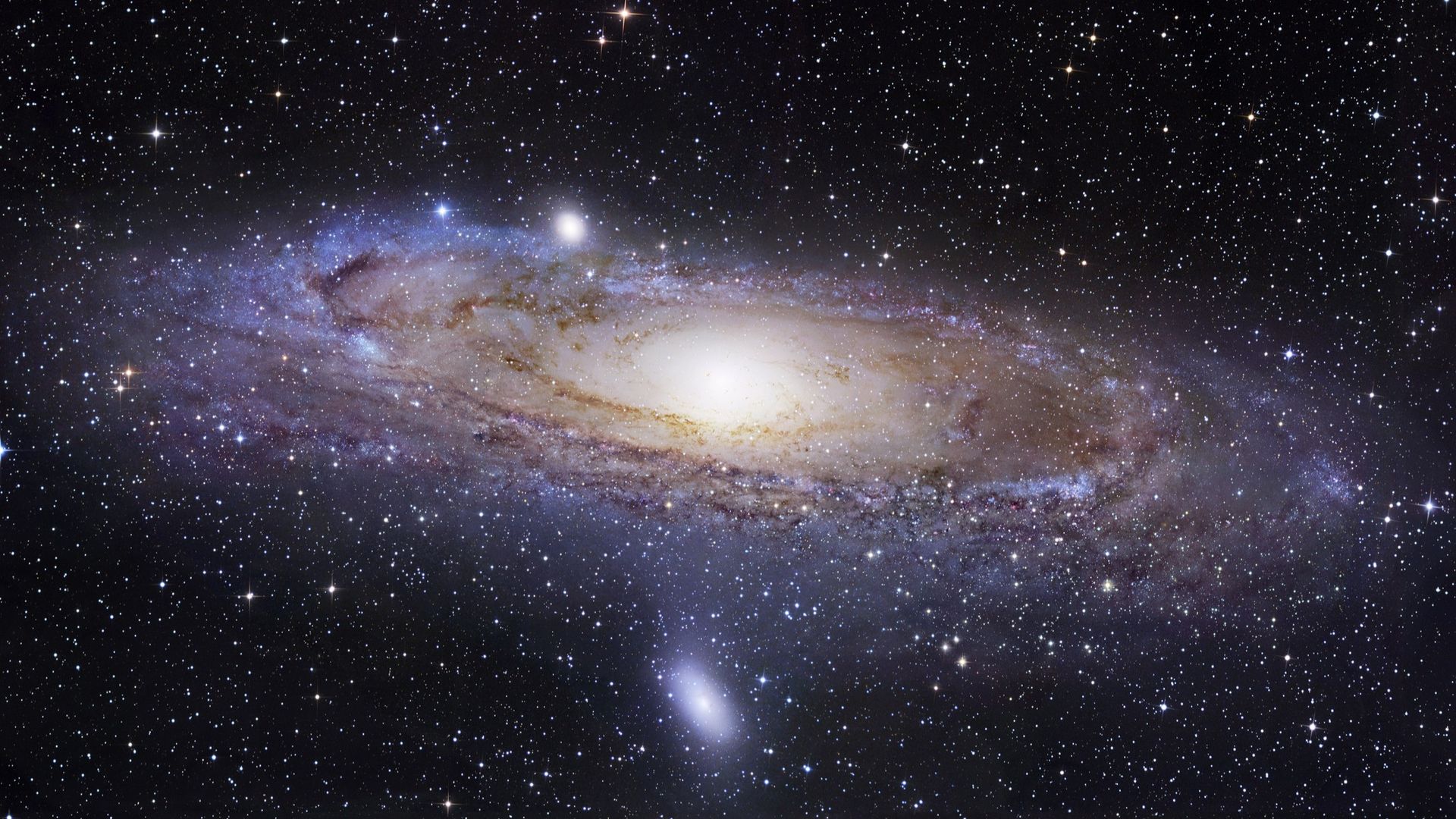
The Andromeda galaxy is one of the most distant things you can see with the naked eye. The difficult part isn't finding it. It's believing that faint smudge really is another galaxy.
When you purchase through links on our site, we may earn an affiliate commission. Here’s how it works.
The first time I showed someone the Andromeda galaxy (M31), our conversation did not go quite as planned.
I'd carefully worked my way across the sky, starting from the Great Square of Pegasus and hopping from star to star until I was confident I had the right patch. I pointed the telescope, got M31 in its crosshairs and proudly announced to my wife that I had found the closest giant galaxy to the Milky Way. Would she like to see it?
She then stayed quiet for a little too long as she looked through the eyepiece. Then came an unexpected question. "Is it near that little smudge?" Hmmm. "Err, no. It is that little smudge," I replied.
There was a pause. Of course, I knew exactly what had happened. We'd both seen photographs of M31 — a vast spiral galaxy with a brilliant center, sweeping dust lanes and hundreds of billions of stars. What we were actually looking at was a grayish blur that could easily have been mistaken for a mark on the eyepiece.
That apparent disappointment is now my favorite part of finding Andromeda because the unimpressive smudge is real. The light entering your eyes has been traveling across space for about 2.5 million years. No screen, photograph or telescope is necessary. You are intercepting ancient light in your backyard. Technically, the Triangulum Galaxy (M33), about 2.7 million light-years away, can be seen with the naked eye, so it is therefore the most distant object the naked eye can see. But not mine — I've never seen it. M31 is a much more realistic naked-eye target.
Early November is an excellent time to find M31 from the Northern Hemisphere. It's high and well placed during the evening, and this week the moon is becoming particularly cooperative. New Moon falls around Nov. 9, giving us several evenings with little or no moonlight to wash out faint deep-sky objects.
I usually begin with the star Alpheratz, one of the corner stars of the Great Square of Pegasus. You go two stars left, two stars up, and you arrive at M31. Another route — and a good way to check you're in the right place — starts in Cassiopeia, the distinctive W-shaped constellation high in the northeastern sky on autumn evenings. You can use its second V-shape as an arrow pointing straight at M31.
You can do that star-hop with the naked eye or a pair of binoculars, but M31 is visible to the naked eye only under a very dark sky. However, don't look for a miniature version of the photographs. Expect a faint, elongated patch with a slightly brighter middle.