// NASA BREAKING NEWS — SPAZIO & SCIENZA
NASA Awards Moon Base Transportation, Technology, Science Projects
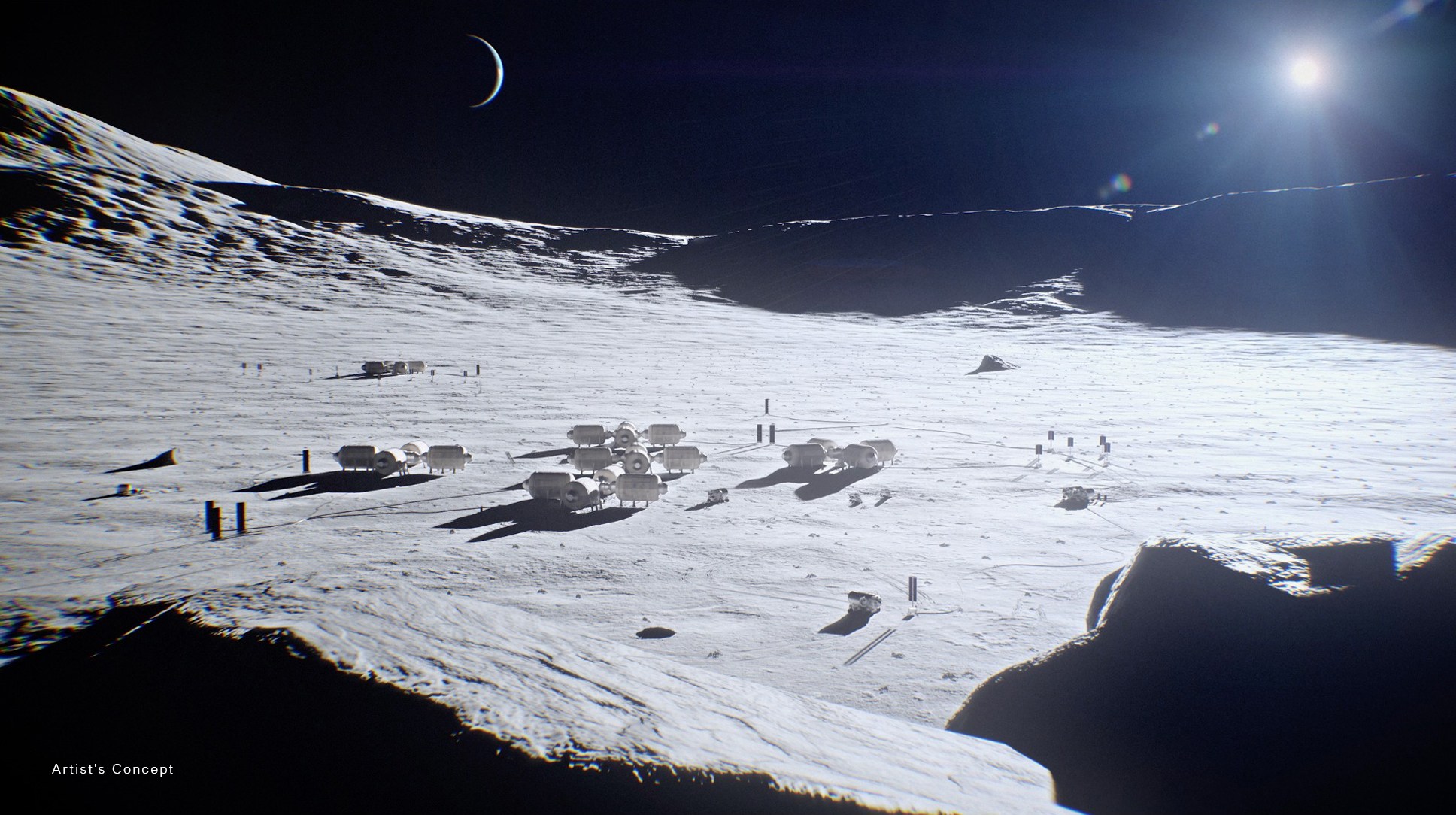
NASA announced a suite of awards and mission updates on Saturday to expand the agency’s Moon Base exploration, science, and infrastructure capabilities. The investments will advance commercial robotic deliveries, a nuclear-powered rover named PROMISE, launch and orbital transfer services, and surface infrastructure as the agency works with American industry to establish a sustained presence on the Moon’s South Pole.
The agency shared the news at the MAX POWER aerospace expo and air show at NASA’s Kennedy Space Center in Florida.
“We are building the Moon Base mission by mission,” said NASA Administrator Jared Isaacman. “Today’s announcements expand nearly every part of that campaign, using the playbook that carried NASA through its greatest eras: fly often, learn, apply those lessons, and get more better and more capable with every mission. When our astronauts return to the Moon, they will arrive with the first elements of the Moon Base already waiting for them on the surface.”
“In the eight months since Ignition, we’ve made incredible strides in accomplishing the near impossible: establishing a permanent outpost on the lunar surface,” said Carlos García-Galán, manager, Moon Base Program. “We’ve consolidated numerous efforts into a streamlined program, evolving our human exploration architecture into an iterative and sustained campaign for Moon Base technology development and implementation. Most importantly, we’ve taken action, awarding new contracts and forging new partnerships to accelerate development.”
To strengthen the cargo lander network needed to support the Moon Base, NASA selected eight companies for the next phase of its CLPS (Commercial Lunar Payload Services) initiative. The companies are eligible to compete for future lunar surface delivery missions under the new CLPS 2 contract:
Under the CLPS 2 framework, the companies will provide lunar delivery services, including managing, building, and operating landers that transport NASA science, technology, and infrastructure payloads to the Moon.
The CLPS 2 framework is a 10-year, multiple-award, indefinite-delivery/indefinite-quantity master contract with a combined maximum value of $10 billion. NASA increased the value of the current CLPS 1.0 contract from $2.6 billion to $4.2 billion to support initial Phase One Moon Base objectives. The original CLPS contract will remain in place through November 2028, with an additional five-year period to complete awarded lunar deliveries through November 2033.
NASA also announced it is moving forward with development of PROMISE (Polar Rover for Observation, Mapping, and In-Situ Exploration). Carrying science instruments and technology demonstrations, the six-wheeled rover will land at the Moon’s South Pole to characterize the surface and subsurface, assess resource potential, and provide data to enable landing site selection, as well as future infrastructure and exploration activities. The nuclear-powered rover can operate during long lunar nights and within permanently shadowed regions thought to harbor ice, which is crucial for a sustained human presence on the Moon.
The agency’s Jet Propulsion Laboratory in Southern California, a division of Caltech, will manage the mission and build the rover from a combination of spare flight components and engineering test models for NASA’s Curiosity and Perseverance Mars rovers. Using proven hardware, software, and Mars rover operation approaches significantly reduces cost and enables integration and testing of the complex PROMISE rover on a shorter timeline. NASA has assessed the compatibility of the hardware with the lunar environment and determined it can tolerate the harsh conditions found near the Moon’s South Pole.
The PROMISE rover will carry a drill to extract regolith, or lunar dust, to characterize ice and other resources from approximately 3 feet (1 meter) below the surface, spectrometers for analyzing the chemical composition of surface material, temperature and radia