// ENGADGET — INTELLIGENZA ARTIFICIALE
Amazon finally launches the $250 Ring Drone Cam and also the Ring Rover Cam
They’re the first two products from the company’s new autonomous home security devices category.
It's been at least six years since Amazon first teased an in-home security camera in the form of a drone, but Ring founder Jamie Siminoff says that his company has actually been working on a "drone concept" since 2016. That's before Amazon even acquired Ring in 2018, and about a decade in the making. After some starts and stops, including the various reveals and tests over the years, Siminoff believes the Ring Drone Cam is finally ready for the general public. It will retail for $249.99 and ship on January 27, 2027. The camera is part of a pair of devices launching as part of the Ring Robotics "category of autonomous, mobile security" that Amazon is also unveiling today.
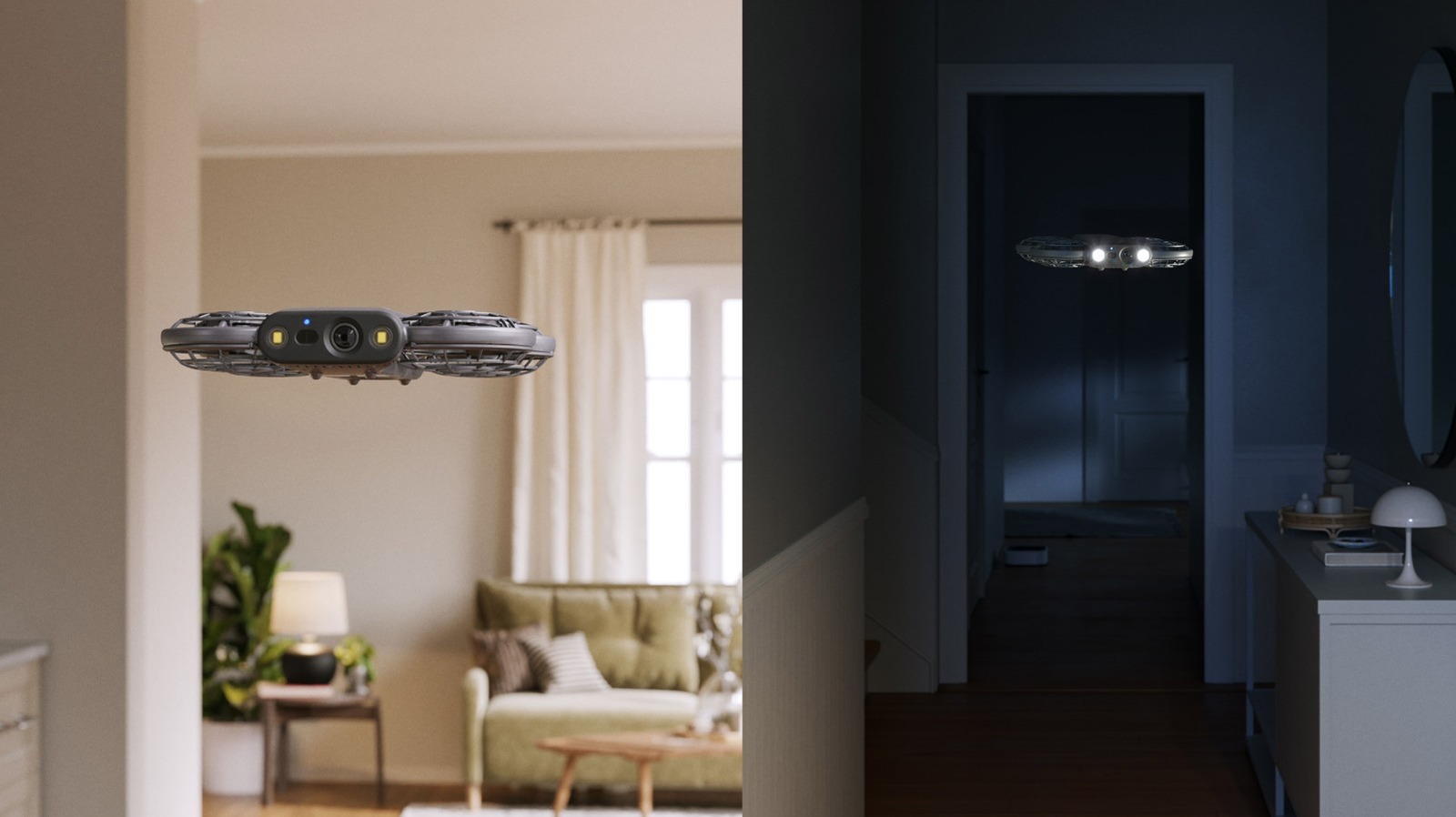
The Ring Drone Cam weighs 165 grams (0.36 pounds) and is basically a tiny quadcopter with cameras onboard. It has a 2K camera and two LEDs on its front and a 1080p camera on the underside. There's also an LED at the bottom for illumination. These lights don't just help illuminate in low light or in dark corners, but can also provide a deterrent to would-be intruders at night. Ring's executives said that when the Drone Cam is flying around your darkened home, its moving lights can resemble the action of a security guard holding up a flashlight and looking around.
The Drone Cam can fly on your preconfigured schedules, as if it's on patrol, or it can chart a flight path in response to a motion sensor or leak sensor that's gone off somewhere in your home. You can also manually start a flight whenever you want, of course. All this is made a bit easier thanks to the Alexa Home Map that Amazon first announced last month, which provides a 3D map view of your house. Instead of having to control and navigate the device, you can just tap a spot on the map and the Drone Cam will chart its own course to the destination.
Amazon said the device's battery will support about eight to 10 minutes of air time, depending on the altitude of the path (as it impacts how hard the propellers have to spin). When it's about to run out of juice or can't connect to Wi-Fi, the Ring Drone Cam will simply land or return to its dock, where eight minutes of charging will deliver enough power for 1 minute of flight time.
Siminoff said at a media briefing in New York this week that previous iterations of the Drone Cam simply weren't good enough to launch to the public. After the first drone was announced in 2021, the company put products in boxes but never shipped them out, because, according to Siminoff, they "just didn't work well enough." Another false start happened in 2025, and the company was finding problems that required more sensors and "more compute," which then demanded more power and bigger batteries.
With the added weight, the drone had to "fly harder," which created safety concerns that led to larger shrouds. That then impacted flight performance as less air could get through. Finally, to do all that in a device would probably drive its retail price up past $5,000, Siminoff said. That would mean it wouldn't really be right for consumers.
What allowed Ring to drop the Drone Cam's weight and price was cloud-processing and what Siminoff calls "intelligence." And it sounds like the company is calling it the "AI Pilot," which powers both the Ring Drone Cam and the Rover Cam (which I'll get to in a bit).
That system basically "maps the space, suggests patrol points, and autonomously navigates around obstacles," according to a Ring press release.
This is basically cloud processing to tell the drone where to go when a motion detector goes off, for instance. So instead of requiring a local AI model and the processors to run those, the Drone Cam is mostly reliant on Wi-Fi.