// SPACE.COM — SPAZIO & SCIENZA
I used the Vaonis Vespera 3 for weeks and here’s who I would recommend it to — full review
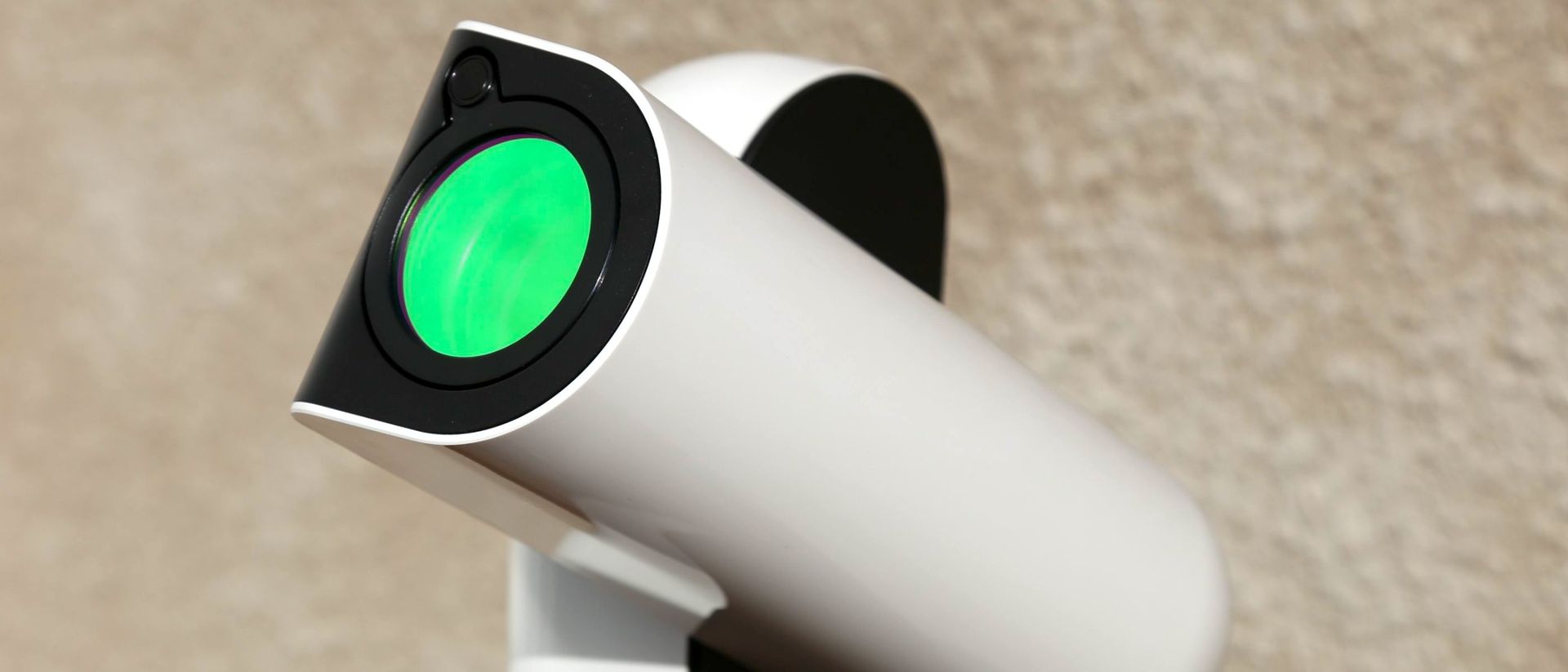
The Vespera III is a premium smart telescope that delivers powerful features like multi-night observation and mosaic technology, rewarding avid astrophotographers who have a serious interest in capturing the night sky.
Why you can trust Space.com
Our expert reviewers spend hours testing and comparing products and services so you can choose the best for you. Find out more about how we test and review products.
I’ve spent a lot of time with smart telescopes, from relatively inexpensive Seestar models to the original Vaonis Vespera and the Vespera Pro. They all promise essentially the same thing — you put a telescope outside at night, choose something interesting on your smartphone and let the technology take care of the rest. The Vaonis Vespera 3 does that exceptionally well, but after spending several nights with it, I’m convinced it’s designed for a rather different kind of buyer.
At $2,490/£2,199, this is hardly an impulse purchase for the beginner who’s curious about astronomy – you could buy several perfectly capable smart telescopes for the same money. Yet I found myself increasingly impressed by what the Vespera 3 could achieve, particularly when I returned to the same object over several nights. The images were sharp, the colors were excellent and I almost never had to think about the battery.
That doesn’t mean the experience was flawless. I sometimes spent longer than I’d have liked waiting for the telescope to get ready, but once it began photographing the sky, the Vespera 3 reminded me why I love smart telescopes so much.
One of my favorite things about smart telescopes is watching a photograph develop as more light is collected. What begins as a fairly ordinary patch of stars gradually becomes something much more interesting. First a faint cloud of gas appears, then more structure emerges, and eventually you have an image that, only a few short years ago, would have been difficult to capture without specialist equipment.
With the Vespera 3, I spent several nights photographing the Pleiades (M45), the famous star cluster in Taurus. The Pleiades make an excellent subject for testing a telescope because the stars are bright, but the surrounding nebulosity is much harder to capture convincingly. The Singularity app used to control Vespera 3 stacks each image as it goes, but keeps them in sight as an optional time-lapse, so you can see exactly why you’re spending so much time on one object.
Even better, the Vespera 3’s PerseverENS feature lets you add data to an existing observation over multiple nights (it’s actually called multi-night observation in the app). Instead of having to call it a night or start again every time the weather interrupts an imaging session, you can return to a target and continue building the image over weeks — or years. This is excellent for faint nebulas, but also for anyone who lives somewhere with unpredictable weather.
The Vespera 3 also has CovalENS, Vaonis’s mosaic imaging system, which captures adjacent sections of sky to produce a larger image. That’s helpful for objects such as the Pleiades and large nebulas, which occupy a substantial area of the sky.
Mosaics inevitably take longer than conventional images — if it images six sections of the night sky, it takes six times longer for the same image quality — but they also make the telescope more versatile than its native field of view (2.5 x 1.4 degrees) might suggest.