// SPACE.COM — SPAZIO & SCIENZA
Space is filling up with junk. Could laser-reflecting mirrors help humanity clean things up?
"Our tests have shown that a device weighing just 50 grams can deliver millimeter-level ranging precision."
When you purchase through links on our site, we may earn an affiliate commission. Here’s how it works.
A British startup thinks it can help humanity deal with its space junk problem.
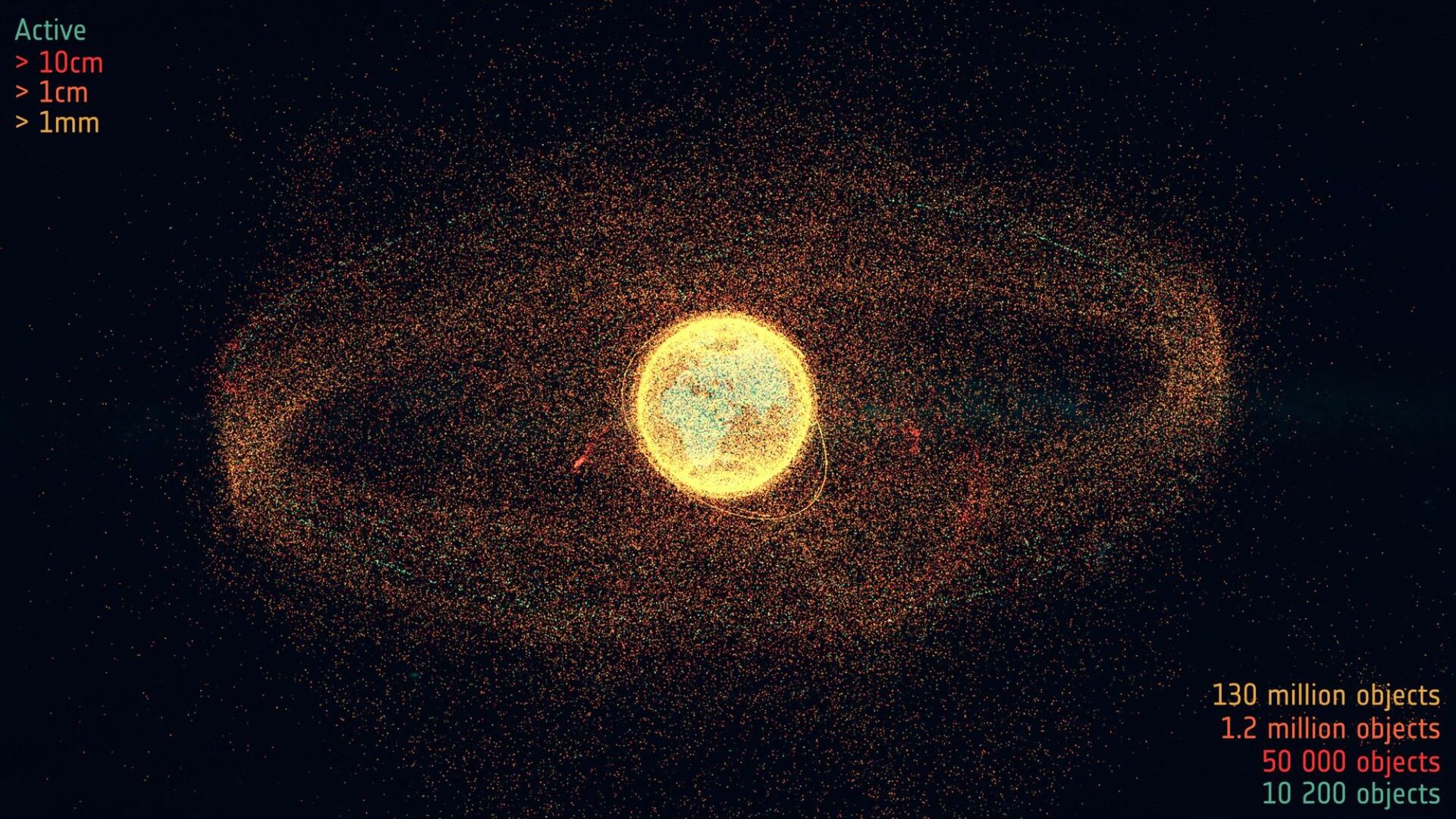
Millions of pieces of space debris circle Earth at the moment, according to the European Space Agency (ESA). Even the smallest fragments are potentially dangerous, given how fast stuff travels in orbit.
Experts have proposed a range of measures to deal with this junk. The smallest bits, for example, may require big space nets, or lasering the stuff down to Earth. Large satellites are increasingly being deliberately deorbited these days, and a few have even been refueled to keep them operating in orbit — something that will likely start happening more and more over the coming years.
Now, the British startup Foundational has another idea to throw into the mix: retroreflectors. The company argues that its tech can help fight the space-junk problem — and it just proved out a demo version in an orbital test.
London-based Foundational recently tested its Retro-2 laser retroreflector system, which it developed in collaboration with ESA. The early-stage test was designed to ensure that Foundational's retroreflectors can return laser-ranging signals from a satellite, at altitudes between about 600 kilometers and 870 kilometers (about 370 to 540 miles).
The long-term aim is to create a sort of tracking device for spacecraft, so they can be monitored in orbit even after they fall silent.
The tech, Foundational said in a statement today (Nov. 17), needs "no electronics, power or commands from its host spacecraft" and allows ground stations to keep tabs on the orbiting spacecraft.
The demo mission launched this past July on SpaceX's Transporter-17 rideshare flight. It attached Retro-2 — a mini device with seven reflectors — to a small satellite that was integrated into an ION carrier craft operated by the Italian company D-Orbit.