// ARS TECHNICA — SPAZIO & SCIENZA
Russia appears set to finally address long-term, serious space station cracks
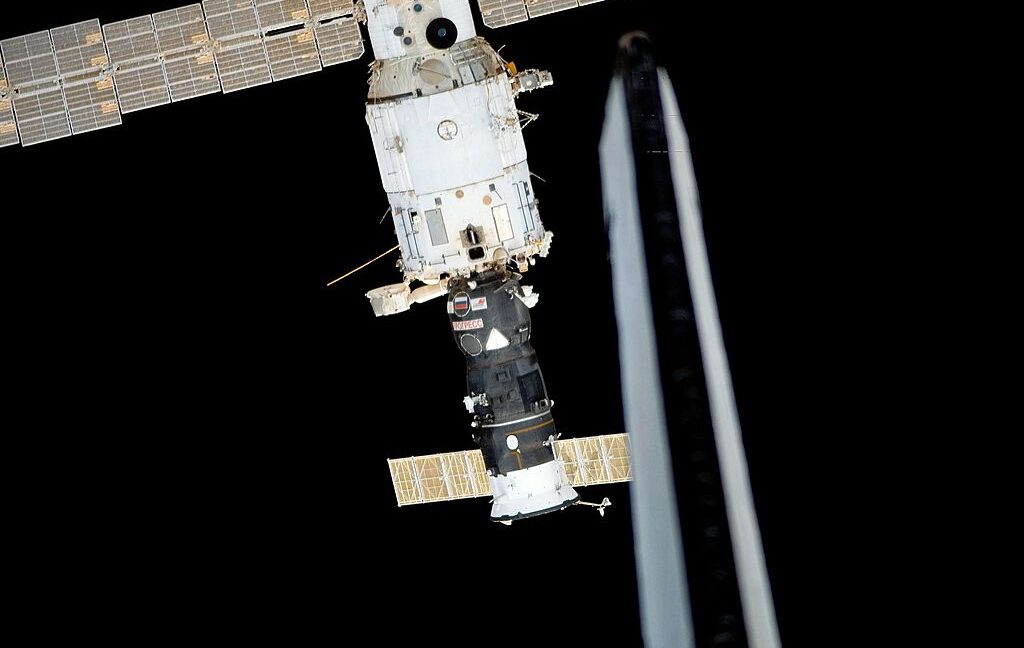
This has been a persistent, behind-the-scenes dispute between NASA and Roscosmos.
Ten days ago, in a moment of very high drama in orbit, NASA directed its astronauts living on the International Space Station to briefly seek emergency refuge in a Crew Dragon spacecraft.
Since then, neither the US space agency nor Roscosmos has provided additional public information about the situation in orbit. But according to sources who spoke to Ars, following the spectacle in space, the problem has been successfully fixed.
At issue were persistent cracks in a small area of the International Space Station attached to the Russian Zvezda service module, known as the PrK module. The problem has been ongoing since 2019, and Russian astronauts have been attempting various fixes, often using a sealant called Germetall-1.
These efforts finally appeared to bear fruit early this year, when Roscosmos reported that the leaks had stabilized. They resumed in May, though, and then increased in early June. That prompted Roscosmos to begin work toward a more extensive inspection and structural repair effort on the morning of Friday, June 5.
A bland statement from Roscosmos offered no additional information. But the solution Russian officials proposed on June 5 spooked NASA officials, prompting them to take the extreme step of securing their astronauts inside Dragon in case of a depressurization event on the space station. Later, Russia backed off, citing the need to conduct additional measurements and inspections of areas where leaks were occurring.
“NASA strongly supported that decision, and as a result, following that decision, Crew-12 and Williams ended their safe haven activities and returned to normal operations aboard the orbiting laboratory,” the space agency said.
Since then, there have been no official updates. To understand what has really been happening, Ars spoke with two NASA officials on background.
The PrK module leads from the main area of the Russian segment of the space station to a docking port. Russian cosmonauts must pressurize the tunnel to access the Progress spacecraft that dock there and unload and stow cargo on the vehicles. The cracking issue in the PrK module’s structure is due to corrosion, and leaks occur inside the aging transfer tunnel when pressure is cycled up or down.
Although NASA has not publicly discussed the gravity of its concerns about the issue—presumably out of a desire to respect its Russian counterpart—the PrK module could break apart without much advance warning. Under pressure, the module could unzip and fail completely. A former astronaut and retired NASA official, Bob Cabana, described the issue in late 2024, saying, “NASA has expressed concerns about the structural integrity of the PrK and the possibility of a catastrophic failure.”