// SPACE.COM — SPAZIO & SCIENZA
Scientists find strange changes on sun hours before a powerful X9 solar flare: 'I was not expecting what I found'
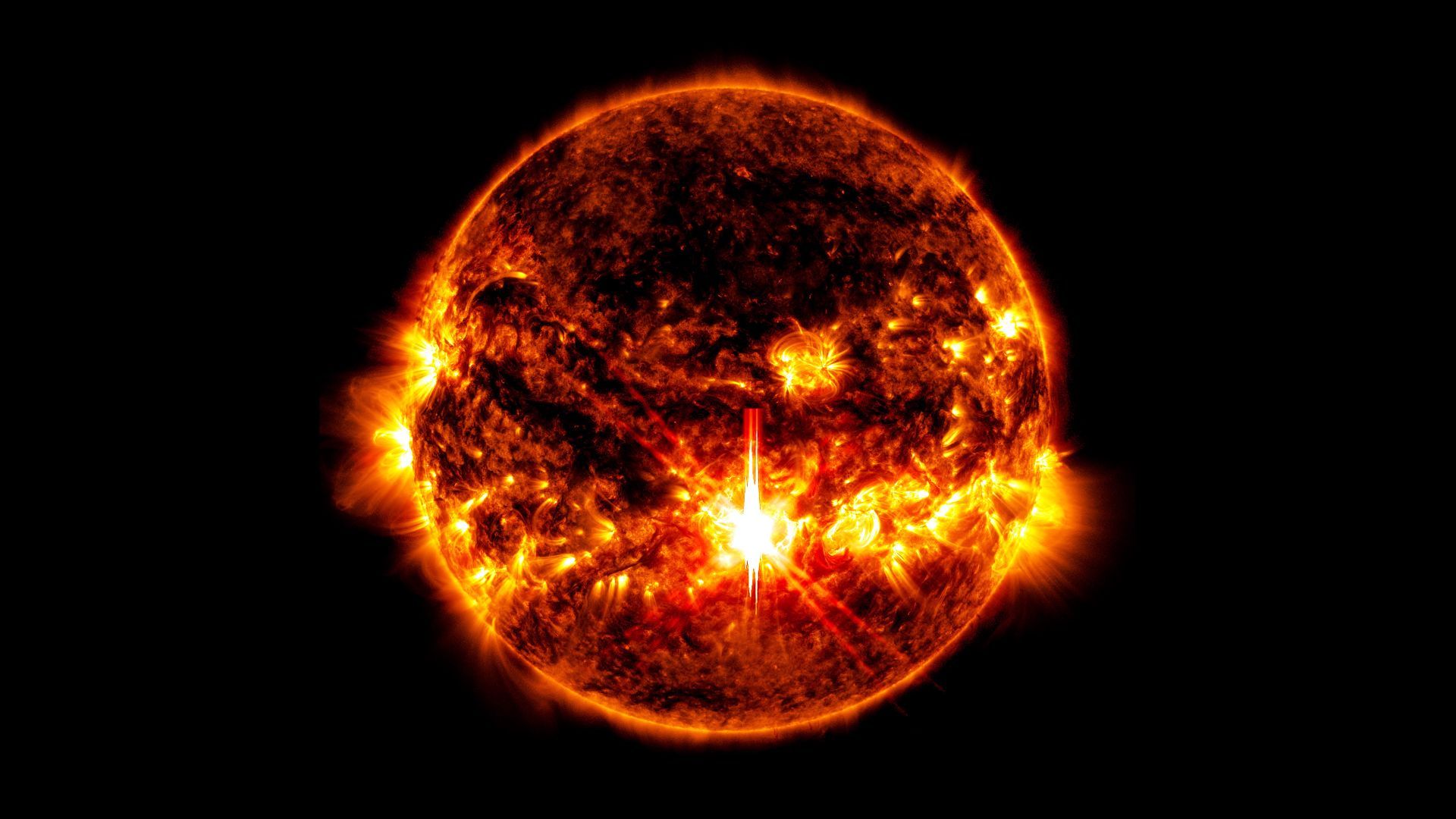
"There's very few that reach that amount of power."
When you purchase through links on our site, we may earn an affiliate commission. Here’s how it works.
Scientists may have finally seen the sun telegraph an eruption hours before it happened — and the one caught was one of our star's most powerful explosions.
Drawing on a rare dataset collected in the hours leading up to a massive solar flare, scientists identified a series of changes in the sun's atmosphere that offer new clues about how major eruptions begin. Eventually, these results could help improve space weather forecasting.
"I was not expecting what I found," Louis Seyfritz, a graduate researcher at the New Jersey Institute of Technology who led the new study, told Space.com.
Solar flares are powerful bursts of radiation from the sun driven by the sudden release of magnetic energy. The more powerful of these eruptions can disrupt radio communications, damage satellites and contribute to geomagnetic storms that affect infrastructure on Earth. Yet, despite decades of study, scientists still do not fully understand what causes these eruptions to occur.
Part of the challenge is practical. While spacecraft continuously monitor the sun, detailed observations of the conditions leading up to a flare are difficult to obtain. High-resolution instruments typically focus on active regions already producing solar activity, and researchers often begin tracking a flare in earnest only after it erupts — when it's possible to trace its path through space and assess its potential impacts on Earth.
In the new study, Seyfritz and his colleagues were able to take advantage of an unusually fortuitous dataset that captured the buildup to an X9-class solar flare that erupted on Oct. 3, 2024.
Their analysis identified several changes in the sun's atmosphere hours before the explosion, offering new clues about how major flares begin and potentially revealing early warning signs of future events.
The active region that produced the eruption had already generated several powerful flares in the preceding days, prompting scientists to keep multiple solar observatories focused on the area. Among them was NASA's Interface Region Imaging Spectrograph, or IRIS, a spacecraft designed to study a narrow slice of the sun's atmosphere in extraordinary detail.