// PC GAMER — GAMING
Google Earth let me turn my hometown into a warzone with AI prompts, and the misinformation possibilities are disturbing
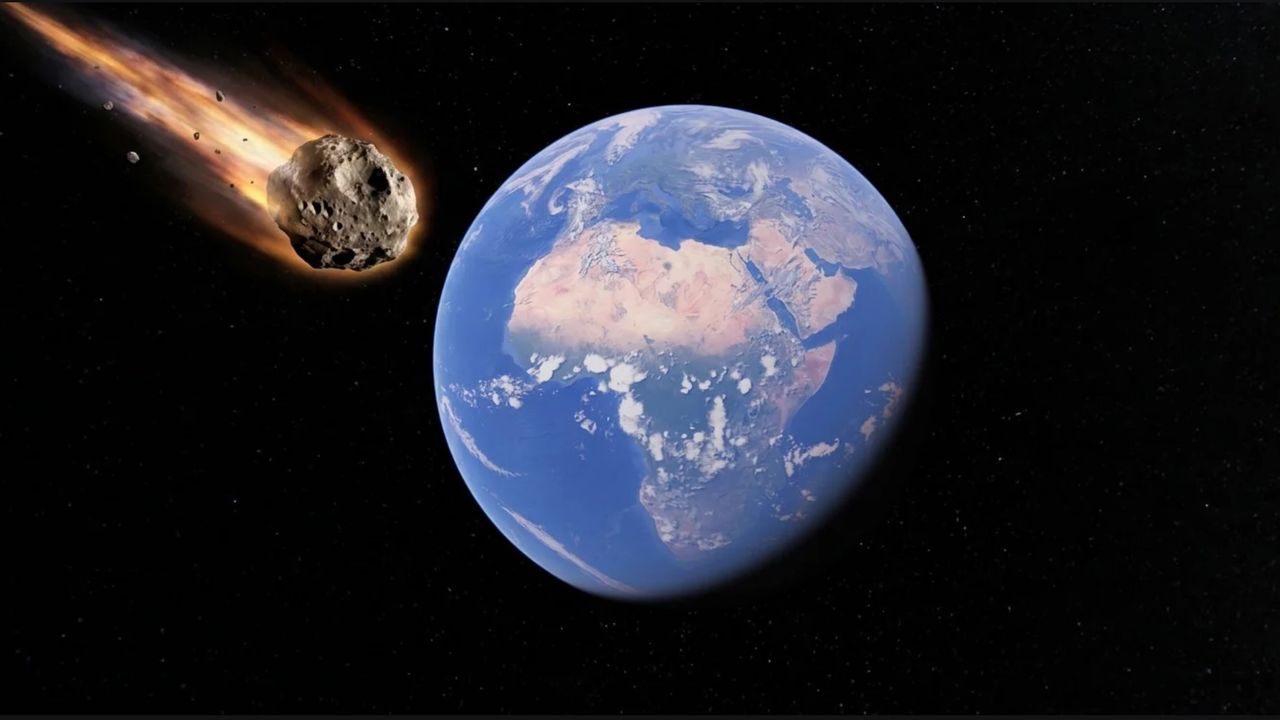
Google says it takes misinformation seriously, but that sounds as fake as the images I've generated with the tool.
When you purchase through links on our site, we may earn an affiliate commission. Here’s how it works.
Another day, another step towards an AI dystopia. Google has just added a "fun" new feature to Google Earth—Nano Banana 2, the company's image creation tool. All you need to do is click on the "create image" button, type in a prompt, and seconds later you'll have a phony picture masquerading as a real satellite and aerial image from Google Earth.
Once upon a time I would have found this ludicrous—that a tool designed to accurately showcase our planet would be touting a feature that lets you make up absolute nonsense. But now we live in a world where the most popular search engine regularly makes up lies.
For a while, Google was convinced I was married, possibly because I, at one point, mentioned my character having a wife in Crusader Kings 3. At least this was largely harmless—but Google's AI summaries regularly hallucinate and misinterprets things, to the point that it cannot be trusted at all.
Manufacturing warzones, riots, crimes—these are less harmless. But Google Earth now lets you create whatever slop you want. This morning, I asked Google Earth to generate an image of tanks and troops moving down a street near my home. I did not save the image, because I have no intention of putting something on the internet that could be used for some nefarious purpose. But feel free to try it for yourself.
I should add that the image Google Earth created for me was not particularly realistic. Some of the tanks, for instance, were as large as buildings. And nobody is going to look at the header image I generated via Google Earth for this article and think "Oh god, an asteroid is hurtling towards us!" AI image creation is inconsistent at best. But Google realises this, which is why it lets you add more prompts to refine the image—to make it as realistic as possible.
Since the feature went live, I've seen plenty of images that, without knowing about Nano Banana 2's integration, look pretty convincing. Digital Digging's Henk van Ess created an image of refugees massing at the Mexican border, which looked troublingly real.
It's easy to see how this tool could be used for propaganda and misinformation, to drum up hate and stoke fears. Google presents the tool as this cute wee thing that will let you add community gardens to abandoned plots or recreate ancient Pompeii, before the eruption of Vesuvius. That's not how it's going to be used.
Keep up to date with the most important stories and the best deals, as picked by the PC Gamer team.