// SPACE.COM — SPAZIO & SCIENZA
NASA's Perseverance rover just ran a marathon on Mars. Could you do the same?
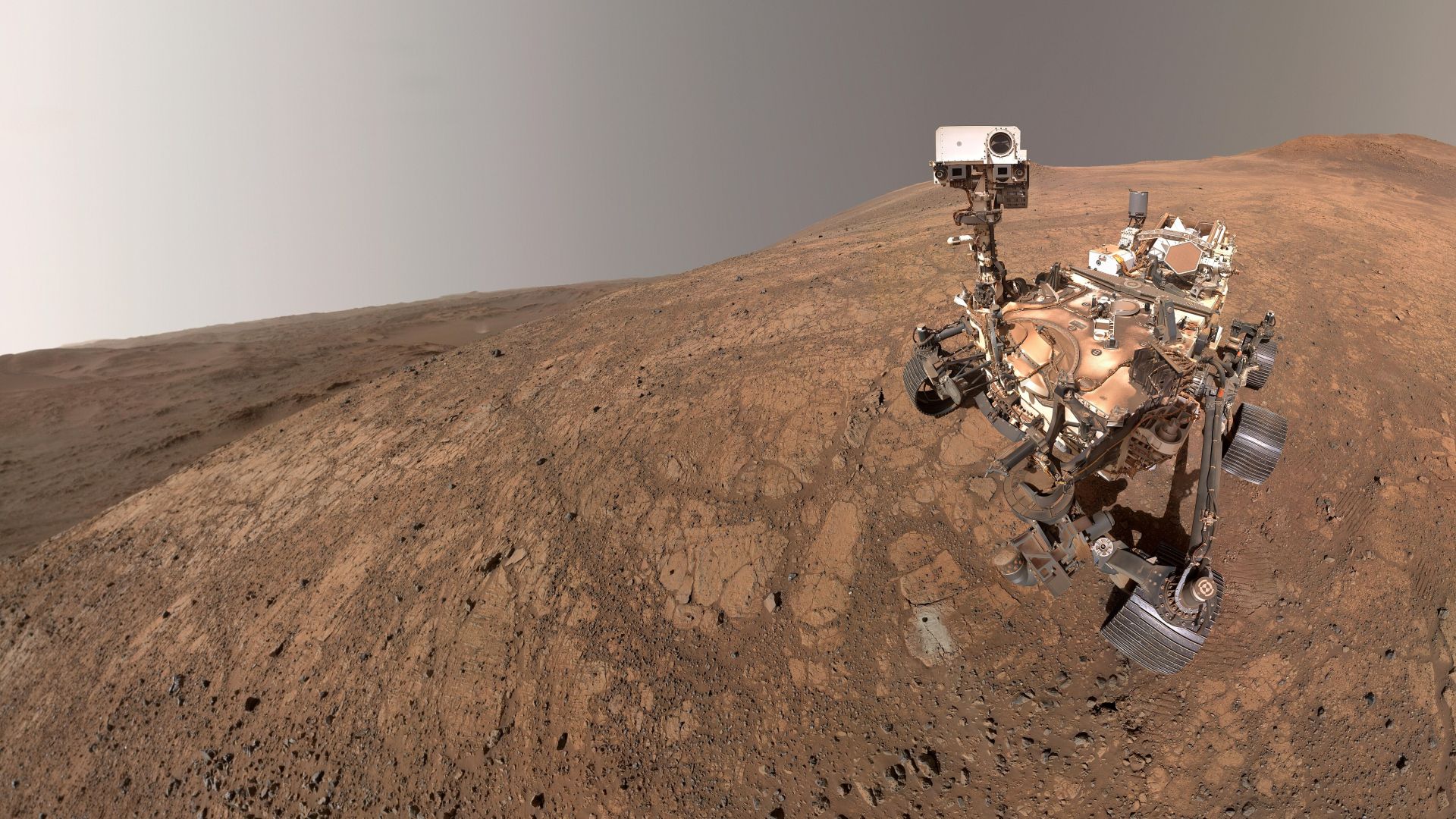
Percy has now traveled more than 26.2 miles on the Red Planet! Could you?
When you purchase through links on our site, we may earn an affiliate commission. Here’s how it works.
Could you run a marathon on Mars? And also — would you want to?
NASA's Perseverance rover just completed an off-Earth marathon: It has now traveled more than 26.2 miles (42.2 kilometers) across the Martian landscape after landing in February 2021, according to the mission team. The only other rover to complete a marathon on the Red Planet is Opportunity, which took over 11 years to traverse the distance. But as NASA looks toward potentially landing humans on the Red Planet some day, it makes me wonder: What would it be like to complete a marathon on Mars … on foot?
Here on Earth, I have run a few marathons — in Philadelphia, New Jersey, and Florida, I've managed to wheeze, sweat, and drag my feet over the finish line. You'll never catch me on the leaderboard, but I've felt all the unique stings and challenges of the race. From the unexpected charley horses to the mental hurdles you overcome, no marathon is easy. But on Mars? We're not comparing humans to rovers, and Perseverance has spent these past five-plue years not just traveling but exploring and conducting scientific investigations. But if we imagine a future where we successfully send humans to Mars, let's explore what it might really be like to travel 26.2 miles on foot across the Red Planet.
For starters, Mars is cold. And while completing a marathon is difficult at any temperature, the cold presents unique challenges, like aggravating breathing troubles and causing your joints to stiffen. The freezing temperatures that you'd find on Mars could certainly pose a challenge for joints and muscles, and depending on how cold it is, sweating due to physical exertion in extreme cold could even increase your risk of hypothermia.
Mars' atmosphere is very thin, so heat from the sun escapes very quickly on the Red Planet. And because Mars is millions of miles farther from the sun than Earth, temperatures on the surface can plummet to as low as minus 225 degrees Fahrenheit (minus 153 degrees Celsius).
That's not to say it's always that cold. If you stood exactly on Mars' equator at noon, you could feel soothing, springtime temperatures of up to 70 degrees F (20 degrees C), according to NASA. But generally speaking, the surface of Mars is quite cold.
Mars' air isn't breathable, either; it's about 95% carbon dioxide. So you'd have to walk around in a spacesuit, meaning you'd never feel those spring-like temperatures directly anyhow. But you might warm up a bit, carrying the weight of that suit.
While the lower gravity on Mars would help out a bit, current spacesuits and their accompanying life support backpacks weigh well over 200 pounds (90 kilograms), and on Mars they could still weigh close to or over 100 pounds (45 kg), it has been reported. We don't yet know how future astronaut suits will be built or how much they might weigh, but if we assume they will be at least fairly similar to previous iterations, they will add a considerable amount of weight as you try to maneuver across the Martian surface.