// ITS FOSS — LINUX & OPEN SOURCE
OpenSearch Is Done Being Called "the Elasticsearch Fork"
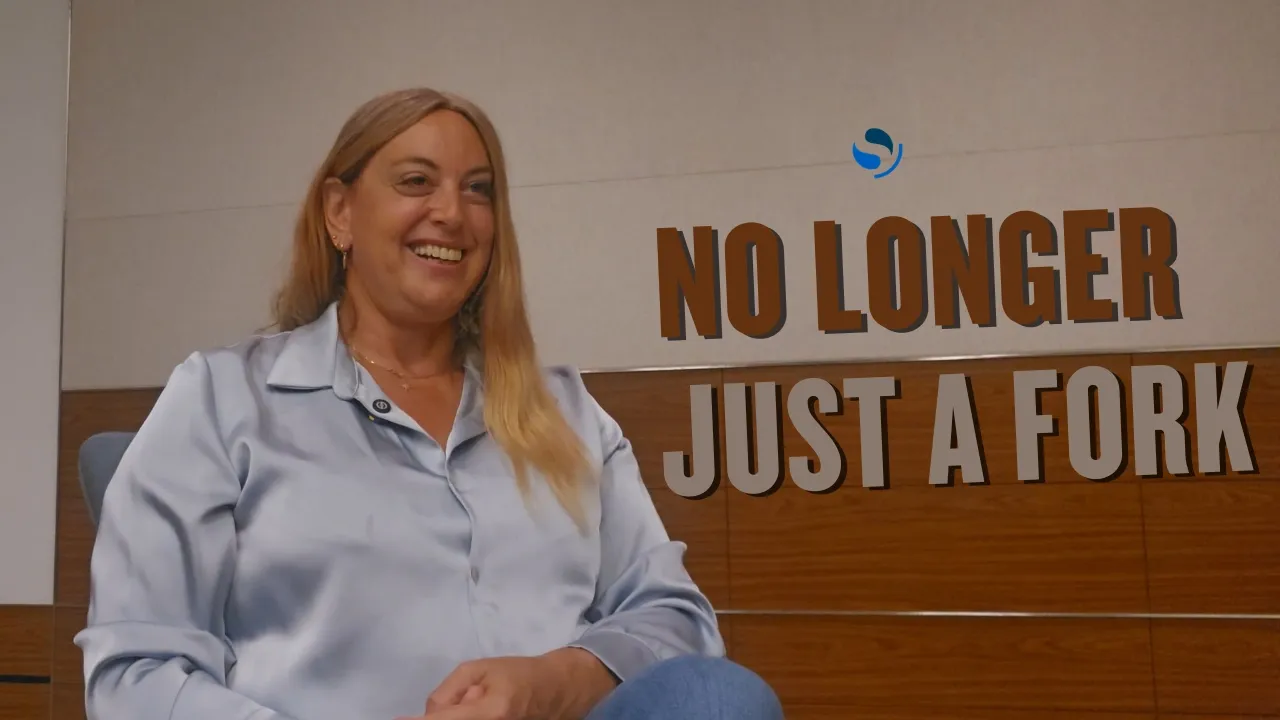
I sat down with Bianca Lewis of OpenSearch at Open Source Summit India, right after the project's second OpenSearch Con in the country. Bianca Lewis is the executive director of the OpenSearch Software Foundation.
OpenSearch started life in 2021 as a fork of Elasticsearch, born out of Elastic's move away from an open source license. Five years on, I wanted to know how much of that origin story still holds, and how the project sees itself now that it's an AI data infrastructure layer with its own roadmap and its own community.
We covered a lot of ground: whether OpenSearch is still tethered to Elasticsearch in any way, why ELK Stack remains the more recognizable brand among young developers, how agentic AI fits into the platform, and an uncomfortable but necessary question about what happens when vendor-backed open source projects go proprietary.
Five years in, is OpenSearch still a fork of Elasticsearch, or has it become a product of its own? Does it still pull in any downstream changes from Elastic?
Bianca: That is a great question, and the answer, very simply, is yes, it's an independent project. It's a completely independent project now that began as a fork, as you correctly said, and in the early days the two were very, very similar. Today the focuses and the strengths have become very different, and today they are completely independent projects. I think the only commonality is that users can still use both platforms for similar kinds of use cases.
OpenSearch is enterprise-focused, but how would you explain it to a home labber or self-hoster who's never heard of it?
Bianca: Well, firstly, of course OpenSearch is an AI infrastructure layer for enterprises, but because it's on an open source platform, free and easy to use and adopt, people making new startups, entrepreneurs, developers, and everyone else find it very easy to get started. Download it, it's free to use, all the features are open and available, and they can join very easily a community of thousands and thousands of people to get up and running.
So it's not just enterprise-focused anymore, it's for anyone and everyone. Whoever's requirements fit it, OpenSearch is for them. I don't think it was ever built to just be for the enterprise. The startups of today are the enterprises of tomorrow.
ELK Stack is still the more recognizable brand in observability and search. How does OpenSearch compete with that brand recognition among young developers?
Bianca: There is no doubt that Elastic, Elasticsearch, and Logstash and Kibana, which make up ELK, have been around a long time, and that's obviously where the fork came from originally. I hope that after five years of OpenSearch developing as an independent and powerful project — 1.7 billion downloads later, 400 individual companies contributing, more than 3,000 contributors, and 15,000 OpenSearch stack users — the differentiation in young developers' minds is becoming clearer just from the sheer weight of numbers.