// ARS TECHNICA — MOBILE & WEB
As global warming threatens corals, scientists search for reefs that can take the heat
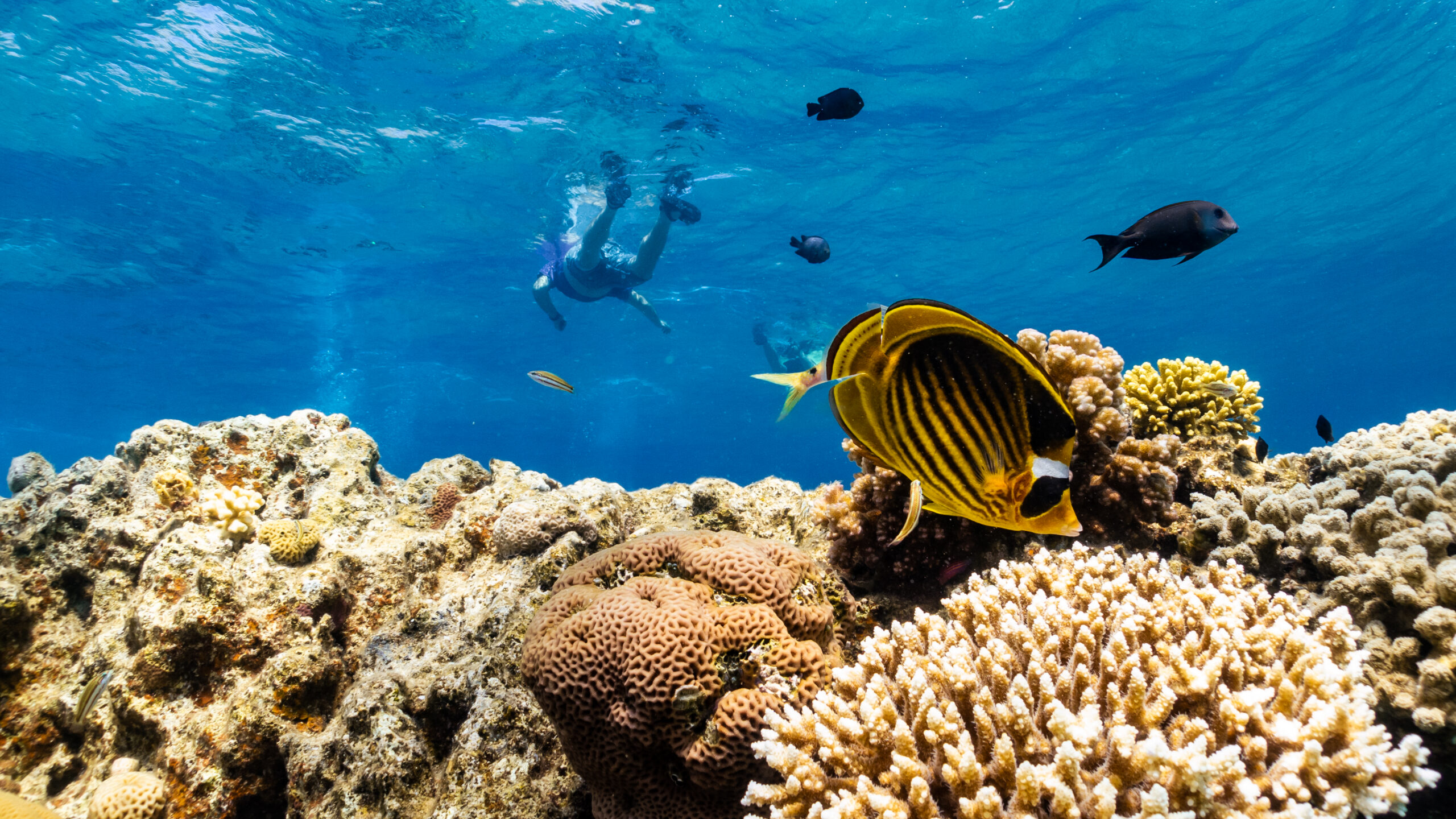
Researchers say these coral strongholds may help repopulate more degraded reefs.
MAJURO, Marshall Islands—Perched on the bow of an aluminum landing craft, Anne Cohen gazed a few yards ahead of the vessel toward a yellow robot gliding across the emerald Majuro lagoon.
The unmanned surface vehicle, called Yellowfin, was quickly becoming one of the coral researcher’s most dependable guides in these Central Pacific waters.
“She’s the best dive buddy,” said Cohen, a tenured scientist at the Woods Hole Oceanographic Institution in Cape Cod. Programmed to navigate to a precise set of coordinates, the robot cut through small swells like a tiny sailboat without a mast, directing Cohen toward a destination she had traveled thousands of miles to revisit.
When the robot finally paused, hovering in place, Cohen recognized it as her cue. Somewhere below should be a patch of reef she’d been observing over the last few years, and she was eager to see how it was faring. Each visit carried a growing weight of uncertainty.
Since 2023, record-breaking marine heat waves have swept through the tropics, fueling the most severe global coral bleaching event ever recorded. More than 80 percent of the world’s reefs have been impacted in at least 83 countries and territories. Corals have been so stressed by the extreme temperatures, they’ve expelled the tiny algae living inside their tissues that provide them with food and their brilliant hues, leaving them pale, ghostly and struggling to survive. Many have not recovered.
Cohen hoped the reef beneath her might be different.
She yanked on her black and yellow snorkel fins, spit into her mask so it wouldn’t fog underwater and slid off the boat, her slight frame barely making a splash. Within seconds of peering into the blue, she let out a squeal muffled by her snorkel, astonished at the scene unfolding beneath her.
Towering pinnacles of chestnut-colored tabletop corals rose from the sandy seafloor like trees, their broad plate-like canopies sheltering fish hiding in their shadows. Dense thickets of staghorn corals stretched in every direction, their golden antler-like branches twisting across a sprawling reef extending as far as the eye could see, bursting with shades of mustard yellow, pink and lavender pastels.
“It’s like a wonderland,” Cohen said, popping her head above the surface, beaming. “I feel like Alice.”