// SPACE.COM — SPAZIO & SCIENZA
Lego Project Hail Mary review: Amaze, amaze, amaze!
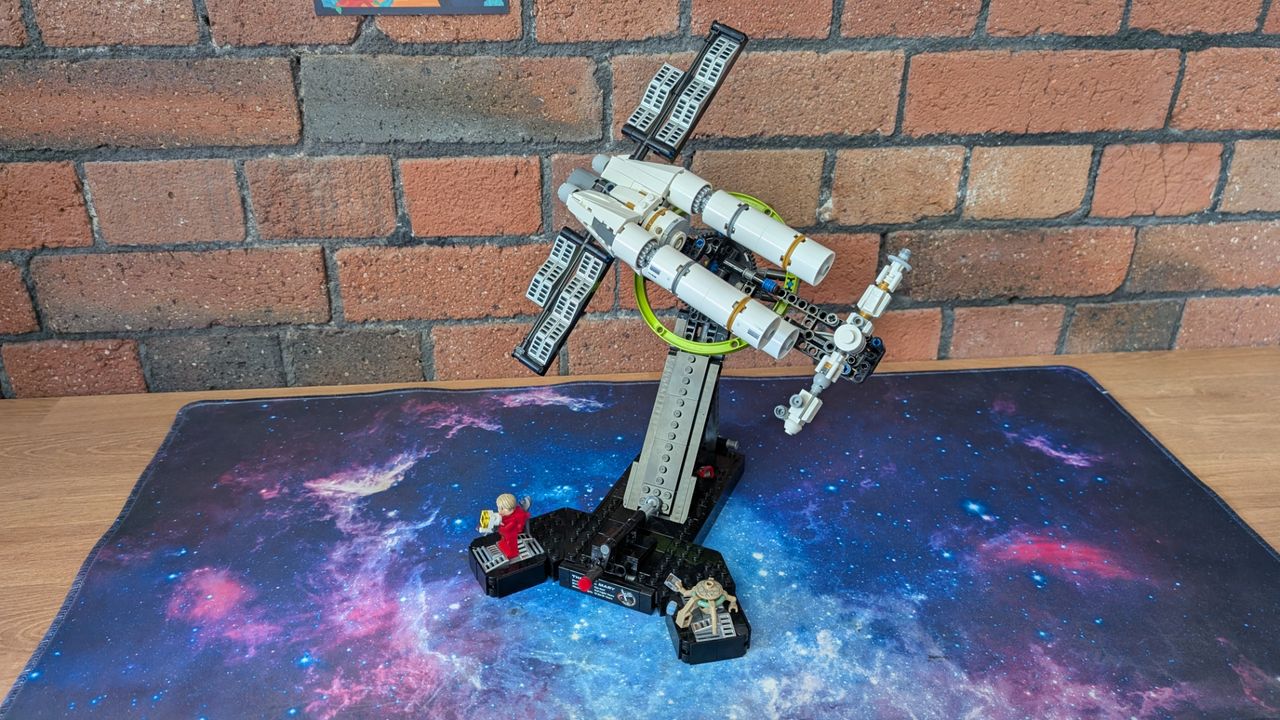
A must-have for fans of Ryan Gosling's sci-fi adventure, though I wish it were a little bigger and more detailed. It does not feature any stickers (thankfully).
Why you can trust Space.com
Our expert reviewers spend hours testing and comparing products and services so you can choose the best for you. Find out more about how we test and review products.
Given how much I enjoyed the Project Hail Mary movie, I was beyond hyped to get my hands on the Lego Project Hail Mary set. And now that I've built it, I'm thrilled to say it does not disappoint. You could even say that it's amaze, amaze, amaze!
The titular Hail Mary is the spaceship from "Project Hail Mary", the Andy Weir novel-turned-Hollywood blockbuster that carries Ryland Grace (Ryan Gosling) across the stars to save humanity. While the design of the ship is certainly described in the book, this is definitely a Lego rendition of the movie version. So, if you're an Andy Weir fan who imagined it looking a little different, you can blame the studio.
Coming in at $99.99 with just under 900 pieces, it's a lot smaller than we expected (and hoped for). If you're after something comparable to the hefty NASA Artemis Space Launch System or gargantuan Venator-Class Republic Attack Cruiser sets, then you'll be disappointed. However, the Lego Project Hail Mary has a heck of a party trick to make up for its diminutive size: A spinning mechanism that simulates the centrifugal gravity system of the ship.
Dimensions: 12 x 9.5 x 8.5 inches / 30 x 25 x 22 cm
The Lego Project Hail Mary is constructed from 830 pieces, split across six numbered paper bags, with a few large pieces in a separate plastic bag. I built the kit over the course of two nights, but you could easily smash it out in a single evening if you wanted to.
The build starts with a little diorama, showcasing the Ryland and Rocky minifigures on either side of a window (the barrier that separates them when they first meet and learn to communicate in the movie). It's a cool little display that can work well on its own or can be attached to the stand of the ship itself.
From there on, four out of the six bags are almost entirely dedicated to the display stand and the incorporated spinning mechanism, with the final section of bag four attaching the ship’s crew module to the spinning mechanism. Thanks to the intricate mechanism inside it, the stand not only spins, but also retracts and extends the crew section of the ship, simulating the centrifugal gravity system from the movie. While it's a complicated mechanism that means a lot of Technic pieces, but the build itself is straightforward thanks to the clear instructions.
At last, the final two bags will see you constructing the ship itself. This consists of the main body where the thruster is housed, the three fuselage sections, and the solar panel array that provides power to the ship. Some builders might be disappointed that the actual spacecraft is a remarkably small part of the build process, but I think the spinning display stand is cool enough to offset that. Also, there are no stickers, which is always a huge win for me.