// ARS TECHNICA — FINANZA
Did poop enable the evolution of complex animals?
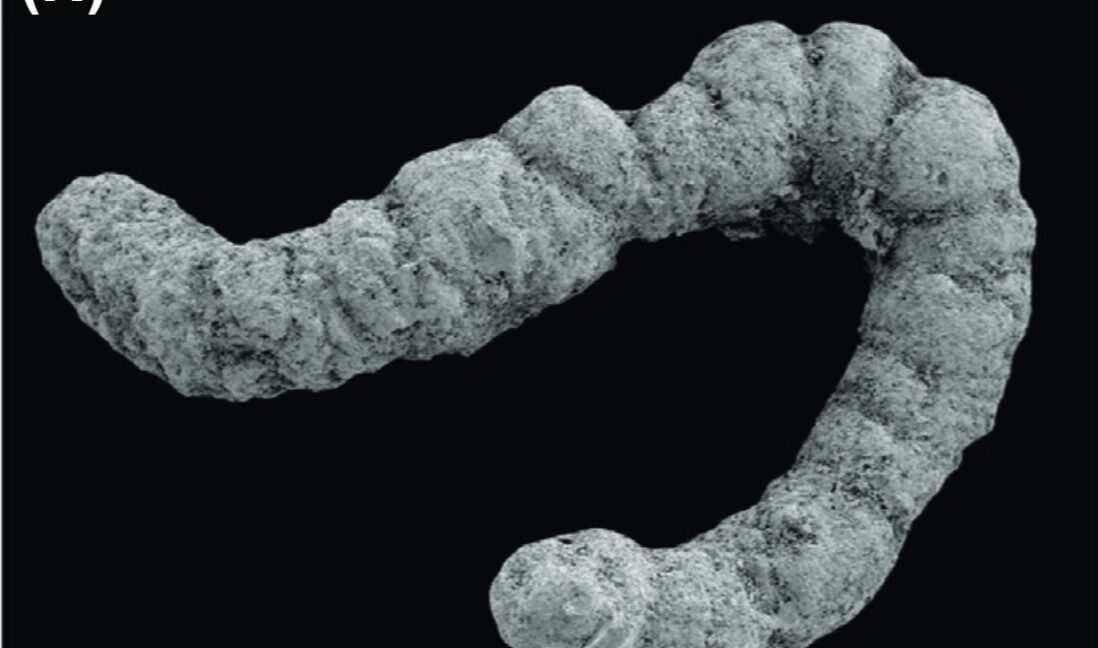
In a recent study, evolution gets even messier than usual.
The Cambrian explosion may have been fueled by poop.
The first animals on Earth emerged about 600 million years ago, and 60 million years later, those simple early animals evolved into wildly different directions, branching out into a diverse menagerie of complicated new forms and conquering new ecological niches. Known as the Cambrian Explosion, this flurry of rapid evolution produced most of the animal phyla and ecosystems we see around us today.
And it may have taken off because some of those early animals evolved a bizarre new ability: pooping. According to a recent study, the first poo pellets helped spread nutrients to deeper parts of the ocean, fueling the evolution of bigger animals in more diverse ecosystems.
Karlsruhe Institute of Technology paleontologist Julien Kimming and Flinders University paleobiologist Russell Bicknell recently dug through the scientific literature for every fossilized digestive system and Cambrian-period coprolite (fossilized fecal matter) they could find, plotting how digestive tracts and feces evolved over time. They also examined the nutrient cycles that support life in today’s oceans and compared them with what—based on simulations and geological evidence—the oceans’ chemical makeup would have been 540 million years ago. All that data pointed to something we’ve overlooked: the raw nutrients that fed the ancestors of today’s animal phyla may have reached the ocean depths thanks to feces.
In today’s oceans, the water is chock-full of poop from everything from zooplankton to blue whales, and it’s a key part of a system called a biological pump, which moves nutrients like carbon, iron, nitrogen, and phosphorus around the ocean. Without that biological pump, the deeper reaches of the ocean would be much less habitable than they are now. And “less habitable” was pretty much the case before about 540 million years ago, toward the end of what’s called the Ediacaran Period. Kimming and Bicknell argue that when animals evolved the first digestive systems, they sent the first poop drifting down through the depths, which gave the early biological pump a sort of kickstart.
“The advent of fecal pellets,” wrote Kimming and Bicknell, “provided an additional source of organic carbon, as well as iron, nitrogen, and phosphorus, to deeper waters. … In this framework, fecal pellets significantly boosted support for marine animal life and possibly supported the diversification and increased Cambrian biomass.”
The first animals on Earth were mostly simple creatures that lived in the sunlit upper layers of the ocean or on the shallowest parts of the seafloor. Depending on which set of scientists you ask, those early animals were similar to either sponges or jellyfish. Organs hadn’t been invented yet, so “eating” just meant waiting for tiny particles of food, like bits of plankton or bacteria, to float into the only opening in the animal’s body. Its cells would then engulf the food particle and break it down into its constituent molecules.
What these early animals released back into the ocean were mostly just chemical byproducts of their cells’ metabolism, not nutrients most other animals could use. So the deeper reaches of the ocean were largely unoccupied, because they didn’t offer enough nutrients to keep animals alive. Digestive tracts and poop changed everything.
By around 580 million years ago, some animals had started to evolve simple organs. Suddenly, these animals could swallow macroscopic chunks of food and digest them in their very simple—but still revolutionary!—guts, outside their cells, which probably really scandalized the sponges. That meant animals could eat more at a time, to support more complicated bodies, but it also meant they needed to dump the parts they couldn’t digest or absorb. Hence the advent of poop.