// SPACE.COM — SPAZIO & SCIENZA
NASA astronaut Mike Fincke retires after 30 years at the space agency
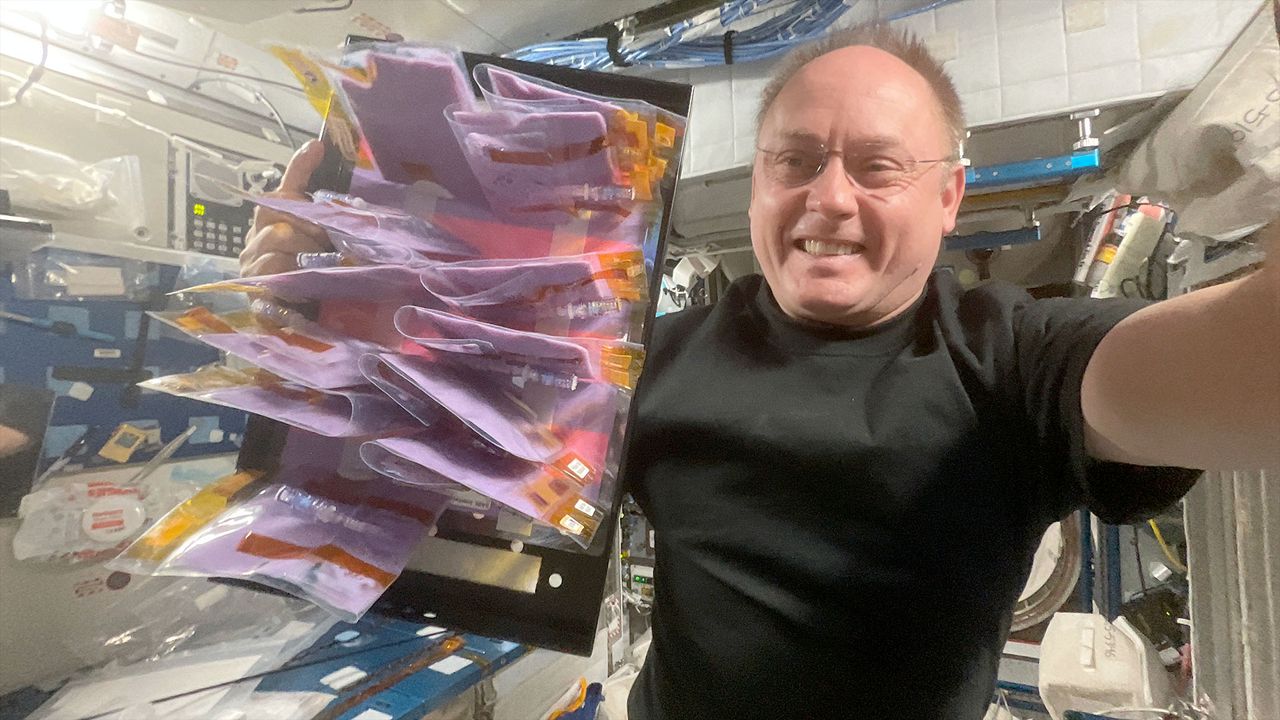
With four launches and nine spacewalks under his belt, Fincke leaves NASA as the fourth-most-flown astronaut at the space agency.
When you purchase through links on our site, we may earn an affiliate commission. Here’s how it works.
Prolific NASA astronaut Mike Fincke has announced his retirement from the U.S. space agency after 30 years of public service.
NASA announced Fincke's decision on Wednesday (Aug. 12), celebrating his contributions to spaceflight and long career of accomplishments.
“Few people have had the opportunity to shape as many chapters of NASA’s history as Mike Fincke,” NASA Administrator Jared Isaacman said that day in a statement. Fincke departs as NASA's fourth-most flown astronaut, racking up a cumulative 549 days in space over four separate spaceflights. During those, he performed nine spacewalks and served twice as commander of the International Space Station (ISS). Most recently, he launched as pilot on SpaceX's Crew-11 mission to the ISS, stepping into the role of commander for ISS Expedition 74 from August 2025 to January 2026.
Before his acceptance into NASA's 16th astronaut class in 1996, Fincke earned two bachelor's degrees from the Massachusetts Institute of Technology (MIT), in aeronautics and astronautics as well as Earth science, atmospheric and planetary sciences. Following his time at MIT, he did a summer stint at the Moscow Aviation Institute and later earned master's degrees in aeronautics and astronautics, and in planetary geology from Stanford and the University of Houston-Clear Lake, respectively.
Fincke also served in the U.S. Air Force prior to his career at NASA. He graduated from the U.S. Air Force Test Pilot School in 1994, then was assigned as a space systems engineer and flight test engineer at Edwards and Eglin Air Force bases in California and Florida, respectively. Those stints were followed by his role as U.S. flight-test liaison for the Japanese-U.S. XF-2 fighter program in Japan.
Following his two years of astronaut-candidate training, Fincke was assigned to NASA's Astronaut Office Station Operations Branch's Crew Test Support Team in Russia. There, he served as ISS CAPCOM (Spacecraft Communicator) and ISS crew procedures team lead until he began official spaceflight training in 1999.
His first rocket launch was aboard the Soyuz TMA-4 mission to the ISS in 2004, where he served as science officer and flight engineer for Expedition 9 and completed four EVAs (extravehicular activities, or spacewalks).
Fincke's second launch brought him back to the ISS in 2008, as a member of Soyuz TMA-13. It was then that Fincke took command of the space station for the first time. As Expedition 18 commander, Fincke added two more EVAs to his career total and oversaw the preparation of ISS facilities to begin supporting an increase from three-person to six-person crews.