// KOTAKU — GAMING
How Two Film Grads, A TiVo Set And GameTrailers.com Changed Video Game Hype Forever
The team from GameTrailers.com had prepared a video review of Shadow of the Colossus for Viacom president Tom Freston. It was a demonstration of what games were becoming capable of. Fumito Ueda’s PlayStation 2 masterpiece departed from stereotypical gunplay and cartoon platforming for something more bespoke in its brushstrokes. The cut was also to demonstrate what Brandon Jones and his crew, far more skilled with editing than other websites, were hoping to accomplish with more resources. To grow beyond a place to merely watch the latest in gaming commercials.
The room was filled with well-wishers, but Freston, then pushing 60, was visibly growing bored. Regardless of their growing craft, he ultimately didn’t care about video games. Geoff Grotz, GameTrailers co-founder, intervened. “We look at our major rivals online, like IGN and GameSpot,” said Grotz, “and what we really want to do is crush them.”
“Crush them,” replied Freston, lighting up. “I like that.”
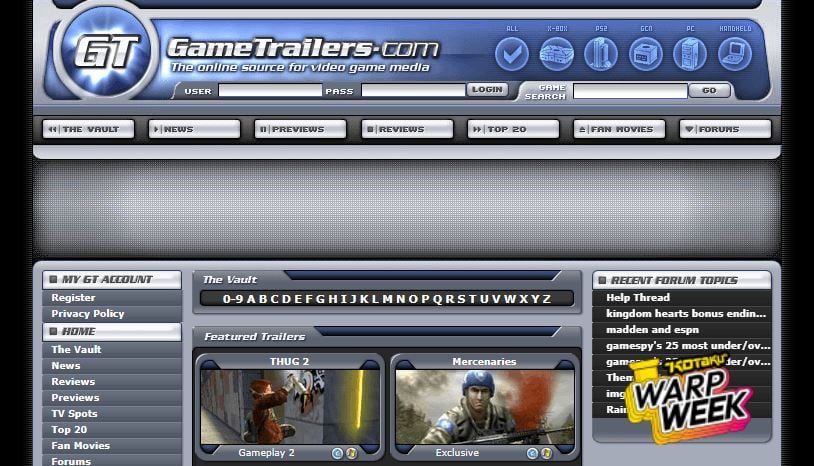
Departing from the traditional media merger story, the acquisition of the scrappy GameTrailers by the conglomerate that owned MTV, Spike and Nickelodeon was an agreeable one. While the page began as a hub for new game footage in 2002, they refined themselves into an institution, producing well-regarded video reviews, previews and retrospectives. There were no algorithms to game, just a feed of games as they emerged, and they gave equal oxygen to first-party blockbusters and emerging indies like Dear Esther. It was momentarily home to some of the more spartan digital media creators, like the Angry Video Game Nerd, and it took over Geoff Keighley’s Spike TV show Game Head for seven seasons; a rebrand that, Jones tells me, was welcomed by Keighley.
They were a unique case. Obviously young viewers were invested in video games, but Viacom wasn’t in the business of building websites. So GameTrailers was given the rare long, well-funded leash.
In 2002 Brandon Jones was fresh out of college and living in Los Angeles. Like many in his circumstances, his evening rituals revolved around macaroni and cheese, Final Fantasy, and checking for updates on Apple’s movie trailers hub. Before YouTube was even a glimmer, it was Apple of all places that provided the latest film trailers. Tom Cruise’s Mission: Impossible 2 hyped up moviegoers in glorious 720×480 QuickTime quality.
Video game promos were hardly as sophisticated. You had whip-crack, often gross-out TV commercials, and then lengthier hype reels for exclusive industry events and presentations. Beyond that, juicier trailers and gameplay footage were bound to demo discs or IGN’s bygone paywall.
“I asked my friends, ‘Why can I get movie trailers for free, but I have to pay money for video games?'” Jones tells me on a call. He and Grotz began hoovering up dirt cheap URLs. “My buddy suggested GameTrailers dot com, and just as a larp we should just start uploading stuff. Unapologetically stealing from IGN and GameSpot. If it was widescreen enough we would crop out the watermark. Yoink.”
Sourcing video game trailers in 2002 required a bit of creativity. On top of plundering other sites, Jones would program his TiVo to record broadcasts that often ran game commercials. While the modern hype circuit is almost solely built on pushing trailers online, it was the Wild West back then. The Napster era was fresh in litigious minds. Cease-and-desists were a regular occurrence. Nintendo wasn’t chuffed to see their Super Smash Bros. commercial online, the one featuring The Turtles’ “Happy Together.” “They’d explain that those ads were for television, not the internet,” says Jones. “Companies didn’t call us, or they did, and when they did it was bad.”
Being a video editor by trade, Jones wasn’t above just cutting a trailer himself. He recalls causing a small frenzy making what was essentially a fan video for Enter the Matrix, stapling audio from The Matrix Reloaded onto whatever gameplay clips he scrounged together. Many confused it for officia