// HACKER NEWS — CYBERSECURITY
Anton Chekhov played at love most of his life
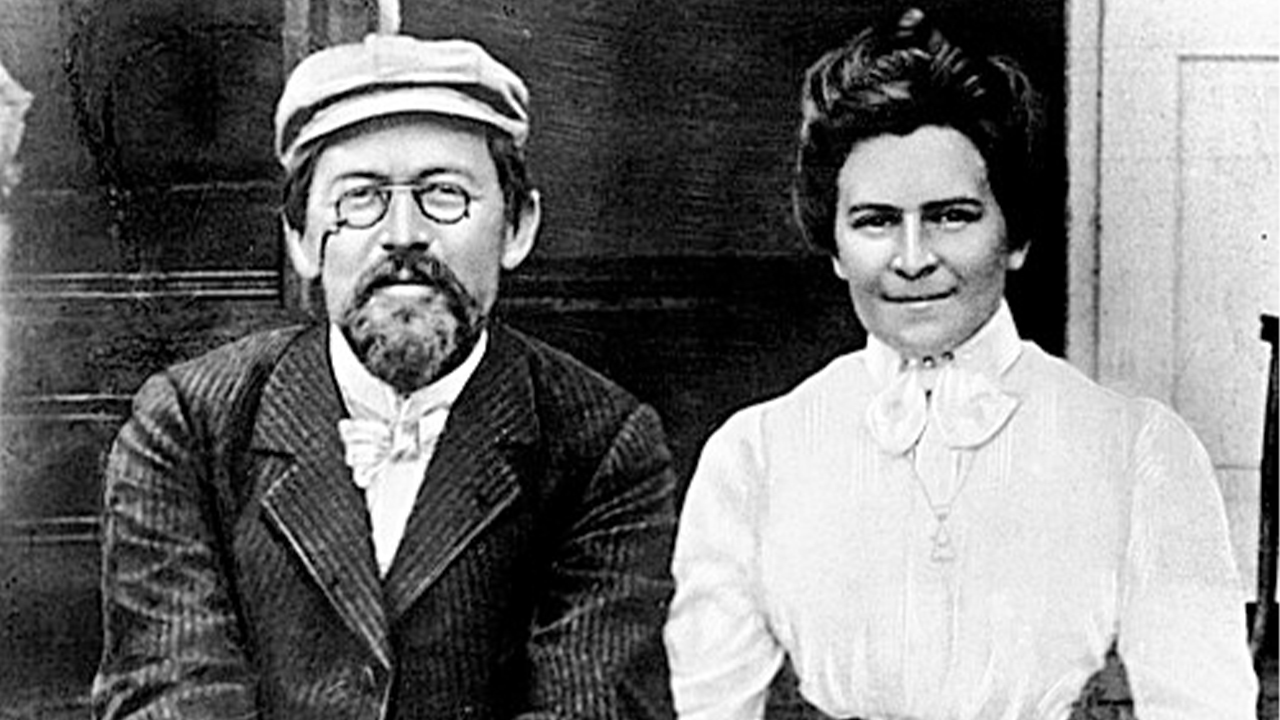
Anton Chekhov played at love most of his life. No one is sure if he won or if he even wanted to.
A favorite professor of my undergraduate years taught the short stories of Anton Chekhov as models of supreme, writerly virtues: brevity, compression, (seeming) simplicity, a cold realism, yet deep compassion for the felt experience of human suffering. He also extolled Chekhov’s personal life—brief, cool, practical, compassionate—giving the impression that the style was the man.
The Soviet Union was falling apart then, but this Chekhov was a writer the Soviets could claim as a pre-Revolution hero of the people: a wise, kind doctor who served in public health crises; traveled at great personal risk to a penal colony to write an early work of social science; helped build schools, libraries, sanatoriums, and local infrastructure; cared for his family as devoted son and brother; was a non-believer before atheism became state policy; and had brought fame to the motherland as a giant of literature and theater around the world. The fact that he died in 1904 at the age of 44, of the “Romantic affliction” and “poet-killing disease,” also meant he could never portray life under Lenin and Stalin.
If the Soviets retroactively claimed this Chekhov for their project, it seems comical that the same Chekhov was being claimed for the West in classrooms at the end of history, where his influence showed in anglophone writers such as Katherine Mansfield, Ernest Hemingway, Ray Carver, Joan Didion, Alice Munro, and Ethan Canin. American writing programs, which often taught Chekhov’s Apollonian aesthetics (despite students more often loving writers and poets who were Dionysian hot messes), agreed not to disagree with the Russians that Chekhov, though flirtatious, handsome, and famous, had been ascetic, perhaps even chaste, in his devotion to medicine (“my wife,” he said) and literature (“my mistress”).
If this Chekhov had the scent of saintliness, it was partly because he cultivated it, as with “The Temptation of St. Anthony,” the jokingly self-titled photo of him visiting young women friends (here, often reproduced) that deflated worldliness with irony. He married only three years before his death; his relationship with actress Olga Knipper had been mostly epistolary and would continue to be. Their published correspondence is playful but positively demure compared to, say, the “wild filth and obscenity” that admirer James Joyce wrote to his own wife.
If I felt happy, as a student, learning that Chekhov had found love late in life, I could be moved to tears by his life’s ending.
Olga, who apparently adored Chekhov and whom he helped make famous with his plays, was younger and already had her own career, in Moscow, which he insisted on. His doctors had prescribed him the exile of warmer climes (Yalta, on the Crimean peninsula, and Nice, France) for his “health”—the tuberculosis killing him by inches, which he would not acknowledge—so he and Olga were often apart. In the letters they pledge their love, fuss over the shallowest parts of each other’s distant lives, gossip about the theater, and nag each other to write more often. They use nicknames (Dear Writer, Dear Actress is the title of the collection of their love letters edited by Jean Benedetti) and terms of endearment—“my wonderful horseykins,” and “my little sperm whale,” he teases Olga—with mildly sexual, romantic, or diminutive connotations.
Many point to Chekhov’s probably most-anthologized short story, “Lady with the Dog,” as autobiographical, at least in terms of Chekhov’s maturation into actual love. Published in 1899, the year after he met Olga at rehearsals for his Seagull at the Moscow Art Theatre, the story portrays the affair of one Gurov, an aging Muscovite, and a younger, more provincial woman, Anna, who meet in the resort town of Yalta. Gurov, who has had numerous affairs, realizes after long reflection that “only now when his head was gray he had fallen in love, really, truly—f