// SPACE.COM — SPAZIO & SCIENZA
How will NASA's astronaut training hub change with commercial space stations?
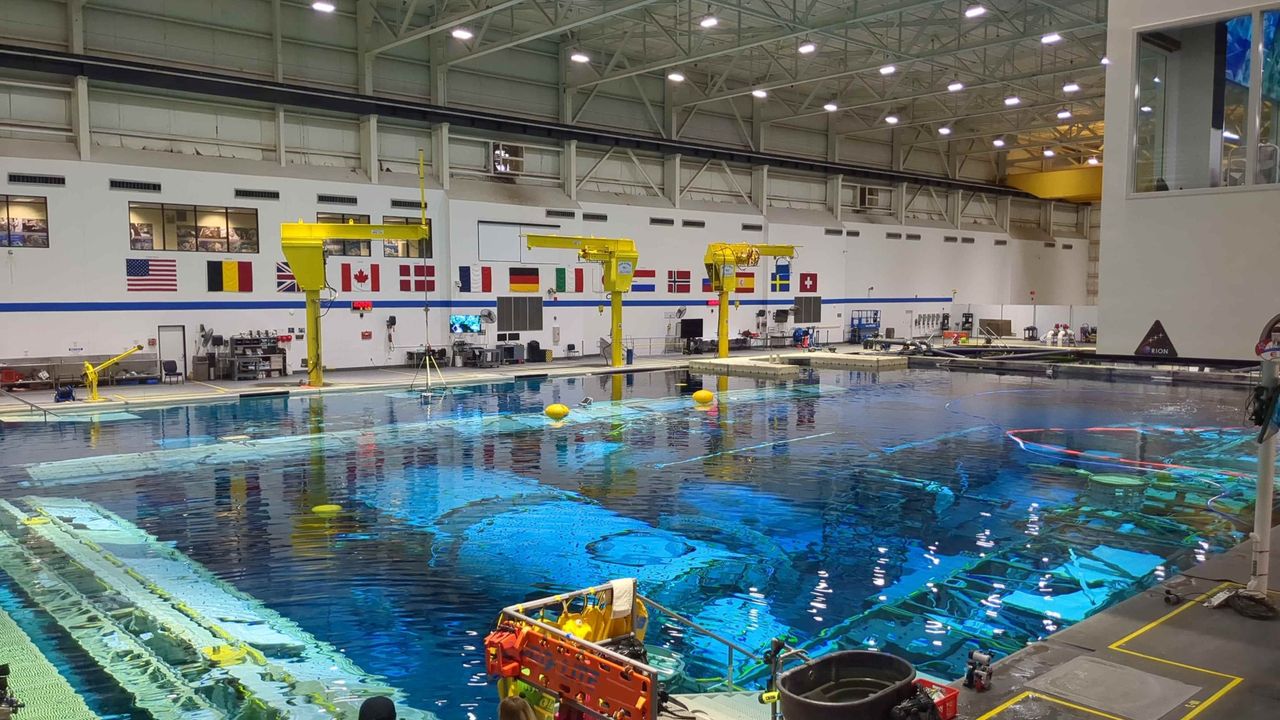
A tour of Johnson Space Center in Houston shows how NASA and private industry are already working together on the future of human spaceflight.
When you purchase through links on our site, we may earn an affiliate commission. Here’s how it works.
HOUSTON — What does NASA's astronaut training hub look like these days, as the agency aims to bring more commercial space stations into the fold?
It's an interesting mix of government and private companies, of space agency personnel and of contractors, all working together to keep U.S. and international astronauts flying through the end of the ISS — currently expected around 2030 — and the new breed of commercial space stations expected to take its place.
Canadian reporters like myself were invited on a tour of Johnson Space Center (JSC) on Aug. 4 ahead of the launch of SpaceX Crew-13, which launches no earlier than Sept. 12. Canadian Space Agency astronaut Josh Kutryk is a mission specialist on the Crew Dragon spacecraft, which also includes NASA commander Jessica Watkins, NASA pilot Luke Delaney and Roscosmos mission specialist Teteryatnikov.
The ISS remains an active program for at least a few years; NASA managers reiterated in a press conference here on Aug. 3 that they are still targeting an end-of-operations in about 2030 — but they are prepared to extend the lifetime of the station if directed by Congress (which wants to keep going at least another two years).
The space station has had a leak on the Russian side for several years, and astronauts recently and briefly sheltered in a Crew Dragon during discussions of a fix. At the press conference, NASA added the situation is under control as Roscosmos agreed to essentially seal off that area. Major station systems, they added, are otherwise in good health.
But as spaceflight takes planning, teams are already thinking about "lessons learned" when the ISS retires for a new generation of mission planners, which would include an even greater focus on companies. NASA's Commercial LEO (Low Earth Orbit) Destinations or CLD program aims to have private space stations for astronauts by the time the ISS retires, and handed out early-stage contracts valued at about $415 million in 2021 to three teams led by Nanoracks, Blue Origin and Northrop Grumman. After NASA briefly considered changing the program's scope, after input from industry a new request for proposals advancing CLD should be out soon.
Meanwhile, companies like Vast Space have their own self-funded modules almost ready to fly, while Bigelow Aerospace has an inflatable module on ISS that is being tested, long-duration wise, to make sure the concept holds up for a future free-flying destination. No matter who hosts astronauts, however, NASA officials on the tour said they are prepared to offer expertise and help — and there is no other visible demonstration of that expertise to the public than the ISS Mission Control, which is often shown live on NASA+ during a selection of space station operations.
The Mission Control building holds several dedicated control rooms for different mission purposes, including an historic Apollo control center and another room alternately used for Boeing Starliner and Artemis missions. I've been lucky enough to visit all of these in the past. Our only stop in the building Aug. 4, however, was the iconic ISS mission control.