// TOM'S HARDWARE US — HARDWARE & GADGET
Cooler Master Q300L v3 MicroATX case review: Sub-$45 MSRP offers incredible value for MicroATX chassis with included fans
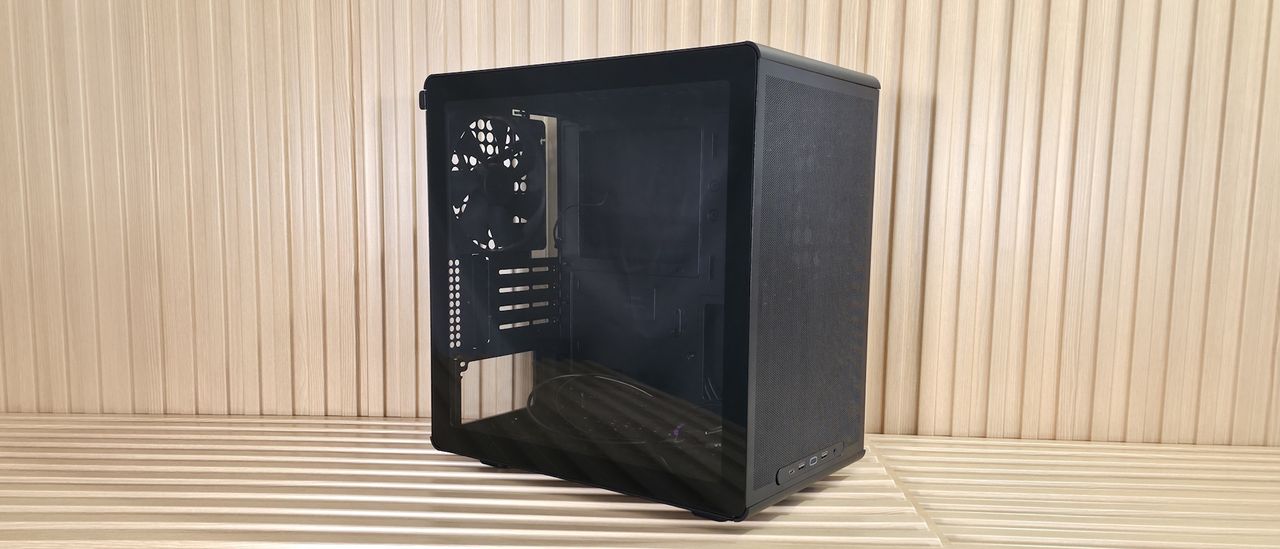
The Cooler Master Q300L V3 offers builders an excellent budget option in the Micro ATX space. Its improved airflow, flexible I/O placement, and 20 Gbps Type-C port are all positives for this sub-$45 budget chassis.
Why you can trust Tom's Hardware
Our expert reviewers spend hours testing and comparing products and services so you can choose the best for you. Find out more about how we test.
Cooler Master’s Q300 series of budget-friendly, compact Micro ATX/Mini-ITX cases started in 2018 and aimed at first-time builders on a budget. It came in multiple flavors, such as the Q300L (with distinctive patterned dust filters) and the Q300P, which added extra panels, RGB lighting, and handles. In 2023, the Q300L V2 was released, swapping out the acrylic panel for glass and adding a fast 20 Gbps USB Type-C port among other things. Fast forward to today: the company recently released the Q300L V3, with a bigger overhaul than the first versions, increasing its size slightly, enlarging the panel perforations, reinforcing the structure, and adding flexible front IO placement.
Even with all the new features, the Q300L V3 is the ‘Lite’ version of the Qube 340 (which includes handles) and remains very affordable, with an MSRP of $44.90. However, you can currently find it on Amazon for even less, under $40, at the time of publishing. The updated Q300L and its slightly larger frame aim to offer increased airflow through enlarged panel perforations, more space for the CPU and graphics card, and continued vertical or horizontal orientation options so you can tailor the build to fit any space. It also includes one 140mm fan. As far as looks go, not a lot has changed, but for a sub-$45 chassis with tempered glass, you won’t mind showing it off.
We'll cover many more details inside and outside the case, showcasing the features and any issues we may encounter during the build process. We'll also run the case through thermal and noise testing to show how it performs compared to other cases and whether it has a chance of making our best PC cases list. Below are the case's specifications from Cooler Master.
Top - 2x120/140mmFront - 2x120/140mmBottom - 1x120/140mmRear - 1x120/140mm
366mm (w/o fan installed)~341mm (with 25mm fan installed)
The Q300L V3 looks remarkably similar to the V2. The updated V3 offers similar dimensions, just a few millimeters larger all around, and keeps its flexible design, allowing vertical or horizontal orientation options. The edges of the small-form-factor chassis are now rounded instead of angled and flat like on the V2. They also moved the IO panel from the top to the bottom by default, but you can move it back to the top if you choose. Outside of that, there are hardly any noticeable changes to the appearance. But that’s not necessarily a bad thing, as it’s a good-looking, basic chassis for the price.
The side uses a clear tempered glass panel that slots in at the bottom and is secured on top with ball-and-socket latching mechanisms, holding it tight. Simply slot the glass in, and push on the top to secure. I like this cleaner implementation versus V2, which used four screws in the corners to hold the panel on. The other side panel is held on by four captive thumb screws in the corners, each with rubber pads to support a horizontal (window panel up) configuration.
Flipping the chassis around to the rear, you get a better look at the fan location, which supports 120mm and 140mm air movers (comes with one 140mm). Below that are the four PCIe expansion slots, which can support up to 3.5-slot video cards and still give them some air to breathe. At the bottom is space for the power supply. You mount the power supply to a ‘box’ offset about an inch or so inside the case, which hides the connector portion of the power plug for a cleaner look from the (generally hidden) backside of the case. You can see it better in the internal photos below.The top, front, and bottom of the case all use magnetic dust filters to keep