// SPACE.COM — SPAZIO & SCIENZA
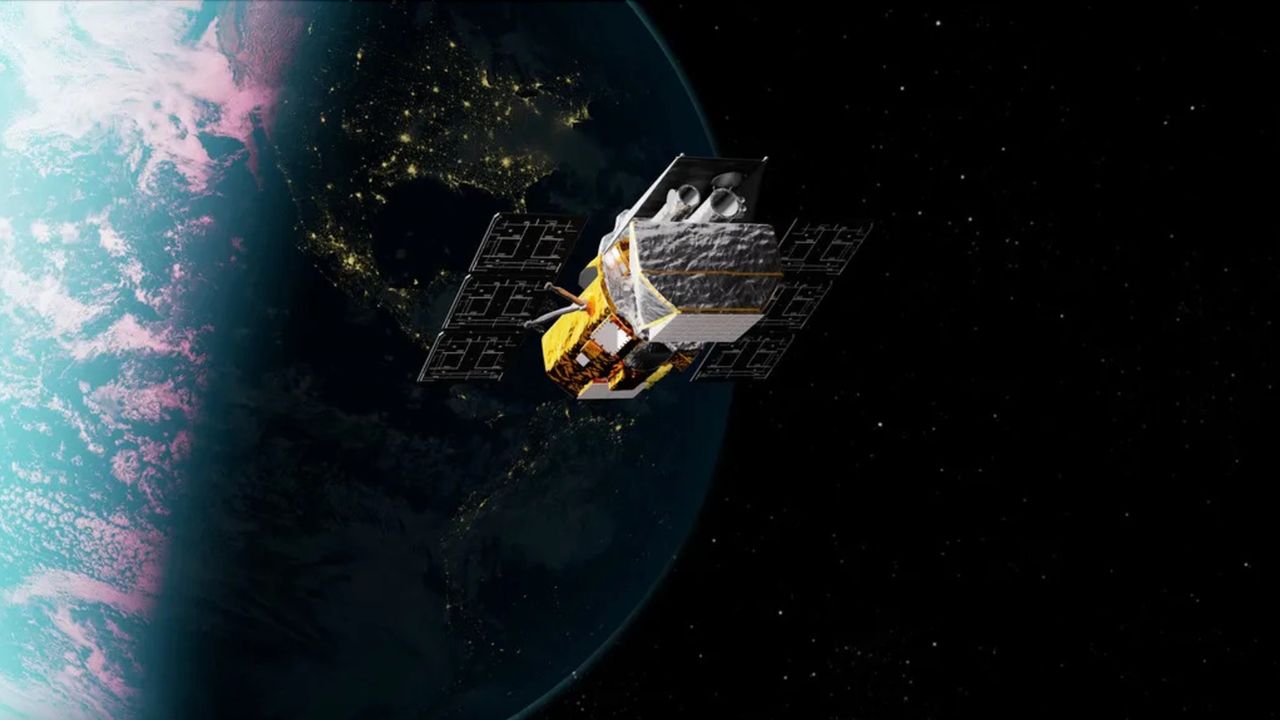
After failure of private rescue mission, NASA's Swift space telescope will crash back to Earth. But when and where?
"The most likely outcome is that any surviving debris will land in the sea, but there is a chance it could impact a built-up area and cause a casualty."
When you purchase through links on our site, we may earn an affiliate commission. Here’s how it works.
A private spacecraft failed to rescue NASA's Swift space telescope, meaning the big observatory will come crashing back to Earth in the near future.
The Neil Gehrels Swift Observatory launched to Earth orbit in November 2004. Over the past two decades, it studied gamma-ray bursts — the most powerful explosions in the universe — and other cosmic objects and events using a trio of telescopes.
But Swift's science work is now done, and its days in orbit are numbered.
In September 2025, NASA put out a call to action to save Swift, whose orbit was decaying quickly due to high solar activity. The bottom line: The observatory needed a boost to a higher orbit soon, or it would be dragged down to its death in Earth's atmosphere.
The Arizona-based company Katalyst Space Technologies answered that call, and won a $30 million NASA contract to perform the re-boost. In hurry-and-scurry mode, Katalyst built a robotic spacecraft called LINK, which launched on July 3 to meet up with Swift and haul it to a higher orbit.
But LINK suffered attitude-control issues after launch, causing NASA and Katalyst to wave off the rescue attempt.
Ghonhee Lee is the CEO of Katalyst Space Technologies.
Speaking to CNN News Central on Aug. 24, Lee said: "You know, this is not the outcome that we wanted, but I think it's very important to recognize the unprecedented scale. This was an ambitious, high-risk, high-reward mission where we designed, built and launched a space robot within nine months."