// HACKER NEWS — CYBERSECURITY
I turned my security cameras into an automatic bird identification system
ImmiBridge pulled 51,000 photos and videos out of iCloud and into my self hosted Immich server over a single weekend. Here's how the setup and the sync actually went.
Teaching a Google Nest Hub to show more than family photos: a driveway camera feed on movement, and a now-playing card for whatever's on the living room Apple TV.
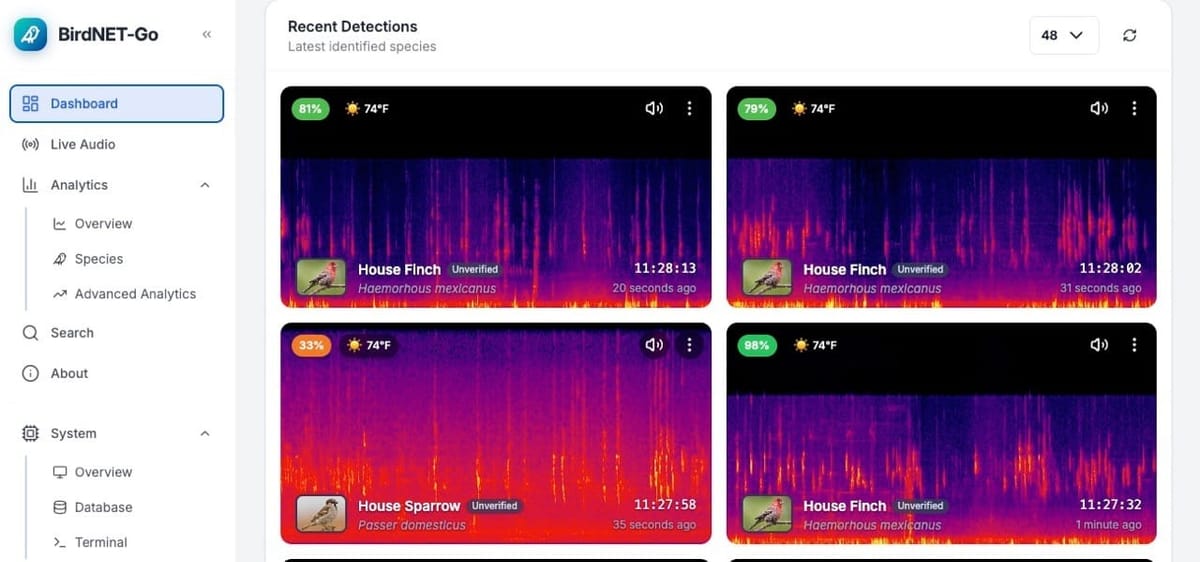
My wife loves listening to the birds and identifying them using an app on her phone. I thought I'd take this a step further and see if there was something that can identify the birds based on their song. Looking around I found BirdNet and BirdNet-Go, then discovered you can run this on Docker and use the security cameras you already have outside to identify the birds. Awesome! So I took 3 of the cameras around my house and used their microphones to identify the birds. It was magic.
BirdNet-Go runs 24/7. It listens constantly. The moment a bird starts singing, it analyzes the audio and gives you an identification. No waiting, no manual recording. It works for bats too, which is pretty cool if you've got them flying around at dusk. The system just keeps running in the background, cataloging everything it hears. It also started detecting frogs which is interesting.
The whole thing runs locally on your hardware. No cloud services. No API calls. The AI models live right on your server or Raspberry Pi. This means it's fast, private, and doesn't cost you anything per month. You can even run multiple models if you want different detection strategies or regional bird databases. They recently added Google Perch v2 to the model gallery allowing for 14,795 species to be detected vs the 6,000 that BirdNET 2.4 provided.
You can set up rules for specific birds. Want to know the instant a cardinal shows up? Done. Looking for a rare species in your area? Set an alert. The system matches against species lists and sends you notifications based on whatever criteria you set. It's like having a birding buddy who never sleeps. I even have it connected to a channel in my homes Discord server. Wait, your house doesn't have a dedicated Discord?
This feature tracks which birds are new to your yard. First time a blue jay visits? BirdNet-Go flags it. It maintains a running list of every species it's detected, so you can see your yard's biodiversity grow over time. Honestly, this turned into a fun game for us.
If your cameras support RTSP, you're good to go. Most modern IP cameras do. You just point BirdNet-Go at the stream URL. I used three of my existing security cameras. Didn't need to buy any special hardware. The cameras I already had for security now pull double duty identifying birds.
BirdWeather is a community platform for sharing bird detection data. BirdNet-Go integrates with it directly. If you want to contribute your observations to a larger dataset, you can. It helps researchers and other birders see what's happening in your area. You don't have to use it, but it's nice that the option exists.
Everything lives on your network. The audio never leaves your house unless you explicitly share it. No subscription fees. No terms of service changes. No company shutting down the service in two years. You own the whole stack. It runs in Docker, so it's easy to manage alongside everything else in your homelab.