// HACKER NEWS — CYBERSECURITY
2004 RuneScape fit a multiplayer RPG into 56k dial-up
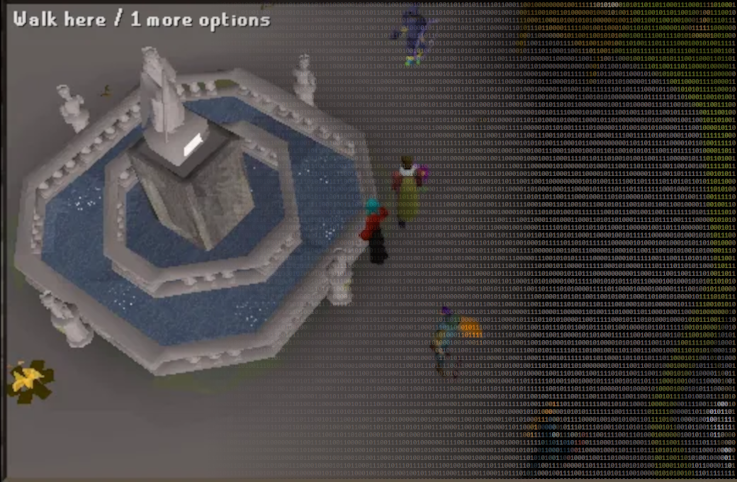
Added correction regarding Ctrl key. In early versions this was “force run”, in a later
update it was changed to “invert movement mode”.
In 2004 I played too much RuneScape on a 56k modem that died the moment Mum picked up the phone. A 3D world, up to a couple of thousand players on a server, dozens on screen at once - in the browser, on 5 kilobytes per second. It worked. Let’s follow a single step and see how.
As a child I was too preoccupied with picking flax and killing goblins to think about how this worked. The answer, however, is a sustained, almost obsessive exercise in not wasting bytes. So, let’s click one tile north of where we’re standing, and trace every byte that crosses the wire from that click, to the server, to the screen of another player.
The detail in this post comes from a decompiled 2004 RuneScape 2 client. Snippets are rough translations from that decompile, tidied up in places for readability but with the logic intact.
The core principles aren’t identical across versions, but most of them run all the way from RuneScape Classic (2001) to present-day RuneScape 3 and, of course, Old School RuneScape.
If you played RuneScape in the early 2000s and are still in possession of a hard drive from that era, please check out the RuneScape Archive Project. They do great work to catalogue historic RuneScape versions which are otherwise lost to time, and every contribution is valuable.
Let’s look at some of the constraints that Jagex were working with at the time.
After the login handshake completes, before any game packets are sent, a small encryption layer is set up. This one’s not about saving bytes; it’s the only encryption in the stack (outside of some RSA encryption in the login handshake), and it’s here because the opcode it protects is the very thing every later section depends on.
Every packet begins with an “opcode” byte: a small integer saying what kind of packet this is. That opcode (and only that opcode) is enciphered with a stream cipher called ISAAC. There are two streams in play - one for traffic from client to server, and one for the reverse direction. Both sides need both streams: the client enciphers what it’s about to send and deciphers what just arrived, and the server does the same in mirror image (per connected player).
Both streams are seeded from a shared four-integer key. The client generates two of those integers itself; the other two come from the server as part of the handshake. The server-to-client stream then uses the same seed with 50 added to each word - enough to keep the two directions from sharing a keystream: