// 9TO5GOOGLE — MOBILE & WEB
Philips Hue adds HDMI-free Sync and new 4K Box, Nanoleaf integration, and more app upgrades
To kick off IFA 2026, Philips Hue announced a new set of sync boxes for its Play lighting. The company also teased a few new app long-awaited changes to the app, and a Nanoleaf partnership that makes your light-up triangles compatible with Philips Hue’s products.
Philips Hue’s Play Sync Box 8K is an incredible addition to any home theater or living room, but it’s expensive. At around $385, you can connect your TV’s visuals with compatible Philips Hue lights, but that isn’t a feasible option for a lot of users.
Camera-based light kits have become popular for users who want the experience without spending the money on Philips’ good-but-pricey hardware. Options from companies like Govee fill that gap for much less.
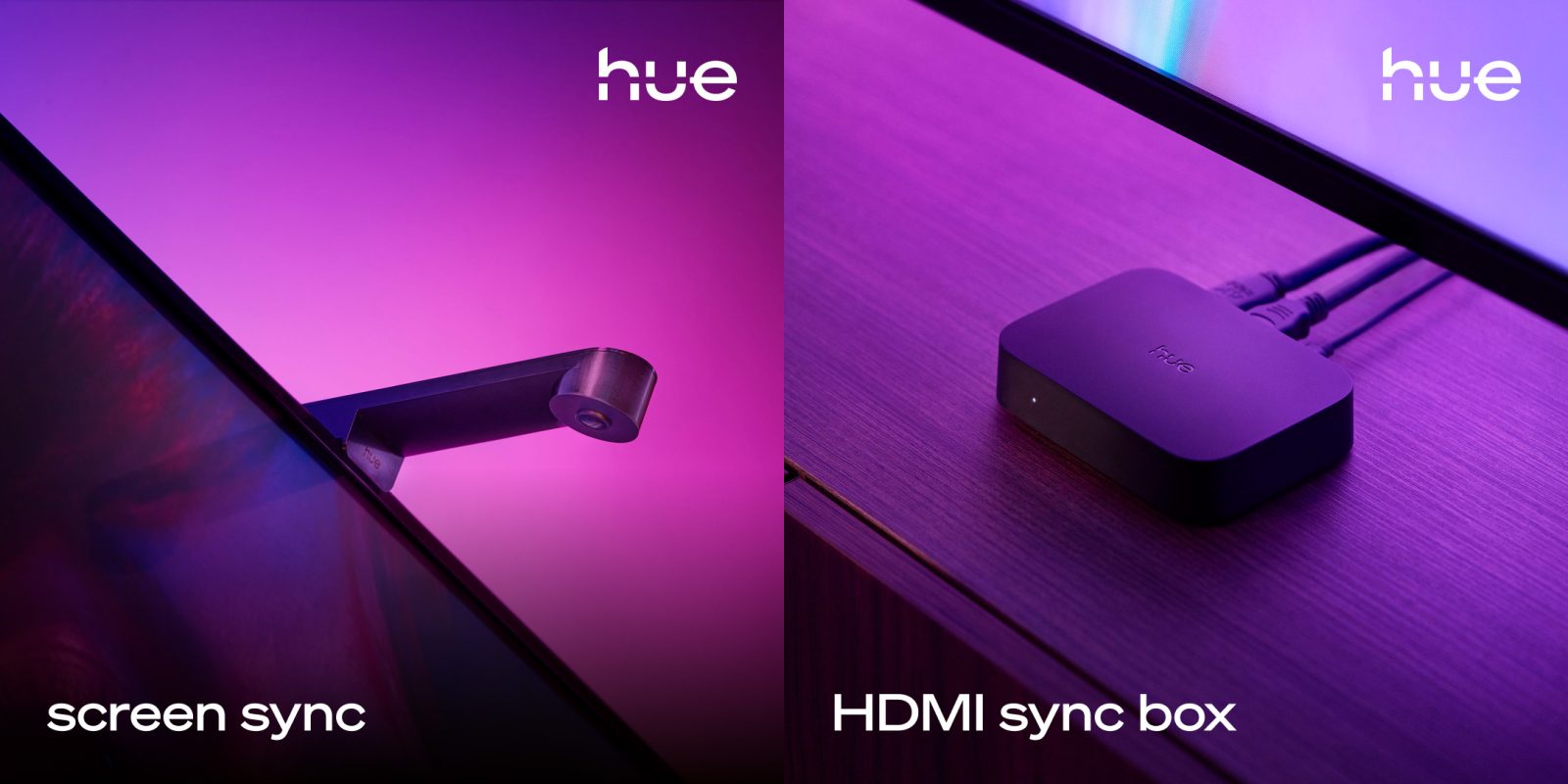
Today, though, Philips Hue announced that it’s going to offer a couple of more affordable options for users, starting with its own camera-based sync box. The Philips Hue Play Screen Sync is made up of a single fisheye camera that sits on the top of your TV. It captures colors displayed by your TV, so not only is it more affordable, but it’s input-agnostic. Unlike the 8K Sync Box, this model will work with native TV apps because it isn’t pulling from select HDMI feeds.
The Philips Hue Play HDMI Sync Box 4K sits in the middle of three, with a similar experience and compatibility to the higher resolution version. It only has one HDMI connection, which might make it ideal for those that just need a connection to an AVR, instead of media players and consoles.
Both new models can also opt to sync to devices through Bluetooth instead of using a Hue Bridge. That makes the setup simpler. The Hue Bridge and Hue Bridge Pro allow connections to expand to 10 lights, as opposed to a single light strip.
With that, new gradient strip lights were announced for entertainment spaces. Philips Hue says these strips will be available for TVs up to 100 inches.
The IFA announcement continues with an announcement regarding a new partnership with Nanoleaf. The company says compatible Nanoleaf shapes can be integrated into the Philips Hue ecosystem with the Wall Light Module. Those devices will work with Hue’s scenes and automations within app control.
The app itself is also getting a couple of changes. First, Philips Hue on Android and iOS will get backup and restore functionality, so users don’t lose their scenes and automations if the app is deleted or they switch phones. The app will also start offering AI-generated scenes that work around specific user needs.
Both of those upgrades will roll out “beginning in fall 2026.”