// SPACE.COM — SPAZIO & SCIENZA
The moon will hide Jupiter in broad daylight on Sept.8 — here's how to see it
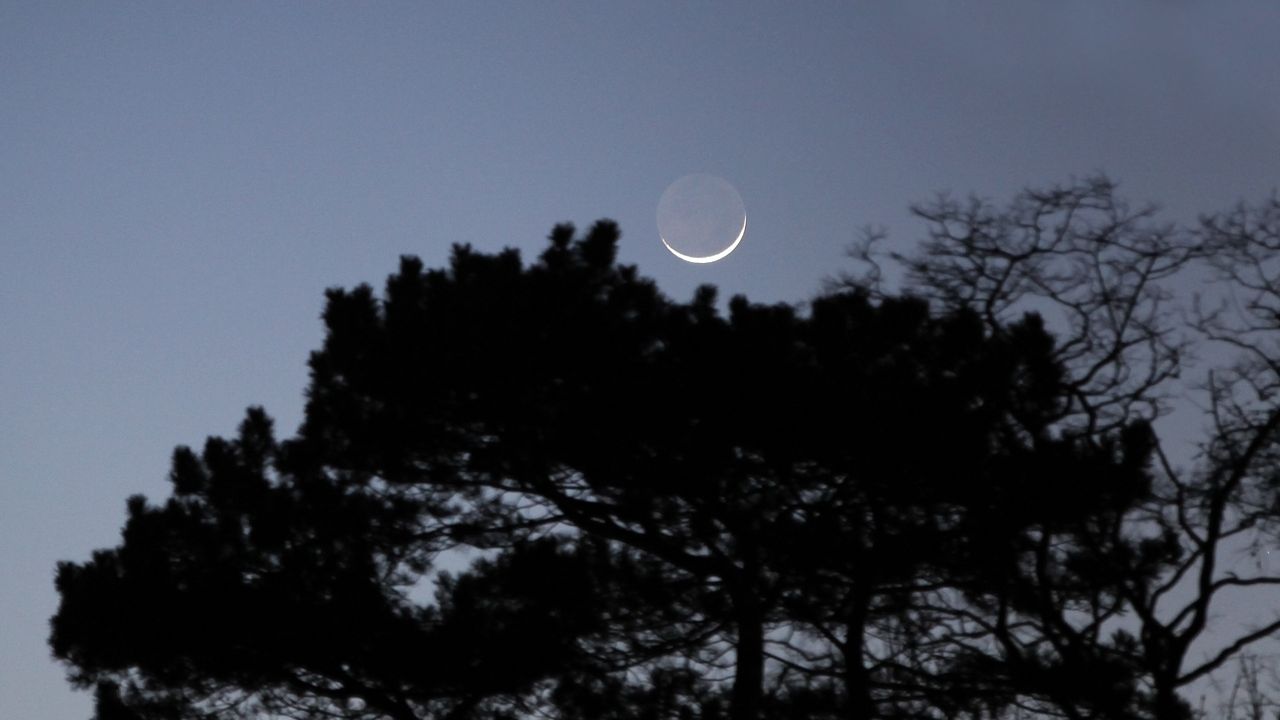
The moon and Jupiter will meet before dawn on Sept. 8, before the moon hides the giant planet from view in a rare daytime occultation.
When you purchase through links on our site, we may earn an affiliate commission. Here’s how it works.
On Tuesday (Sept. 8), skywatchers can first catch a striking predawn pairing of the crescent moon and Jupiter, then — where conditions and location allow — attempt the much harder daytime occultation, when the moon hides the planet from view.
Set your alarm for 5 a.m. local time on Tuesday and look low toward the east-northeast sky. Check in advance for tall obstructions that could block your view of this delicate predawn tableau. A slender waning crescent moon — just under 10% illuminated and resembling a "celestial smile" — will be immediately apparent. About 5 degrees below it, roughly half the width of your clenched fist held at arm's length, will be brilliant Jupiter.
Jupiter rises in the east-northeast shortly before 4 a.m. local daylight time, but it does not climb fairly high until just before dawn's first light. The planet is in the dim zodiacal constellation Cancer; one of my astronomy mentors at New York's Hayden Planetarium, Dr. Ken Franklin, used to call Cancer "the empty space between the Sickle of Leo and the Gemini Twins." If you set up a telescope before dawn, you can be among the first to see what became of Jupiter's tumultuous cloud belts while the planet was hidden in the sun's glare from early July through mid-August.
Another moon-Jupiter show awaits later in the day: a daytime occultation, when the thin waning crescent moon will hide Jupiter from much of North America. Unfortunately, a swath of the western United States — anywhere west and south of a line running roughly from Bellingham, Washington, to Rockport, Texas — falls outside the occultation's visibility zone.
The occultation occurs during the afternoon, when the moon and Jupiter will appear somewhat lower than the sun and well off to its right. Jupiter will disappear behind the moon's sunlit limb, with the moon taking roughly a minute or more to inch across the giant planet's face. Approximately 50 minutes later (give or take ten minutes), Jupiter will gradually reappear from behind the moon's dark edge.
Jupiter will vanish (going from north to south) between 2:55 and 3:30 p.m. for those in the Eastern Time Zone, 1:45 to 2:20 p.m. for the Central Time Zone, and 12:30 to 1:00 p.m. in the Mountain Time Zone.
To find out when these events occur at your location, use the accompanying map. Interpolate between the ten selected cities to find the local daylight time of Jupiter's disappearance (top) and reappearance (bottom) for your site.
The chief challenge will be finding the moon and Jupiter at all, so give yourself plenty of time. The easiest method is to locate the pair before sunrise and track them into daylight. Much will depend on the transparency of your local sky — how deep its blue color is. If the day is hazy, the search will be harder.