// KOTAKU — GAMING
Playing Wind Waker With My Daughter Helped Me To See The Game In A Whole New Light
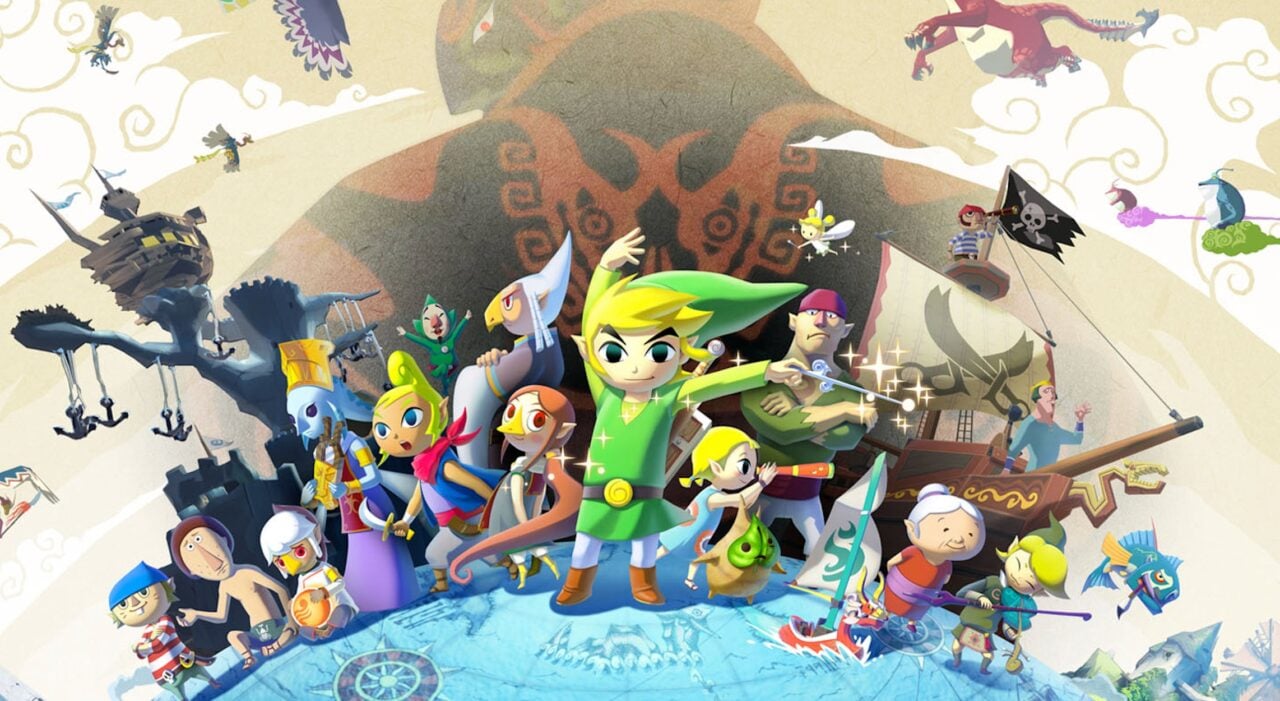
I enjoyed Wind Waker the first time I played it on GameCube, but it didn’t resonate with me the same way some of my other favorite Zeldas in the series had. I really liked Wind Waker’s art style, but I felt the gameplay was too simplistic and the number of actual dungeons was less than I’d hoped for. The Triforce quest was a tedious slog that nearly derailed my quest as it caused me to put it down for a good chunk of time. When I finally came back and finished it, I appreciated the game for its aesthetics, but placed it on a lower tier when it came to my favorite Zelda games.
This all changed when I revisited Wind Waker HD many years later on the Wii U with my daughter. I’d earlier introduced her to the original The Legend of Zelda on the classic Nintendo and she’d caught me playing parts of Tears of the Kingdom. When I wanted to find a Zelda game we could play together this past summer, several people suggested this was one of the best ones to play with family. I’m glad I listened to them.
From the moment I turned on Wind Waker HD and my daughter wandered Outset Island, the expressive animation of the characters and vibrant visuals of the surroundings drew us in. I’ll be honest. Way back when it first came out, I was disappointed. Like many people, Space World 2000’s Nintendo demo showcasing a realistic Link fighting Ganon was so incredible, I was shocked at Wind Waker’s visuals when it was first announced. It grew on me when I played and as mentioned above, I came to appreciate it. But what I’d once deplored as a letdown was now a breath of fresh air, especially when so many contemporary games pursue hyper realism. The HD version is beautiful on a flatscreen and looks like a playable Zelda cartoon, a goal the devs were pursuing.
My daughter insisted on interacting with every NPC, shaving down every blade of grass, and collecting all the rupees she could find. She also collected three pigs for Rose’s new animal pen in exchange for a reward. After rescuing Tetra in the Forest of Fairies, a case of mistaken identity gets Link’s sister, Aryll, kidnapped by the giant bird, the Helmaroc King. My daughter immediately wanted to set out to rescue her.
One aspect that appealed to her was how young Link is. This Link is a random young boy taking part in a local tradition for kids who came of age, forced to get involved to help his sister. He’s not the chosen hero nor someone possessing special powers. He has to use whatever he picks up and faces his adversity with grit and a sense of humor. The cell-shading is gorgeous and Link’s energetic yelps (and brows) add to the dynamic feel.
I was worried that the first main dungeon, the Forsaken Fortress, might be too challenging for my daughter since it was her first 3D Zelda. But after having his barrel launched into the fortress and Link slamming like a pancake cartoon against the wall, she dived right into it. Even though Link loses his sword, he can pick up items, use barrels to hide, and sneak about.
She shut down the searchlights, avoided Bokoblins, snatched an optional heart piece, retrieved her sword, and climbed all the way to the top. Watching her play and intuitively navigate the fortress gave me a deeper appreciation for the designers at Nintendo. The environments are constructed in a way that gives visual hints on where players should be heading between the main courtyard and its peripheral hallways. Enemy animations show players how to respond to them and also have funny reactions that make them seem less ominous. Even when you’re caught, Link doesn’t die, but is sent to a prison cell that’s relatively easy to break out of so that mistakes aren’t too punishing.
There’s an intentionality to the floor layout that ties in with the spotlights, making each space a meaningful puzzle to be figured out. I appreciated the simplicity I’d disliked before as it allowed my daughter to focus on learning Link’s physics and capabilities. This in turn immersed her more into the quest sinc