// ARS TECHNICA — HARDWARE & GADGET
Steam Frame: The Ars Technica review
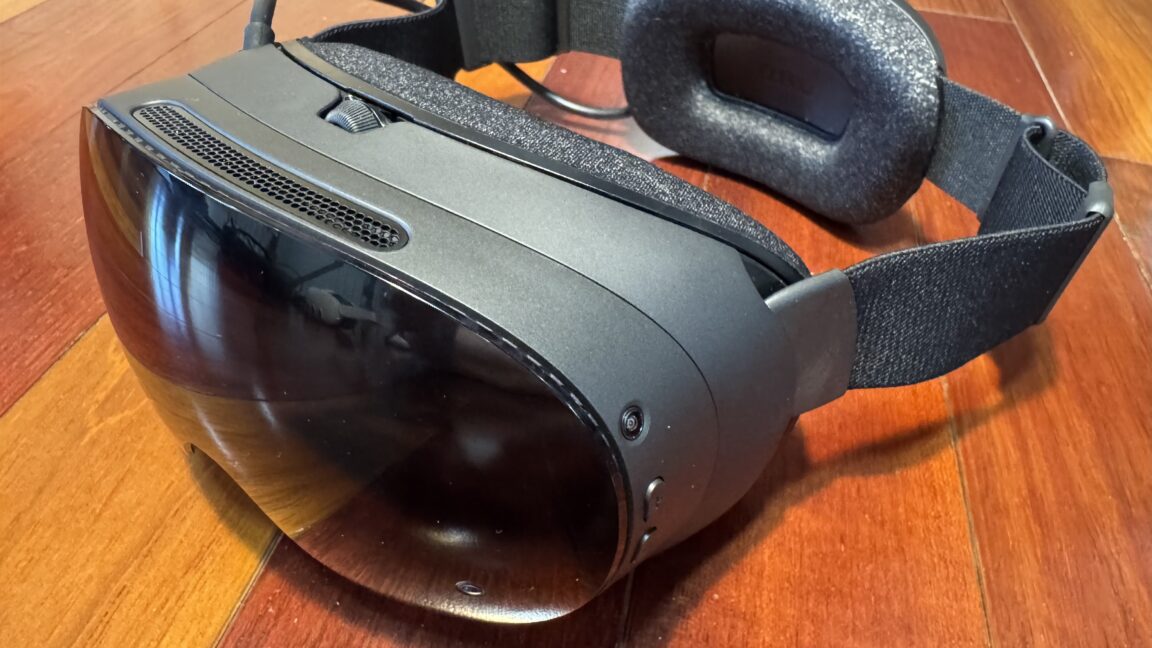
Valve’s new $1,059 VR hardware tries to revive an abandoned VR “revolution.”
In the 2010s, Valve was at the forefront of a virtual reality revolution that looked to some like it would upend the gaming industry. The Valve of six to ten years ago seemed committed to being a major player in the world of PC-connected VR headsets, first through its “strategic partnership” with HTC on the impressive-for-the-time Vive headset (plus the SteamVR platform standard that powered it) and then years later with its own Index headset (and proof-of-concept adventure Half-Life: Alyx).
Then came the Meta (previously Oculus) Quest, a low-powered, low-cost headset that proved the vast majority of VR-curious gamers didn’t want to bother with being literally tethered to a bulky, expensive gaming PC. As the Quest line carved out a modest niche through the 2020s, Valve seemed more or less satisfied to let its earlier VR hardware and software ambitions wither on the vine.
Those years of Valve’s benign neglect of VR make the imminent release of the $1,059 Steam Frame—which starts taking reservations today—more than a little surprising. Now that virtual reality’s hype-fueled, revolutionary promises have decidedly not played out, Valve is somehow ready and willing to limp headfirst into the world of standalone VR headsets—today, in 2026. And after spending a week or so with Valve’s latest foray into gaming hardware, the Frame somehow feels simultaneously overengineered and underbaked, depending on how you look at it.
The Steam Frame makes a great first impression on your face. The entire setup weighs just 440 g (a bit under a pound), a roughly 15 percent weight reduction from the Meta Quest 3’s 515 g. That weight reduction inches us ever closer to the 250 g target that Meta’s former CTO John Carmack said he was once trying to achieve at the company.
If anything, that “all in” weight overstates how heavy the Steam Frame actually feels on your head, though. That’s because roughly half the weight is contained in a curved, cushioned, 21.6 Wh battery that tucks in behind your skull, attached to the back of a thick, stretchy headstrap. The remaining “core” lens-and-compute housing is noticeably less front-heavy than any other VR headset I’ve tried. Combined with the counterbalance of the battery in the back, the Steam Frame never feels like it’s pulling your head forward or threatening to fall down the bridge of your nose as many heavier, less balanced headsets can.
Yes, the “ski goggle” fit of that lens housing does still put a little pressure against your cheekbones and forehead, effectively trapping heat and sweat during more active VR experiences. But while we’re still a far way from “forget it’s there” territory, you’re much less likely to feel the Frame shifting uncomfortably on your face as you move your head around in VR. I had no trouble wearing the Steam Frame across hours-long sessions without the need for a comfort break.
The only major downside of the Frame’s design is that the “battery bump” on the back of your skull can get in the way if you try to lean your head back against a headrest during seated play. Glasses-wearers should also be aware that the headset pushed noticeably against my thin corrective frames while I wore them inside the Frame, even with an included magnetic spacer. Hopefully, a third-party accessory maker will come up with a thicker spacer to help glasses-wearing Frame players out.
On paper, the Steam Frame has all the specs you’d want from a modern virtual reality headset. The pancake optics display maxes out at 144 Hz and 2160 x 2160 resolution per eye, offering a relatively luxurious 110-degree field of view that limits the “tunnel vision” effect seen on earlier headsets. Outward-facing cameras provide “inside-out” tracking that doesn’t require setting up the bulky base stations needed for previous Steam VR devices while also letting you see a grainy image of the room around you without taking off the headset.
The s