// NATURE NEWS — SPAZIO & SCIENZA
Underground hydrogen could spur a green-energy revolution — if companies can find it
James Mitchell Crow is a freelance writer, based in Melbourne, Australia.
Search author on:
PubMed
Google Scholar
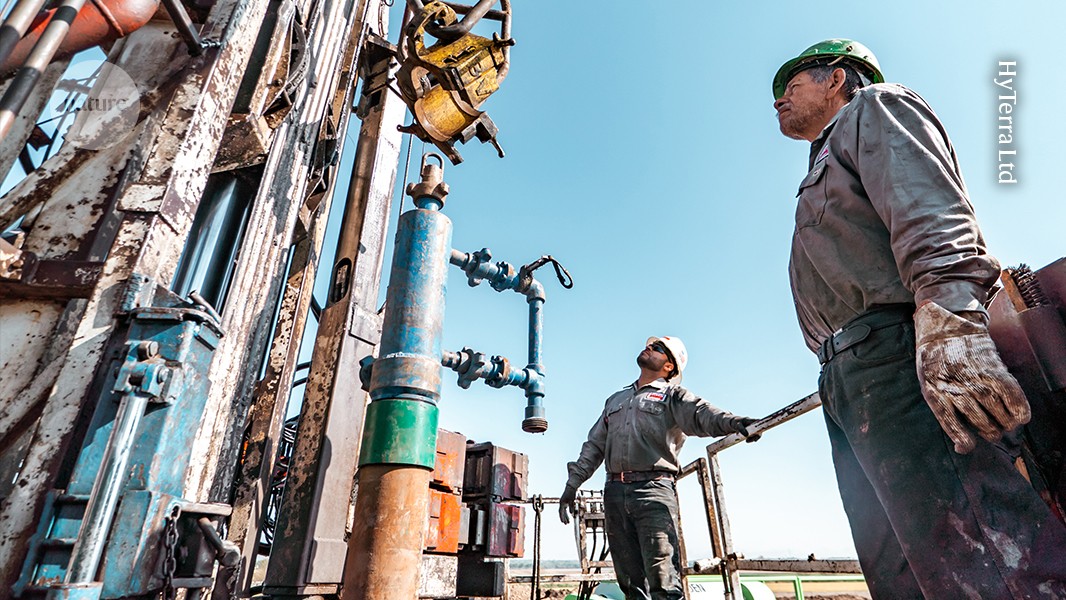
The company HyTerra explored for hydrogen in Nemaha, Kansas, but there wasn’t enough gas for commercial production. Credit: HyTerra Ltd
In almost 30 countries, energy prospectors are hunting for a potential game changer in the quest to fight global warming. Their quarry is hydrogen gas trapped deep underground in hidden deposits. They hope to find big reservoirs of this geological hydrogen — substantial enough that the gas could become a green replacement for fossil fuels.
How the hydrogen revolution can help save the planet — and how it can’t
When hydrogen is burned to produce electricity, the only by-product is water vapour — no carbon dioxide is emitted. And the potential for geologic hydrogen has energy specialists buzzing. Since 2023, venture capitalists have invested nearly US$500 million in the search for deposits.
A 2024 analysis suggests that Earth’s subsurface probably contains tens of trillions of tonnes of the gas1. If even a small fraction can be recovered at a profit, geologic hydrogen could meet projected clean energy needs for 200 years, potentially at, or even below, the cost of fossil fuels. “That’s why it has gathered momentum as quickly as it has,” says Owain Jackson, head of hydrogen-exploration company H2Au, headquartered in Epsom, UK, which started drilling in Kansas in August.
Or all of this could be a pipe dream. Nobody knows whether there are large enough deposits of geological hydrogen to match the hype. That’s why companies are racing to drill into the ground in many geological formations, from northern Canada to eastern Africa to South Australia. Findings from these wells could emerge within the next few months, providing key clues about the potential for geologic hydrogen.
“At the moment, we still don’t know if it’s almost nothing or completely everywhere,” says David Waltham, a geophysicist at Royal Holloway, University of London.
All this excitement caught geologists by surprise. “On Wikipedia, natural hydrogen didn’t exist five years ago,” Jackson says.