// NATURE NEWS — SPAZIO & SCIENZA
A retinoic acid autoregulatory loop governing prefrontal–motor arealization
Nature
(2026) Cite this article
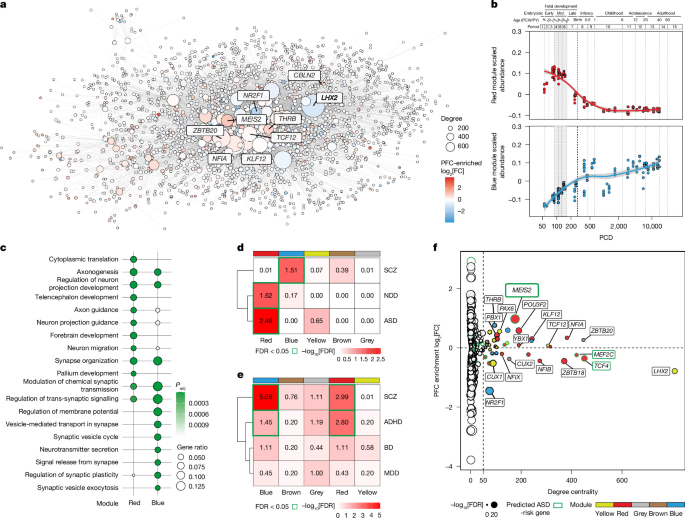
The frontal lobe comprises the prefrontal association cortex (PFC), which supports complex cognition and goal-directed behaviour, and the motor cortex (MC), which executes movement1,2,3,4,5,6,7,8,9,10,11,12,13,14. The establishment of distinct regional identities and connections along the sensorimotor-to-association axis provides a fundamental scaffold for cortical areal organization and function15,16,17,18,19. Retinoic acid (RA) signalling has emerged as a key regulator of PFC development19,20,21,22,23,24,25,26. However, the mechanisms that spatially confine RA signalling within the developing PFC, and the downstream RA-responsive gene networks, remain poorly understood. Here we define an RA-associated gene regulatory network in the developing human PFC and identify MEIS2, which encodes a transcription factor linked to intellectual disability and autism spectrum disorder, as a key hub of this network. Conditional deletion of Meis2 in postmitotic cortical excitatory neurons in mice results in a partial respecification of prospective prefrontal association territories towards motor-like molecular and connectivity features, highlighting a critical role of postmitotic neurons in establishing and maintaining cortical areal identities. Concomitant with Meis2 loss, the population of excitatory neurons expressing the RA-synthesizing enzyme ALDH1A3, and consequently RA signalling itself, is substantially reduced in the developing medial PFC (mPFC). These findings reveal a conserved autoregulatory loop, RA → MEIS2 → ALDH1A3 → RA, that reinforces a PFC-enriched RA gradient and organizes the MC–PFC axis. Together, our findings reveal a postmitotic mechanism by which specific features of neuronal identity reinforce RA signalling to define key features of prefrontal and motor cortical territories, linking a classic morphogen to transcriptional identity, neural circuit formation and function, and potentially to neuropsychiatric disorders.
The frontal lobe, particularly the PFC, is critically involved in executive processes, including decision-making, abstract cognition, planning, impulse regulation and personality1,2,3,4,5,6,7. In primates, the PFC undergoes prominent expansion relative to motor and sensory cortices, which is implicated in increased behavioural complexity and the emergence of higher-order cognitive functions7,8,9,10,11,12,13,14. Investigating specification of the PFC and motor domains of the frontal lobe is essential to elucidate mechanisms involved in the PFC expansion.
Previous research has established that early patterning of the cerebral wall is governed by opposing gradients of transcription factors and morphogen signalling centres, followed by the instructive influence of ingrowing thalamocortical axons27,28,29,30,31,32,33,34,35,36,37. While this framework has provided fundamental insights into the specification of key areal and laminar features in prospective primary sensorimotor cortices, the mechanisms by which areal identities are established along the sensorimotor-to-association processing axis remain poorly understood.
We previously found that broad gene expression gradients across the fetal frontal and temporal cortex delineate prospective higher-order processing association regions, including the PFC; these gradients are most prominent during mid-fetal development—an important developmental stage associated with neuronal specification and axonogenesis19,21,37,38,,23,38,39,40. Importantly, genes associated with RA signalling are embedded within the prefrontal gradient and are enriched in the developing medial frontal limbic cortex and PFC relative to the MC20,21,22,23,24,25,38,39, implicating RA as a potential regulator of the MC–PFC axis. In mice, alterations in RA signalling disrupt multiple aspects of medial frontal limbic and prefrontal gene expression and development20,22,23,24,25. In humans, genetic variants affecting components of the RA pa