// NATURE NEWS — SPAZIO & SCIENZA
Mercury is shrinking with age — faster than thought
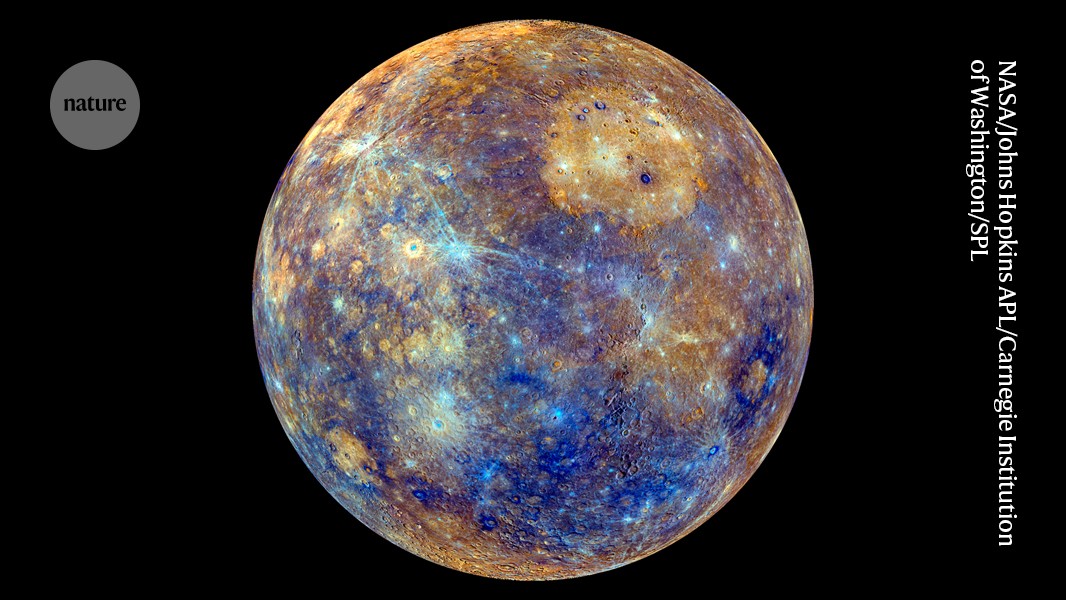
Mercury’s surface (artificially coloured) is pocked with craters made by comets and meteoroids. Credit: NASA/Johns Hopkins Univ. Appl. Phys. Lab./Carnegie Inst. Washington/SPL
Mercury, the smallest planet in the Solar System, is contracting as it cools, creating distinctive wrinkles across its surface. Analysis of these features suggests that since the planet formed, its diameter has shrunk by around 23 kilometres1 — a finding that puts fresh constraints on the evolution of Mercury’s interior.
Access Nature and 54 other Nature Portfolio journals
Get Nature+, our best-value online-access subscription
Prices may be subject to local taxes which are calculated during checkout
Nishiyama, G. et al. Geophys. Res. Lett. 53, e2026GL124067 (2026).
NASA’s Roman telescope holds promise far beyond mapping the invisible Universe
Glacier collapse caused Nepal’s deadly flash flood — a sign of things to come?
Tidal tomography reveals a thermal anomaly beneath Mars’s crustal dichotomy
Join HZAU's global faculty team to advance research with competitive benefits.