// KOTAKU — GAMING
Silent Hill: Townfall: The Kotaku Review
The island town of St. Amelia is devoid of people. Nothing inhabits its narrow streets but mementos of past activity, the detritus of a bygone time in the shape of discarded protest placards, triangles of red, white, and blue bunting hanging listlessly in a thick white fog. Its houses are empty, too, with unwashed dishes, bits of trash, and rumpled clothes left in place, as if those who would’ve used these items had been raptured out of their homes in the middle of the day.
The exception to this emptiness is a single woman and two men, lingering more as ghosts than humans, and a host of shambling grotesques, stalking the streets more as pitiful monsters than people.
Silent Hill: Townfall is set in the winter of 1996, in a fictional Scottish fishing village built against the grey horizon of the North Sea. When the story starts, an American called Simon washes in from that sea and up onto the town docks. He has an IV line in the back of his hand, the tube running along his forearm and disappearing into his shirtsleeves, and he, like the player, has no idea what’s going on in St. Amelia or how he ended up in this strange place. The answers to these questions are provided in good time, but they’re presented in a way that’s far less compelling than the manner in which they’re raised over the game’s first several hours.
Created by Screen Burn, the small Scottish studio that, under its former name No Code, made the excellent Stories Untold and Observation, Townfall is another experiment in broadening the Silent Hill series’ scope by a non-Konami studio. Like last year’s (also excellent) Silent Hill f, Townfall looks beyond the original games’ fictional American town for a horror story that pulls from the aesthetics and, more importantly, the culture and history of a different country.
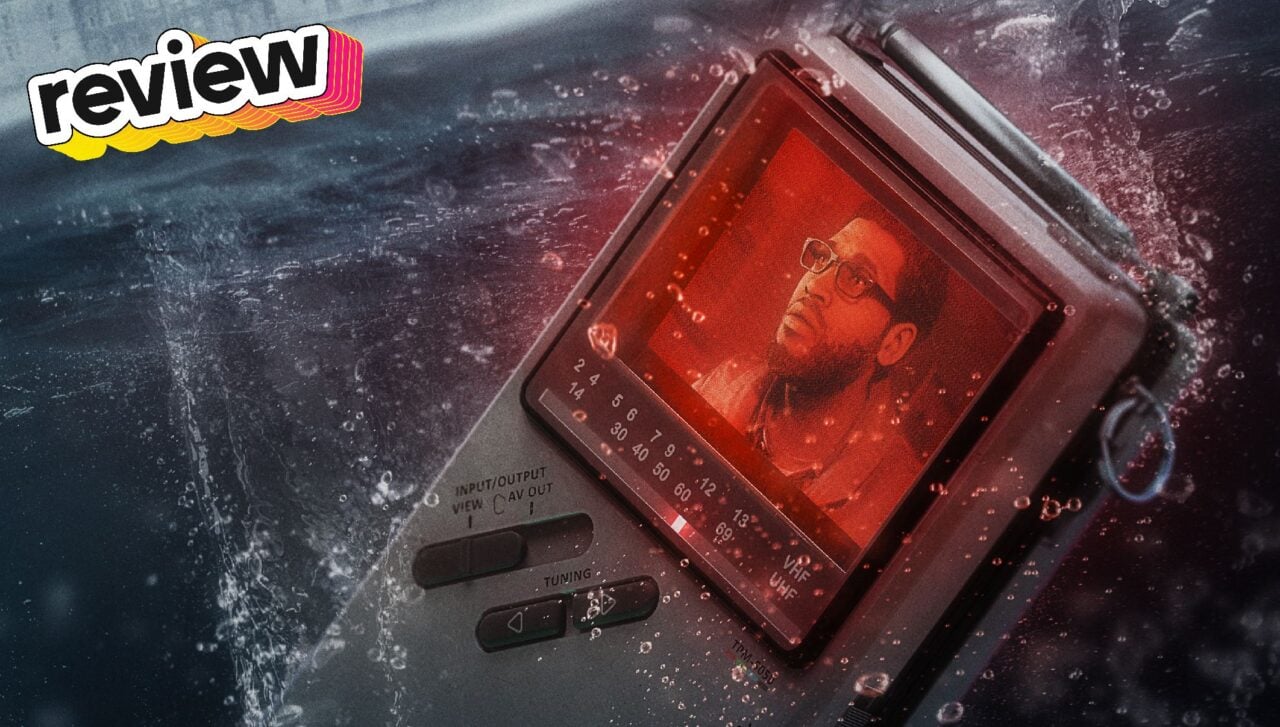
Your initial guide to that country is American. Though it moves between different perspectives across its runtime, Townfall is mostly centered on Simon. He looks at St. Amelia with a tourist’s eyes, unsure of how it ended up deserted and strewn with signs blaming an energy corporation for some recent unnamed tragedy. Given little more to go on than a voice that calls out to him from a telephone and the dreamlike flashes of a woman’s face that crackle into life on the portable TV he finds, Simon starts exploring. He works, for a time, like the player personified. He shakes with fear and goes wide-eyed in surprise when seeing something as inexplicable as giant tentacles suddenly descend from the sky. He, like us, looks for morsels of context when listening to voicemails or reading notes left behind by St. Amelia’s vanished population. Everything around him is as horrifying and bewildering to him as it is to us.
Before long, he finds more monsters. He’s transported into blood-red industrial versions of the town where reality fractures into the nightmare landscapes of Silent Hill’s longstanding “otherworlds.” His viewpoint also shifts in time to that of other outsiders, an English nurse called Zoe and a shadowy American named Richard. Using these three lenses, the first acts of Townfall provide a loose framework for the situation in St. Amelia. We know some terrible accident took place that shocked the town and filled its hospitals with dying patients or, in a particularly grim scene, choked its parking lots with triage tents and corpses shrouded in black body bags. We know that St. Amelia’s dismal economy has been revived by investment from a foreign energy company—Chapman Energy Group (CEG)—that employs much of the town. We know that there’s a direct connection between this company and all the death that surrounds Simon, Zoe, and Richard. The urge to explore further, to gain a better understanding of the tragedy and the three main characters’ roles in it, gives real momentum to the initial four or five hours of the game.
The tone established throughout Townfall’s opening hours is equally absorbing. This is partially the result of the fidelity with w