// ARS TECHNICA — HARDWARE & GADGET
Review: Apple's hyper-pricey M5 Ultra Mac Studio made me into a vibe coder
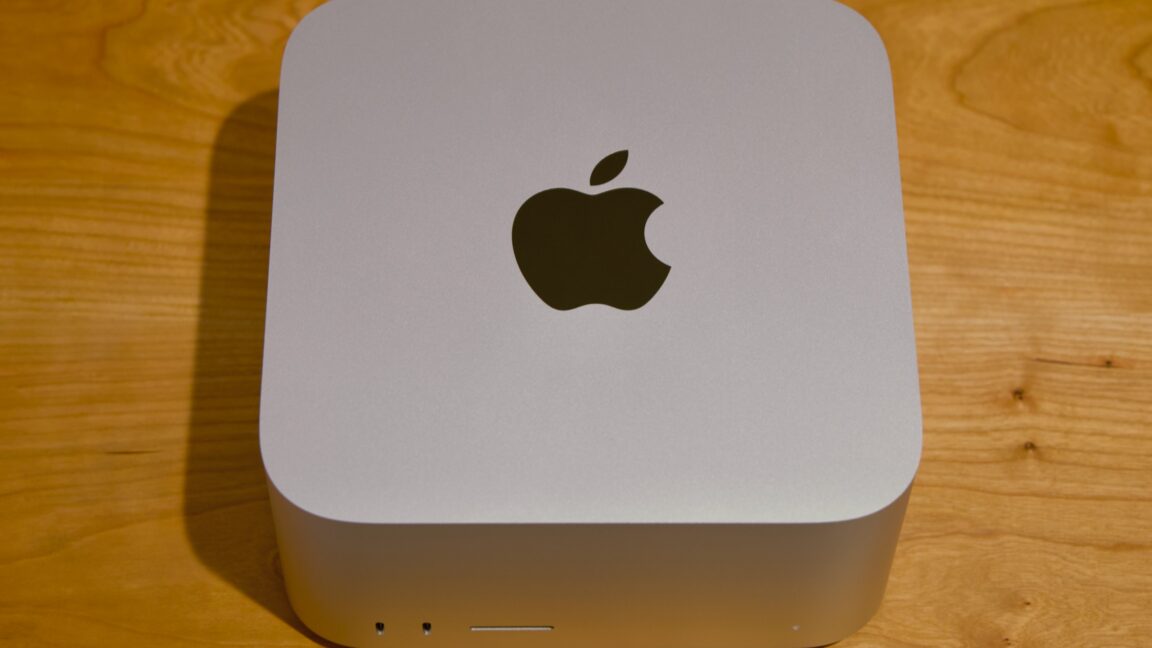
Usable local AI is a lot of fun, but how much would you pay for it?
This spring, Apple made it official: The Mac Pro is dead.
When Apple was using Intel processors and AMD GPUs, the idea of an expandable and upgradeable tower made sense. But Apple Silicon chips bring the CPU, GPU, and memory interface all under one roof in a way that makes that sort of upgradeability not just superfluous but impossible. At least not without breaking some of the chips’ key benefits.
And as it happens, Apple Silicon’s combination of a fast CPU, solid GPU, and unified memory architecture has made it a good fit for a modern “pro” workload that really pushes high-end hardware: running language models and agents locally.
That’s really the core audience for the M5 Ultra Mac Studio, Apple’s tippity-top config that is jumping two processor generations in a single refresh (there was no M4 Ultra, if you recall). The highest-end Studios have always felt like a bit of overkill for most people, but now there’s a particular kind of AI-pilled coder or designer who can legitimately benefit from having this kind of system on their desk.
Apple was caught off guard by the demand for these systems from people running software like OpenClaw and running open-weight models locally, which, along with the AI-fueled memory shortage, is why it has been nearly impossible to buy most of these systems for months. That’s the context that the new Mac Studio is launching into.
The new Mac Studio looks the same as it did when it launched with the M1 Max and M1 Ultra back in 2022. It’s a small, squat box, with the same 7.7-by-7.7-inch footprint as the old Mac mini, but it’s taller. Both the Max and Ultra variants of the Studio look the same, but the M5 Ultra version weighs two pounds more because it has heavier but more-conductive copper in its heatsink to help cool the more powerful chip.
Both Studio models also come with nearly all the same ports. On the back, you’ll find four 120Gbps Thunderbolt 5 ports, a 10Gbps Ethernet port, an HDMI 2.1 port, and a pair of 5Gbps USB-A ports. On the front, both Studios have a UHS-II SD card reader, but the Max comes with two 10Gbps USB-C ports, and the Ultra comes with two more 120Gbps Thunderbolt 5 ports.
The Ultra’s additional oomph extends to external display support. The M5 Max supports up to five external displays, and the M5 Ultra supports up to eight, though both come with caveats depending on the resolution and refresh rates you’re using.
The M5 Max is a known quantity at this point, and Apple has been shipping it since March in the MacBook Pro. It improved over the last-generation M4 Max by introducing new “super” cores for the CPU and nudging the maximum memory bandwidth up from 546GB/s to 614GB/s. The number of GPU cores stayed the same (40), but new neural accelerators built into each GPU core helped improve its performance for ML/AI-assisted technologies like MetalFX upscaling and frame generation.