// TOM'S HARDWARE US — HARDWARE & GADGET
Gamemax RGB PRO 750G power supply review: Efficient, but pricey for an average unit with pretty lights
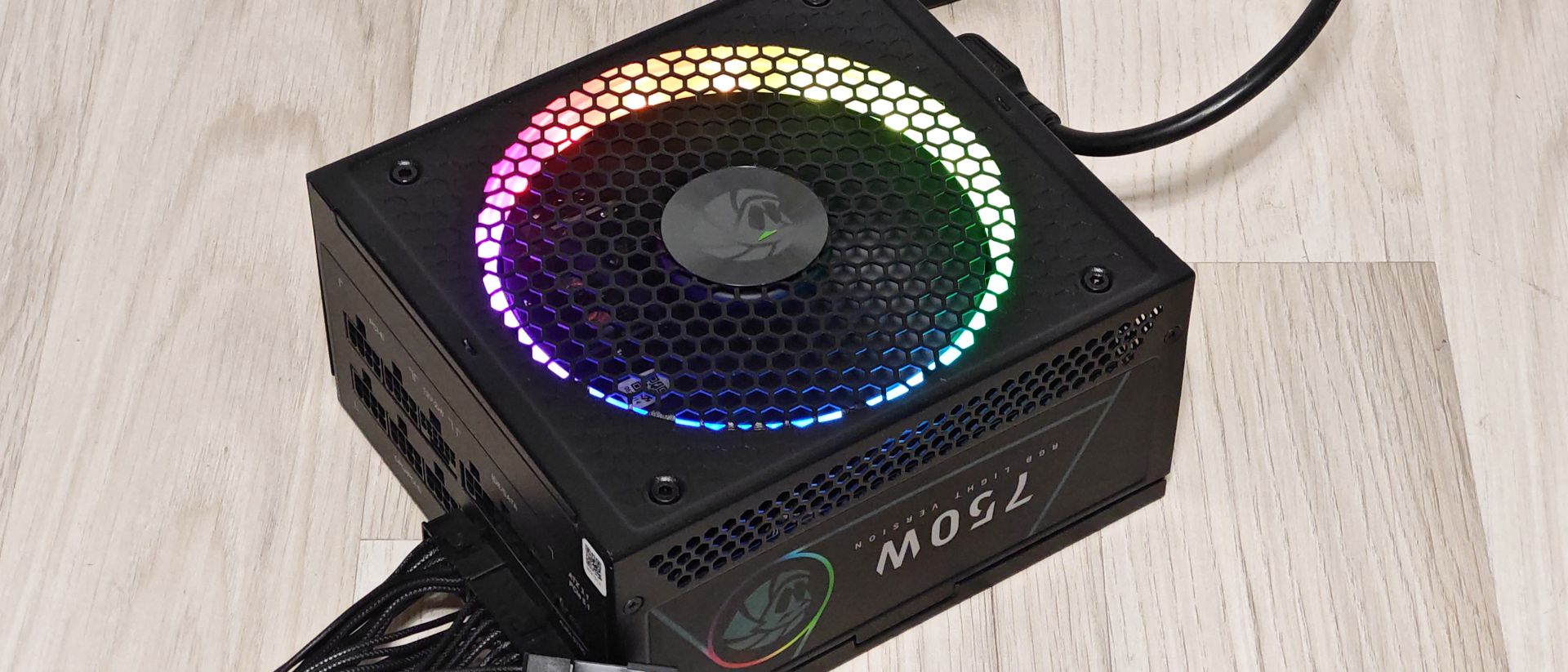
The Sohoo platform measures respectably, with 90.8% average efficiency at 230 VAC and genuinely good ripple, but almost everything around it is priced wrong. At $105, the RGB PRO 750G costs more than an MSI MAG A750GL or a Corsair RM750e while offering a mediocre all-around package.
Why you can trust Tom's Hardware
Our expert reviewers spend hours testing and comparing products and services so you can choose the best for you. Find out more about how we test.
Gamemax is a brand behind an OEM (Sohoo), founded to retail its own products. Founded in 2013, the company sells cases, coolers, monitors, peripherals, and power supplies under a positioning it calls affordable luxury, which in practice means visually loud products at prices that undercut the established names. Its power supply catalog has always been the most uneven part of the range. There are units at the bottom of the stack that exist purely to hit a price, and there are recent models such as the Lion Core series that carry genuine certification and measure respectably. Knowing which of the two a given Gamemax supply belongs to has historically required someone to open it up and put it on a load tester, because the badge on the box does not settle the question.
We examine the Gamemax RGB PRO 750G to see how it fares among the best power supplies on the market. The RGB PRO series sits in the middle of that catalog and leads with its lighting. The 750G reviewed here is the 750W model, a fully modular ATX unit built around a 140 mm ARGB fan, compliant with ATX 3.1 and PCIe 5.1, and fitted with a native 12V-2x6 connector for current graphics cards. Gamemax rates it at 40°C ambient and lists an operating range up to 50°C, with the important caveat that output is derated by twenty percent above 40°C, so anyone running it in a genuinely hot environment is buying a 600W supply.
The company claims 80 PLUS Gold efficiency, Japanese 105°C main capacitors, and 25 addressable lighting modes with motherboard sync. The Gold claim is the one worth pausing on, because no entry for this model exists in the CLEAResult 80 PLUS database, nor in the Cybenetics or PPLP databases, so the badge printed on the sticker is at present a manufacturer assertion and nothing more. At an MSRP of $105, the RGB PRO 750G is asking more than several other 750W Gold units currently sell for, which places a great deal of weight on the lighting to justify the difference.
The RGB PRO 750G arrives in a black cardboard box with a render of the unit on the front, the model name and wattage set large across the top, and three badges in the top right corner: PCIe 5.1 ready, ATX 3.1 ready, and a warranty shield. Green pinstripes run vertically across the artwork, the word Gamemax is spelled out letter by letter along the bottom edge, and an RGB color wheel with the words RGB LIGHT VERSION occupies the corner. It is busy but legible, and the front of the box tells a buyer most of what they need to know.
Protection inside is adequate rather than generous, with the supply held between two molded pieces and the cables bagged separately. The bundle is thin. There is the AC power cord, four mounting screws, two zip ties, a multilingual user manual, and a 5V three-pin ARGB cable for motherboard synchronization. The ARGB cable is the one item a competitor would not usually include, and given the feature set, it is a necessity rather than a bonus.
All of the unit’s cables are individually sleeved in black braid. Gamemax's marketing describes the whole set as “embossed flat cables”. Wire gauges look appropriate throughout. These sleeved cables are slightly stiffer than flat ones and take more effort to route behind a motherboard tray, which is the usual trade for looks and ruggedness.
At 165 x 150 x 86 mm, the RGB PRO 750G is a slightly long power supply. The 165 mm depth is 25 mm more than the ATX design guide recommendation, which is commonly met by 750W units. While every full-size ATX case will likely take it,