// HACKER NEWS — CYBERSECURITY
First Principles Thinking
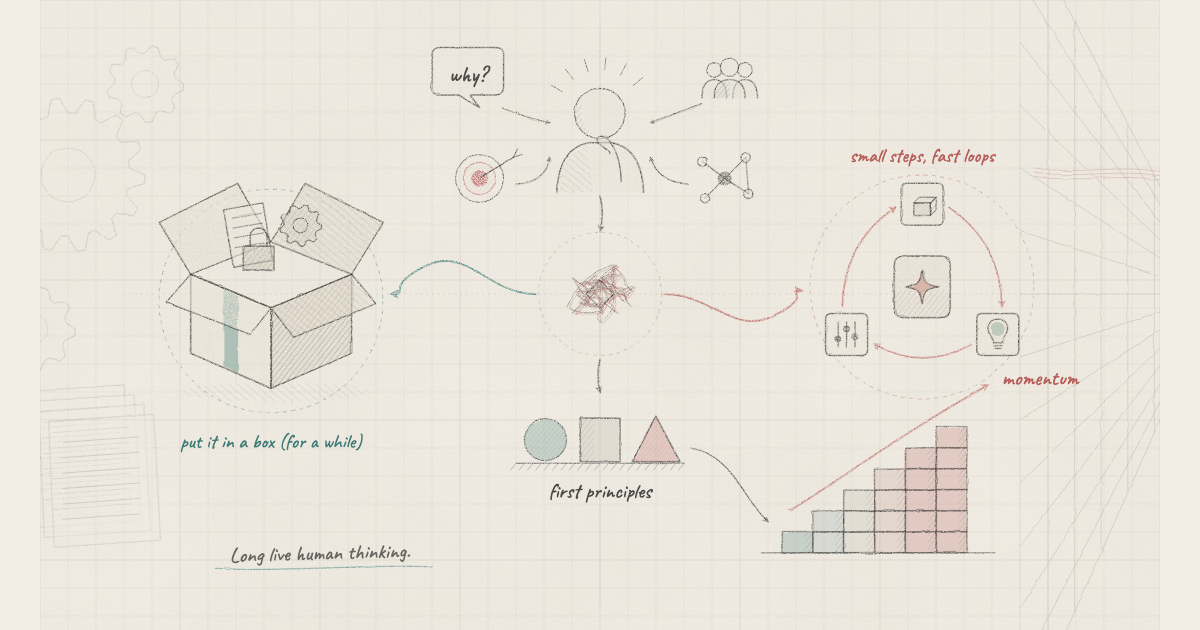
I’ve re-read Sunil Pai’s “the senior engineer death spiral” several times this week. It’s very good. If you haven’t read it, start there.
It’s resonating with me because I think almost every senior engineer has felt some version of being stuck. You get good at what you do, then things change, and the experience you’ve built up can make it hard to approach things differently.
(Also, still getting over the fact that this is a different Sunil in software engineering.)
Pai talks about focusing on momentum instead of outcomes, and I fully agree. When I’m stuck, I break the work down to the smallest thing I can actually accomplish. Getting something done usually helps me figure out what to do next.
After sitting with his post, I kept coming back to first principles thinking.
I’ve been lucky to work with and manage a lot of great senior engineers. When I think about what made them great, I keep landing on the same thing: they seemed to know what needed to be done. There’s an intuition there that I’ve always admired.
Some of the best I’ve worked with came from customer support or services. Others taught themselves to code or started as designers or entrepreneurs. They took different paths into engineering, but they shared a habit of thinking from first principles.
They’d ask why we were building something and what it would do for the people using it. They could connect what was happening in the codebase to what was happening outside it. That understanding helped them keep things simple.
I think that’s another way to build the momentum Pai describes. Consider the simplest thing you could do first. It’s often enough.
I’ve had a lot of conversations with friends and coworkers about the shift to agentic development. The people who seem to be vibing with it are usually the ones who already think this way.